
How to Grow Peppers: Pepper Plant Care from Seed to Harvest
Start pepper seed about 8 weeks before planting out at 80 to 90 F, plant out after frost once nights stay above 50 F, space 12 to 24 inches, water evenly and pick green or ripe.
Sources: University of Minnesota Extension, Maryland Extension, Illinois Extension, Clemson Cooperative Extension and 4 more. See the sources we used. How we source our guides

On this page (13)
To grow peppers, sow seed indoors about 8 weeks before you set plants out, 1/4 inch deep at 80 to 90 F, move them outside after the last frost once nights stay above 50 F, and space plants 12 to 24 inches apart. Peppers are slow starters that need warmth at every stage: the sources put the indoor start at 6 to 10 weeks, keep the mix warm until it sprouts, and wait for warm soil as well as warm nights. Water evenly. Most sweet and hot peppers are ready about 70 to 85 days from transplanting; you can pick them green or wait for color. Flower drop in hot or cold spells is normal and usually passes.
For the indoor start, and the bigger pots the seedlings move into at their first true leaves, see the best seed starting trays and pots.
| Sun | At least 6 hours of direct sun, 8 to 10 preferred (Maryland) |
|---|---|
| Sowing depth | 1/4 inch, indoors (Johnny's, Minnesota) |
| Germination temperature | 80 to 90 F (Johnny's, Minnesota) |
| Planting out | After the last frost, once night lows stay above 50 F (Minnesota); soil at 65 F (Maryland) |
| Spacing | 12 to 24 inches, rows 30 to 36 inches apart (Maryland) |
| Water | 1 inch a week, from rain or a thorough soak (Minnesota) |
| Days to maturity | About 70 to 85 days from transplanting (Maryland, Clemson) |
| Frost tolerance | None: frost injures top growth (Maryland) |
When to plant peppers
Peppers cannot take frost and sulk in cold soil. Illinois Extension says they need somewhat higher temperatures than most tomatoes and grow more slowly. Clemson Extension puts their comfort range at 70 to 85 F by day and 60 to 70 F at night, and keeps them out of the garden until frost is no longer a risk. Two more thresholds come up again and again: University of Minnesota Extension transplants once night lows stay above 50 F, and Maryland Extension says plants set out before the soil reaches 65 F will "just sit there."
That makes the indoor start the part to schedule. The sources disagree on how early. Maryland sows 8 to 10 weeks ahead of the average date of the last frost, and up to 12 weeks ahead for some types. Minnesota and Johnny's Selected Seeds start about eight weeks before planting out, and Clemson starts six to eight weeks before the last frost. The table turns the Maryland and Clemson rules into dates for four NOAA stations, counted from each one's 1991-2020 normal last 32 F freeze.
| Station (NOAA 1991-2020 normals) | Last spring frost | First fall frost | Start seeds (Maryland) | Start seeds (Clemson) |
|---|---|---|---|---|
| Minneapolis-St. Paul airport, MN | Apr 23 | Oct 18 | Feb 12 to Feb 26 | Feb 26 to Mar 12 |
| Chicago O'Hare airport, IL | Apr 16 | Oct 28 | Feb 5 to Feb 19 | Feb 19 to Mar 5 |
| Washington Reagan airport, VA | Mar 24 | Nov 18 | Jan 13 to Jan 27 | Jan 27 to Feb 10 |
| Dallas-Fort Worth airport, TX | Mar 8 | Nov 24 | Dec 28 to Jan 11 | Jan 11 to Jan 25 |
The dates are 1991-2020 NOAA normals for 32 F at 50 percent probability: in roughly half of years, the final spring freeze lands after the date shown. We worked out the seed-starting dates from each source's rule.
Find your dates by ZIP, or see the planting schedule for zone 6, zone 7 or zone 8. For an indoor start: seed starting trays and grow lights for seedlings.
The frost date is only the earliest planting day. In practice you wait past it for warm nights and warm soil, which in a cool spring can add a few weeks. That is why Minnesota sows peppers ahead of its tomatoes.
What you'll need for peppers
As an Amazon Associate we earn from qualifying purchases.

Sherwoods Seeds Corno di Toro Rosso Pepper Seeds
Long Italian sweet pepper.
Check price on Amazon
Sow Right Seeds California Wonder Pepper Seed
Standard sweet pepper.
Check price on Amazon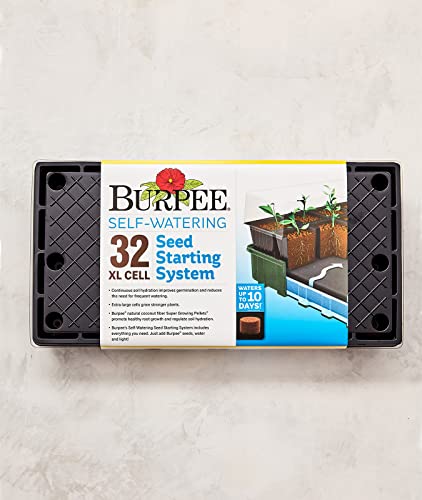
Burpee 32 XL Cell Self-Watering Growing System
Indoor start.
Check price on Amazon
VIVOSUN 10 Gallon Grow Bags, 5-Pack
At least 5 gallons, for bushy plants that can reach 3 to 4 feet.
Check price on Amazon
Corona FS 3214D ComfortGEL Micro Snips
Cut, do not pull, fruit.
Check price on Amazon
Starting pepper seeds indoors
Pepper seed is slow and fussy about heat. Johnny's says it germinates very slowly in cooler soil and keeps the mix at 80 to 90 F; Minnesota also suggests a heat mat at 80 to 90 F until seedlings emerge. Fedco Seeds gives 60 F as the minimum soil temperature for germination and 68 to 95 F as the optimal range. Sow 1/4 inch deep (Johnny's).
After the seedlings are up, Minnesota calls 70 F soil ideal, and Johnny's grows them at about 70 F by day and 60 F at night, moving them to 2-inch cells or 4-inch pots when the first true leaves appear. Peppers often try to flower indoors. Minnesota says to pinch off the flower buds until just before the plants go outside, and Maryland pinches early flowers and small fruit after transplanting for stronger plants. Johnny's describes the ideal transplant as having buds but no open flowers.
Harden plants off over a week or two before planting, bringing them in if nights drop below 55 F (Minnesota). Clemson sets out transplants that are 6 to 8 weeks old.
Sweet vs hot peppers
Peppers are nightshade vegetables, in the family Illinois Extension calls the potato family along with tomato and eggplant. Most garden peppers, sweet and hot, belong to one species, Capsicum annuum, and Maryland Extension notes that a sweet pepper grown beside a hot one stays sweet. The heat comes from capsaicin, which Minnesota says sits in the seeds and the pale inner membrane.
- Bell peppers. The standard sweet pepper. Illinois says green bells are usually picked fully grown, 3 to 4 inches long and firm, and can be left to ripen to red, yellow, orange or brown.
- Corno di Toro. A long Italian sweet pepper; Eden Brothers lists its Corno di Toro Rosso at up to 8 inches long and 60 to 90 days.
- Shishito. A small, thin-walled frying pepper. Fedco Seeds lists its Takara shishito at 60 days, with dozens of wrinkled fruit on early, well-branched plants.
- Hot peppers. Clemson's hot list includes cayenne, habanero, jalapeno, tabasco and large cherry types. Illinois says hot peppers are usually picked red-ripe and are hottest when fully ripe.
If your summers are short or cool, Minnesota suggests growing some smaller-fruited peppers alongside the bells, since smaller fruit types tolerate both cool and hot weather better.
What the sources say about peppers, side by side
| U. of Minnesota | Maryland | Illinois | Clemson | Johnny's Selected Seeds | Fedco Seeds | |
|---|---|---|---|---|---|---|
| Start indoors | About 8 weeks before planting out | 8 to 10 weeks before frost-free date (some 12) | Late winter | 6 to 8 weeks before last frost | About 8 weeks before transplanting | March or April |
| Germination temperature | 80 to 90 F | Not stated | Not stated | Not stated | 80 to 90 F | 60 F minimum; 68 to 95 F optimal |
| Plant out | Night lows above 50 F | Soil at 65 F | Nights below 50 to 55 F slow growth | After last frost | After frost, warm soil | Set out in June |
| Spacing | 18 in; rows 30 to 36 in | 12 to 24 in; rows 30 to 36 in | 18 to 24 in; beds 14 to 18 in | 12 in; rows 3 ft | 12 to 18 in; rows 24 to 36 in | Not stated |
| Flower drop | Days above 90 F; nights below 60 or above 70 F | Nights below 60 or above 75 F; days above 95 F | Warm nights above 70 F; hot dry winds | Not stated | Row cover off above 85 F | Cold, extreme heat, drought |
| Days to harvest | Not stated | 70 to 85 from transplant; bells +2 to 3 weeks to ripen | Not stated | About 70 to 85 from transplant; 100 to 120 from seed | Not stated | Shishito 60 days |
Most of the spread in the table is about season length. Northern sources start seed earlier relative to frost and plant wider; Clemson, in South Carolina, starts later and spaces plants closer, at 12 inches.
Transplanting once nights are warm
Illinois Extension says that when nights fall below 50 to 55 F, pepper plants grow slowly, the leaves may yellow and the flowers drop. Black plastic mulch, raised beds and floating row cover all help warm the soil; Johnny's uses row cover on wire hoops early in the season but takes it off on sunny days over 85 F so the heat does not knock off blossoms or damage plants.
How far apart to plant peppers
Spacing depends on the source and the bed:
- University of Minnesota: 18 inches between plants, 30 to 36 inches between rows.
- Maryland: 12 to 24 inches in the row, rows 30 to 36 inches apart, or double staggered rows in a 2-foot bed.
- Illinois: 18 to 24 inches in rows; in beds, 14 to 18 inches each way.
- Clemson: 12 inches in the row, rows 3 feet apart.
- Johnny's: rows 24 to 36 inches apart, 12 to 18 inches between plants.
What you'll need is this guide's shopping list.
Pick a sunny spot: Maryland asks for at least 6 hours of direct sun a day and prefers 8 to 10. Clemson aims for a soil pH of 6.0 to 6.5 and Minnesota for 6.5 to 7, so a soil test settles which is right for your bed.
Watering peppers
Minnesota Extension waters peppers with a thorough soak at least once a week whenever the plants get less than one inch of rain that week, and more often on sandy soil. It advises against overhead sprinklers, because wet leaves are more disease prone. Maryland calls drip irrigation and soaker hoses excellent for peppers, and Clemson names fruit set and fruit development as the critical period for moisture.
What to plant with peppers
Utah State Extension pairs peppers with marigolds, which it says deter nematodes and other pests. Maryland interplants basil and sets a row of peppers next to onions, and West Virginia University tucks lettuce or spinach between slow growers like peppers. Keep them away from black walnut, which Illinois says they are especially sensitive to. More pairs: what to plant with peppers.
Peppers in pots
Maryland Extension lists containers as an option for peppers, with 5 gallons as the minimum, for bushy plants that can reach 3 to 4 feet. Keep the moisture even, because Maryland links dry spells to dropped blossoms, undersized fruit and blossom end rot. Clemson's target is to wet the soil at least 6 inches down and not let it dry out between waterings while fruit is developing.
Why pepper flowers drop
Flower and small-fruit drop is the most common pepper complaint, and temperature is usually the cause. The sources give slightly different limits:
- Maryland Extension: nights below 60 F or above 75 F, or days above 95 F, can make flowers and small fruit drop. Plants often stop setting fruit in midsummer heat and start again in late summer and early fall.
- New Mexico State University: no fruit sets when the average temperature is under 55 F or over 95 F, and flowers drop on nights above 75 F.
- Illinois Extension: cold early in the season; later, drying hot winds and nights warmer than 70 F.
- University of Minnesota: dry soil, days over 90 F, and nights outside 60 to 70 F can weaken plants.
Other causes Maryland lists are soil that stays too dry or too wet, heavy shade, too much nitrogen and not harvesting often enough. Maryland's fixes are practical: some late-afternoon shade, a water spray to cool plants in hot, dry weather, and protection from wind. Then wait; production usually resumes when the weather eases.
Blossom end rot and sunscald
Peppers get blossom end rot on the blossom end of the fruit, just as tomatoes do. Clemson explains that it comes from a calcium shortage inside the plant, which does not always mean the soil is short of calcium; calcium moves poorly, so plants need a steady supply in the soil water. Illinois links it to drought, uneven water and roots cut by careless cultivation. Even watering and mulch are the defense in both. Pick off affected fruit.
Sunscald is the other fruit blemish. Minnesota says pepper fruit gets white patches when there is not enough leaf cover to shade it during hot, dry weather, so avoid stripping leaves from the plants.
Green vs ripe harvest
Every pepper starts green. You can pick it then or leave it to color up, and both are fine. Maryland gives 70 to 85 days from transplanting for most sweet and hot types; bells may reach a mature green stage in 70 to 80 days and need another 2 to 3 weeks to ripen fully, and habanero types take 90 to 120 days. Clemson gives about 70 to 85 days from transplanting, or 100 to 120 days from seed. Maryland notes that peppers do not ripen further once picked, and that fully colored sweet peppers are sweeter.
Fedco picks its first peppers green, once they reach full size, and Minnesota notes the plants keep flowering through the picking season. Cut peppers off rather than pulling, because the stems are brittle and branches snap (Clemson, Illinois). Wear gloves when picking hot peppers; Minnesota warns that even sweet peppers can carry enough capsaicin to irritate skin.
Store peppers cool but not cold. Maryland and Clemson both give 45 to 50 F for two to three weeks; Minnesota says they keep a week or more in a refrigerator but can pit if chilled too long.
Pepper seeds and supplies
A bell, a Corno di Toro, a shishito and one hot pepper such as a cayenne or jalapeno cover most of what the sources describe. In a short-season garden, add a small-fruited type.
The gear that matters most here is what keeps the seed warm: a covered seed tray and a heat mat that holds 80 to 90 F. To pick one, see the best seedling heat mats. Later, a container of at least 5 gallons for patio plants and a pair of snips for cutting fruit cleanly.
Sources we used
Pepper numbers here (seed depth, spacing, soil and germination temperatures) come from the pages listed next, read on October 29, 2026. When they differ, the page gives both.
- "University of Minnesota Extension: Growing peppers in home gardens"
- "Maryland Extension: Growing Peppers in a Home Garden" and its "Poor Blossom and Fruit Set" page
- "Illinois Extension, Home Vegetable Gardening: Peppers"
- "Clemson Cooperative Extension, HGIC 1316: Pepper"
- "New Mexico State University, Guide H-230: Growing Chiles in New Mexico"
- "Johnny's Selected Seeds: Peppers, Key Growing Information"
- "Fedco Seeds: Peppers" (culture notes) and its "Takara Shishito" page; "Eden Brothers: Corno di Toro Rosso"
- "NOAA NCEI climate normals for 1991-2020": the 50 percent freeze dates behind the pepper table
Related guides
- How to grow tomatoes, started indoors a little later than peppers
- How to grow tomatoes in pots, the other big patio crop
- Best tomato cages, which includes a short cage for peppers
- Best seedling heat mats, for keeping a pepper tray warm until it sprouts
- How to grow melons, a vine crop for the same warm weeks
- How to grow okra, a pod crop for long, hot summers
- How to grow beans, a direct-sown crop for after frost
- How to grow squash and pumpkins, which also go out after the last frost
- How to grow asparagus, which can also be started from seed indoors
- Nightshade family vegetables, the family guide to rotation and shared diseases
- How to protect plants from frost, when to cover peppers and when to uncover them
Frequently asked questions
When should I start pepper seeds indoors?
Start pepper seeds about 8 weeks before planting out, the timing Johnny's and University of Minnesota Extension give. Maryland Extension says 8 to 10 weeks before the frost-free date, up to 12 for some types, and Clemson says six to eight. Keep the mix at 80 to 90 F; Johnny's says pepper seed germinates very slowly in cooler soil.
When can I plant peppers outside?
Plant peppers outside after the last frost, once night lows stay above 50 F, the rule University of Minnesota Extension gives. Maryland Extension also waits for the soil to reach 65 F and says plants set out sooner will just sit there. In our reading, a cool spring can mean waiting a few weeks past your frost date.
How do you plant pepper transplants?
Set pepper transplants with the shoots at the soil line, as they grew before, which is how University of Minnesota Extension plants them. Water the plants well first, dig a hole that fits the root ball, then press the soil in around the roots and water again. Bury any peat pot rim so it cannot wick moisture away.
How far apart should pepper plants be?
Give pepper plants 12 to 24 inches in the row and 30 to 36 inches between rows, the ranges Maryland Extension gives. University of Minnesota Extension uses 18 inches, Clemson uses 12 inches in rows 3 feet apart, and Illinois uses 14 to 18 inches each way in beds. Maryland also fits double rows into a 2-foot bed.
What can I plant with peppers?
Marigolds, basil, onions and early greens are the pepper partners extension pages name. Utah State Extension credits marigolds with deterring nematodes and other pepper pests, Maryland Extension interplants basil and sets peppers in a row beside onions, and West Virginia University tucks lettuce or spinach between them. Illinois Extension warns that peppers are especially sensitive to black walnut.
Why are the flowers falling off my pepper plants?
Pepper flowers usually fall off because of temperature, and plants often set fruit again once the weather eases. Maryland Extension names nights below 60 F or above 75 F, or days above 95 F, as the trigger. It lists soil that stays too dry or too wet, heavy shade, too much nitrogen and infrequent picking as other causes.
When do you harvest bell peppers?
Harvest bell peppers green once they are fully grown and firm, about 3 to 4 inches long in Illinois Extension's description, or leave them to ripen to color. Maryland Extension says bells may reach that mature green stage 70 to 80 days after transplanting and need another 2 to 3 weeks to ripen fully. Cut, do not pull.
Can you grow peppers in pots?
Yes, in a container of at least 5 gallons, the minimum Maryland Extension gives for bushy plants that can reach 3 to 4 feet. Keep the soil evenly moist, because Maryland links dry conditions to dropped blossoms, small fruit and blossom end rot. Clemson wets the soil at least 6 inches down.