
Arugula Plant: How to Grow Arugula, From Sowing to Cut-and-Come-Again
Sow arugula as soon as the soil can be worked in spring and again from late summer, 1/4 inch deep, thinning to about 6 inches. It usually comes up in 5 to 7 days and is ready to cut in 3 to 4 weeks. Sow every 2 to 3 weeks and keep it out of summer heat, which makes it bolt.
Sources: Cornell Garden-Based Learning, Wisconsin Horticulture, Illinois Extension, NC State Extension Gardener Plant Toolbox and 5 more. See the sources we used. How we source our guides

On this page
To grow arugula, sow it in spring once the ground is workable, or from late summer into fall, about 1/4 inch deep and an inch apart, then thin to roughly 6 inches. It sprouts in cold soil, usually within 5 to 7 days, and the first leaves are ready to cut in about 3 to 4 weeks. Sow a short row at 2 to 3 week intervals for a steady supply, stop about a month before your first fall frost, and keep it out of summer heat, which makes it flower and turn bitter.
The arugula plant (Eruca sativa, also sold as rocket or roquette) is a fast, peppery salad green in the mustard family. This guide works from Cornell, Wisconsin, Illinois, NC State, Colorado State and Delaware Extension pages and Johnny's Selected Seeds' growing notes, shows where they give different numbers, and turns the fall timing into dates for four NOAA weather stations.
| Sun | Full sun to part shade (Johnny's, NC State) |
|---|---|
| Sowing depth | 1/4 inch (Cornell); 1/8 inch for a dense cut crop (Johnny's) |
| Spacing | Sow 1 inch apart, thin to 6 inches (Cornell, NC State); 3 to 6 inches (Wisconsin) |
| Germination temperature | 40 to 55 F (Cornell); usually up in 5 to 7 days |
| Days to first cut | As soon as 3 to 4 weeks (Wisconsin); about 20 days in summer, 30 to 40 in spring and fall (Illinois) |
| Frost tolerance | Most types survive 22 F (Illinois) |
| Soil pH | 6.0 to 6.8 (Johnny's) |
When to plant arugula
Spring sowing has no countdown in the sources, only a soil condition. Cornell sows the moment the ground is workable, because the seed germinates quickly even when the ground is cold, and puts the germination range at 40 to 55 F. Wisconsin notes that arugula tolerates frost, so it can go in several weeks ahead of the last spring frost. Illinois sows from early spring to early fall and says most types survive 22 F.
Fall is where the calendar matters, because each sowing needs time to size up before hard cold. Cornell keeps sowing until about a month before the average first frost; Johnny's keeps going until 2 to 3 weeks before it. The table turns both cutoffs into dates at four stations, using the median first 32 F date from NOAA's 1991-2020 normals. Your own station's normals are the thing to look up; a zone number does not give a frost date.
| Weather station | First fall 32 F (median) | Last sowing, about a month before first frost (Cornell) | Last sowing, 2 to 3 weeks before first frost (Johnny's) |
|---|---|---|---|
| Minneapolis-St. Paul, MN | Oct 18 | Sep 18 | Sep 27 to Oct 4 |
| Chicago O'Hare, IL | Oct 28 | Sep 28 | Oct 7 to Oct 14 |
| Washington Reagan, VA | Nov 18 | Oct 19 | Oct 28 to Nov 4 |
| Atlanta Hartsfield, GA | Nov 20 | Oct 21 | Oct 30 to Nov 6 |
Fall frost dates: NOAA's 1991-2020 climate normals give, for each station, the day by which half of all years have seen a 32 F night. About a month is counted as 30 days here. There is no spring column because spring sowing follows the soil, not a count of weeks.
Use the earlier column if you want full-size leaves before the cold sets in, the later one for a quick crop of small leaves. Under a cold frame or low tunnel, Illinois says, arugula might even last the whole Midwest winter.
Cool-season timing and bolting
Arugula's one weakness is heat. When the days get long and warm, or the soil dries out, the plant sends up a branched flower stalk 2 to 3 feet tall, as Wisconsin describes it; that is bolting. Illinois puts it plainly: summer heat and long days trigger flowering, and because arugula is an annual, flowering ends the plant's useful life. The leaves get stronger and more bitter as the plant ages and as heat and drought set in, according to Wisconsin.
The sources' fixes are all about keeping the plant cool and unstressed:
- Grow it in spring and fall. Colorado State plants early in spring and again late in summer.
- Shade for warm-weather sowings. Wisconsin and Delaware say light shade may help slow bolting; Cornell suggests some shade for warm-season plantings; Colorado State puts summer arugula in shade or under floating row cover where it stays cooler.
- Even moisture. Cornell's advice is to cut heat stress and drought stress, both of which hurry bolting.
- Keep cutting. Picking small leaves regularly helps hold off seed production (Wisconsin).
When a plant does bolt, it is not wasted. The four-petaled cream flowers with dark veins are edible, as are the young seed pods (Wisconsin, NC State), and Johnny's notes that leaves picked after flowering can still be used, with a sharper taste.
Sowing in succession
A single sowing of arugula gives a few weeks of good leaves, so the sources all plant in small batches. Cornell and Wisconsin sow every 2 to 3 weeks, Johnny's about every 2 weeks, and NC State staggers plantings by 1 or 2 weeks. A short row or a square foot at a time is plenty for a household. Cornell adds that quick arugula fits intercropping and relay cropping, so a short row can go in beside slow carrots and come out before they need the room (our reading).
How to plant arugula: depth, spacing and thinning
- Depth and spacing. Cornell plants 1/4 inch deep and 1 inch apart, then thins gradually to 6 inches, eating the thinnings. Johnny's sows shallower, 1/8 inch, at about 5 seeds per inch for a cut crop. Wisconsin thins to 3 to 6 inches for individual plants or leaves the stand dense for cutting.
- Emergence. Cornell and Johnny's both put the usual wait at 5 to 7 days; Wisconsin says seed is up in just a few days, cool soil or not.
- Soil. Full sun to part shade in fertile, well-drained soil; Illinois warns that heavy clay or poorly drained ground can cause root rot, and Johnny's lists a pH range of 6.0 to 6.8.
- Rotation. Cornell advises against planting after other cabbage family crops.
Watering arugula
Even moisture is the goal. NC State says arugula thrives in moist, rich soil, and Cornell slows bolting by easing both heat and moisture stress, so water before the bed dries out in warm spells. Do not overdo it on heavy ground: Illinois warns that heavy clay and poorly drained spots can lead to root rot.
| Cornell | Johnny's | Wisconsin | NC State | Illinois | |
|---|---|---|---|---|---|
| Seed depth | 1/4 in | 1/8 in | Shallow | Not given | Not given |
| Spacing | 1 in, thinned to 6 in | 5 seeds per inch | Thin to 3 to 6 in | Thin to 6 in | Not given |
| Germination | 40 to 55 F; 5 to 7 days | Typically within 5 to 7 days | A few days; fine in cool soil | Not given | Not given |
| Succession | Every 2 to 3 weeks | About every 2 weeks | Every 2 to 3 weeks | Stagger by 1 or 2 weeks | Not given |
| Last fall sowing | About a month before first frost | 2 to 3 weeks before first frost | Not given | Not given | Early fall |
| First harvest | Often ready as early as 4 weeks | Leaves about 3 to 6 in; recut in 5 to 14 days | As soon as 3 to 4 weeks | 40 to 50 days to mature; after 6 weeks | About 20 days summer; 30 to 40 spring and fall |
| Cold | Not given | Most varieties hardy in cool tunnels in winter | Tolerates frost | Light frosts | Most types survive 22 F |
The days-to-harvest figures differ most, and season explains much of the gap: Illinois gets summer arugula in about 20 days and spring or fall arugula in 30 to 40, because warmth speeds growth, while NC State's 40 to 50 days to maturity counts to a full-grown plant rather than the first cut.
Cut-and-come-again harvest
Arugula is usually harvested young and more than once. Wisconsin starts picking when leaves are a couple of inches long, and either takes the outer leaves of each rosette or cuts the whole plant an inch or two above the ground, which can be as soon as 3 to 4 weeks from sowing, then harvests the regrowth. Johnny's cuts with a knife when leaves reach roughly 3 to 6 inches, about an inch above the soil and above the base of the plant, and cuts again 5 to 14 days later depending on the variety. Illinois uses scissors or a sharp knife and harvests regrowth as it comes.
Young leaves are milder; NC State and Wisconsin both say older leaves turn bitter, so pick often and small. A fall planting stretches furthest: Illinois says fall-grown arugula can be cut repeatedly and carry on into the next spring until it bolts. NC State adds that cut leaves are short-lived in the refrigerator, so harvest only what you need.
Seed catalog days vary too. Delaware lists Rocket at 35 days and Red Dragon at 45 to 50 days.
Arugula on a windowsill
Because it is small and quick, arugula is one of the easier greens to keep going indoors, and for an even faster counter crop there are sprouts in a jar. Wisconsin says it can be grown in containers, even in winter on a bright windowsill. NC State sets the container minimum at 3 gallons with at least 4 to 6 inches of soil depth. Sow thickly, keep the mix evenly moist, and cut the leaves young as described above.
A pot also sidesteps flea beetles, which spend the winter outdoors. Use a container with drainage holes and a well-drained potting mix, since soggy roots are the one thing every source warns against.
Salad vs wild arugula: which to sow
Two different plants are sold as arugula. Salad arugula is Eruca sativa (Cornell lists it as Eruca vesicaria), a fast annual whose lower leaves NC State describes as pinnately lobed. Wild arugula, often sold as Sylvetta, is a separate genus, Diplotaxis; NC State calls it perennial wall-rocket (Diplotaxis tenuifolia) and describes narrow, deeply divided leaves and better heat tolerance.
Cornell's comparison is the most useful: Sylvetta grows more slowly, reaches about half the height, bolts later, has smaller and more deeply lobed leaves and yellow flowers, and tastes more pungent. Johnny's lists both under arugula, and its seed counts show how much finer wild arugula seed is: about 100,700 seeds per ounce against 15,400 for salad types. NC State says both are used the same ways in the kitchen.
- Salad arugula for quick crops in spring and fall and for cut-and-come-again beds.
- Wild arugula when you want a plant that holds longer into warm weather and a stronger bite.
Flea beetles and row cover
Flea beetles are the pest the sources mention first. These tiny jumping beetles chew small, round holes, most less than 1/8 inch across, which Wisconsin calls shot holes; the leaves are still edible but may look rough. Illinois says spring and summer arugula tends to see the heaviest pressure, with almost none in fall, when the beetles disappear with cooler weather. Minnesota Extension adds that seedlings take the most damage and that spring is the worst season for them.
A barrier is the usual fix. Johnny's says floating row cover laid from the day of sowing can control flea beetles; Illinois and Wisconsin both use row covers. Wisconsin adds a caution: because flea beetles overwinter in the soil, they can come up under a cover laid too early on a bed where they wintered, so rotate the arugula bed and do not plant after other cabbage family crops (Cornell).
What to plant with arugula
In our reading, arugula is more often the helper than the crop being helped. Minnesota Extension says some spicier brassicas, arugula among them, can work as a well documented flea beetle trap for cabbage family crops such as kale, and cites research where mixes of 3 or more trap species cut damage more than one. See our companion planting chart.
Delaware lists the other problems to watch for: downy mildew, root rot, aphids and bacterial leaf spot. For disease, Johnny's relies on crop rotation and sanitation.
Arugula seeds and supplies
One packet of salad arugula (Eruca) covers several succession sowings, and a packet of wild arugula (Sylvetta) is worth adding for warm-weather leaves. Floating row cover or insect netting laid at sowing can keep flea beetles off, and a container of 3 gallons or more lets you grow it indoors.
What you'll need for arugula
As an Amazon Associate we earn from qualifying purchases.
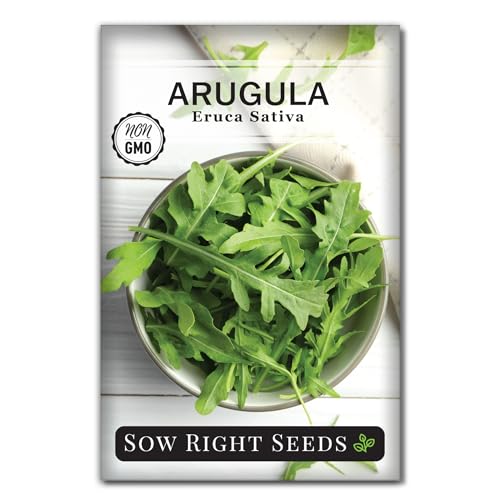
Sow Right Seeds Arugula Seed
The fast annual for succession sowings; Delaware lists Rocket at 35 days and Red Dragon at 45 to 50 days.
Check price on Amazon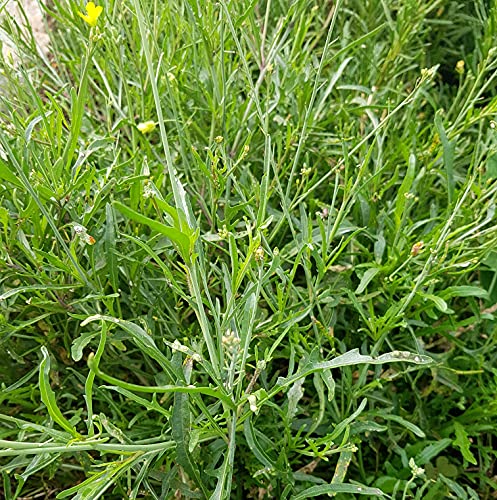
Earthcare Seeds Wild Arugula Seeds
Cornell: slower growing and slower to bolt, with a more pungent taste.
Check price on Amazon
RooTrimmer 5 Gallon Nursery Pots with Drainage Holes
A pot of 3 gallons or more with drainage holes and at least 4 to 6 inches of soil.
Check price on Amazon
Agribon AG-19 Floating Row Cover, 10 x 50 ft
Floating row cover laid from the day of sowing can keep flea beetles off the leaves.
Check price on Amazon
Sources we used
Arugula figures here trace to saved copies of the extension and seed company pages below. Where they part ways on a number, the page reports each version.
- "Cornell Garden-Based Learning: Arugula growing guide"
- "Wisconsin Horticulture (UW-Madison Extension): Arugula"
- "Illinois Extension, Good Growing: arugula (November 7, 2018)"
- "NC State Extension Gardener Plant Toolbox: arugula"
- "Colorado State University Extension, PlantTalk Colorado: Spicy Greens"
- "University of Delaware Cooperative Extension: arugula fact sheet (October 2024)"
- "University of Minnesota Extension: Flea beetles"
- "Johnny's Selected Seeds: Arugula, Key Growing Information"
- "NOAA NCEI: U.S. Climate Normals, 1991-2020": first fall 32 F dates at four airports
Related guides
- Growing basil on a windowsill, a warm-season herb for the same bright indoor spot.
- Kale, a hardier green for the same fall bed.
- How to grow carrots, a slow crop to sow beside quick arugula.
- How to grow sprouts, another fast indoor crop for winter.
- Brassicas, for arugula's place in the cabbage family.
- Spinach, another salad leaf for spring and fall sowings.
- Chicories, the radicchio and endive family.
- Chicory and radicchio, a bitter leaf for the fall salad bowl beside arugula.
- Radishes, another quick spring and fall sowing.
- Swiss chard, another leafy green to grow beside arugula.
- Cilantro, a cool-season herb that also bolts in summer heat.
Frequently asked questions
When should I plant arugula?
Sow arugula early in spring, the moment you can dig the soil, and again from late summer into fall. Cornell keeps sowing until about a month before the average first frost, and Johnny's until 2 to 3 weeks before it. Illinois Extension calls arugula very cold hardy and says most types survive 22 F.
How do you plant arugula seeds?
Plant arugula seeds 1/4 inch deep and 1 inch apart, as Cornell advises, then thin gradually to 6 inches and eat the thinnings. Johnny's sows shallower, 1/8 inch, at about 5 seeds per inch for a dense cut crop. Seedlings usually come up in 5 to 7 days, even in cool soil.
How long does arugula take to grow?
Arugula is usually ready to cut 3 to 4 weeks after sowing, by Wisconsin Extension's count, and Cornell says about 4 weeks. Illinois gets summer arugula in about 20 days and spring or fall arugula in 30 to 40. NC State's longer 40 to 50 days counts to a full-grown plant.
How do you harvest arugula?
Cut the leaves with a knife or scissors when they are roughly 3 to 6 inches long, about an inch above the soil, as Johnny's does, or pick the outer leaves of each plant (Wisconsin). The plants regrow, and Johnny's cuts again 5 to 14 days later. Pick young and often, since older leaves turn bitter.
Why is my arugula flowering?
Arugula flowers, or bolts, when long days, heat and dry soil push it to make seed, and Illinois Extension notes that flowering ends the annual plant's useful life. Grow it in spring and fall, shade warm-weather sowings, keep the soil evenly moist and harvest often, as Cornell and Wisconsin advise.
What grows well with arugula?
Cabbage family crops such as kale, because Minnesota Extension finds it well documented that arugula and some other spicy brassicas can serve as a flea beetle trap crop. It works better mixed: Minnesota cites research in which 3 or more species planted as a trap outdid a single one. Cornell adds that it suits intercropping, though not where cabbage family crops just grew.
What is the difference between arugula and wild arugula?
Salad arugula is Eruca sativa, a fast annual with lobed lower leaves (NC State); wild arugula, or Sylvetta, is Diplotaxis tenuifolia, a separate plant. Cornell says Sylvetta grows more slowly, reaches half the height, bolts later and tastes more pungent, with smaller leaves and yellow flowers. NC State notes that it tolerates heat better.
Can you grow arugula indoors?
Yes. Wisconsin Extension says arugula grows in containers, even through winter on a bright windowsill. NC State suggests a pot of at least 3 gallons with 4 to 6 inches of soil depth. Use a mix that drains well, keep it evenly moist, and cut the leaves young for repeat harvests.