
Nightshade Family Vegetables: Rotation, Shared Diseases and Pests, and Timing
The nightshade family in the garden: tomatoes, peppers, eggplant, potatoes and tomatillos share early blight, late blight, verticillium wilt, the Colorado potato beetle and the hornworm, so rotate them as one group for 3 to 4 years, set the warm-season four out after frost and plant potatoes early from seed tubers.
Sources: NC State Extension, University of Minnesota Extension, University of Maryland Extension, Illinois Extension. See the sources we used. How we source our guides

On this page
The nightshade family, Solanaceae, is the tomato and potato family: in the vegetable garden it means tomatoes, peppers (bell and chile), eggplant, potatoes and tomatillos, as NC State Extension lists them. What they share matters more than what sets them apart. Early blight, late blight, verticillium wilt, the Colorado potato beetle and the tomato hornworm all move between these crops, so rotate the five as one group: Minnesota Extension advises a spot with none of them for the past 3 or 4 years. Four of the five are warm-season transplants set out after frost, with peppers and eggplant waiting for nights above 50 F. Potatoes are the exception, planted from seed tubers in cool spring soil.
Nightshade vegetables: the crops in the family
Five garden vegetables make up the family here: tomatoes, peppers, eggplant, potatoes and tomatillos, with ground cherries as the tomatillo's close relative (NC State, Minnesota). Tobacco belongs to the same family, both services note, and so do several common weeds. The table gives each crop's season and how it goes in the ground, from the sources below; a crop's name links to its guide where we have one.
| Crop | Season | How it is planted | One thing to know |
|---|---|---|---|
| Tomatoes | Warm | Transplants, out after frost once the soil warms (Minnesota) | Minnesota says the family's heat-loving plants need a long season with no frost |
| Peppers | Warm | Transplants, out once night lows stay above 50 F (Minnesota) | Seed goes in earlier than tomato seed, about 8 weeks ahead |
| Eggplant | Warm | Transplants, out once night lows stay above 50 F (Minnesota) | Far less cold hardy than tomatoes, per Minnesota; a chilled plant may never set fruit |
| Tomatillos | Warm | Transplants, out after frost once the soil warms (Minnesota) | Grow more than one plant for good fruit set |
| Potatoes | Cool (NC State) | Seed tubers or cut pieces, not true seed, in early spring (Minnesota, Maryland) | Maryland calls them half-hardy: light frost is fine, heavy frost is not |
"Season" follows NC State's lists of cool-season and warm-season annuals, which do not name tomatillos; we file tomatillos as warm because Minnesota sets them out after frost into warmed soil (our reading).
Crop rotation for the nightshade family
Rotate nightshades as one family, and keep a bed free of all of them for 3 to 4 years before any returns: that is Minnesota Extension's figure on its eggplant, potato and late blight pages, and its eggplant and potato pages count tomatillos too. Its early blight page asks home gardeners to let two years pass before tomatoes or peppers return to a spot. NC State's general rule for any family is to give it a spot at most once in three years, and Maryland gives a three-year rotation for crops prone to verticillium wilt. Planting tomatoes where last year's potatoes or peppers grew is not a rotation, because the diseases below infect several members.
| Source | Page | Rotation it gives | Crops it counts |
|---|---|---|---|
| U. of Minnesota | Growing eggplant; growing potatoes | None of the family for the past 3 or 4 years | Tomatoes, potatoes, peppers, eggplant, tomatillos |
| U. of Minnesota | Late blight | Tomatoes go where none of the four grew for the past 3 to 4 years | Tomatoes, potatoes, peppers, eggplant |
| U. of Minnesota | Early blight | Two years (home garden); at least two years (farms) | Tomatoes and peppers (home); tomatoes and related crops (farms) |
| NC State | Vegetable gardening handbook | A family returns to a spot at most once in three years | Any family; its table lists the nightshades together |
| U. of Maryland | Verticillium wilt | A three-year rotation | Crops prone to verticillium: tomato, potato, eggplant, pepper, plus strawberry and brambles |
Making it work in a small garden. With four beds and the family moving one bed along each year, a bed holds nightshades one year in four and rests three years in between; five beds give four years of rest (our arithmetic). Maryland's verticillium list means a bed that just grew strawberries or brambles is not a clean break for that disease (our reading). NC State also names a fallow season or a green manure as a way to break a pest or disease cycle.
Diseases the nightshades share
Three diseases cross between family members in the sources we read: early blight infects tomatoes, potatoes and peppers; late blight infects tomatoes and potatoes; and verticillium wilt hits tomato, potato, eggplant and pepper. Minnesota adds that tomatillos and ground cherries catch many of the same diseases as the other four, and that these can survive the winter in the soil to infect the next crop.
| Disease | Family members it can infect | Weather or region | How it carries over | Source |
|---|---|---|---|---|
| Early blight (Alternaria) | Tomatoes, potatoes, peppers; also black and hairy nightshade weeds | Develops from 59 to 80 F; most likely to spread in wet weather or heavy dew | Infected debris and soil; tomato seed; may come in on transplants | U. of Minnesota |
| Late blight (Phytophthora infestans) | Tomatoes and potatoes; the weed hairy nightshade can carry it | Cool (60 to 70 F) and damp; long hot, dry spells can halt it | Infected seed potatoes, shipped tomato transplants, windblown spores; can overwinter in potato cull piles | U. of Minnesota |
| Verticillium wilt | Tomato, potato, eggplant, pepper (Maryland); tomatillos and ground cherries (Minnesota) | More common north of Maryland, per Maryland | Lives in the soil | U. of Maryland, U. of Minnesota |
Early blight shows first as small dark spots on the oldest, lowest leaves, which grow target-like rings and often a yellow halo (Minnesota). It starts when infected soil touches those leaves or rain splashes it onto them, so mulch, watering at the base, staking for airflow and trimming the lowest leaves can all help. Resistant tomato varieties are easy to find and are often coded "EB" in seed catalogs; Minnesota notes they still show some disease, only less.
Late blight can cause total crop failure in fields if untreated, Minnesota says of farm plantings, while noting that home gardens there rarely see it. Its leaf blotches are large and dark brown with a green-gray edge, and infected potato tubers turn discolored and rot. For home gardens Minnesota advises scouting and removing diseased leaves, not spraying.
Verticillium wilt yellows and drops older leaves, wilts shoot tips during the day and darkens the lower stem inside (Maryland). Minnesota calls it the most common eggplant disease. Maryland's remedies are seed of resistant cultivars, disease-free transplants and destroying infected plants.
Pests that move between nightshades
Three pests feed across the family. The Colorado potato beetle is chiefly a potato pest in Minnesota's account, also feeding on eggplant and tomatillo; Maryland calls eggplant a favorite and adds pepper and tomato; Illinois names potatoes, peppers, tomatoes and eggplants. The tomato hornworm prefers tomato but turns up on potato, eggplant and pepper too (Minnesota). Flea beetles hit eggplant, peppers, tomatoes and potatoes along with many other crops.
- Colorado potato beetle. Adults overwinter in the soil, 5 to 10 inches deep, and come out about when potato shoots emerge (Minnesota). Because they move little before temperatures reach 70 F, a year with no potatoes in the garden can thin their numbers (Minnesota). Hand-pick adults into soapy water, crush the orange egg clusters under the leaves, and lay row cover before any beetles show up on plants set in a new spot. Maryland suggests using eggplant as a trap crop, though Minnesota reports that in its 2020 on-farm trials eggplant trap crops did not lower beetle numbers. Illinois counts two to three generations in a typical summer there.
- Tomato hornworm. Caterpillars reach up to four inches and can strip a plant. Check plants at least twice a week in summer and pick them off (Minnesota). Leave any hornworm carrying white, rice-like cocoons: those are parasitic wasps that go on to kill more hornworms.
- Flea beetles. Their feeding leaves pits and tiny holes in the leaves, mostly smaller than 1/8 inch, and seedlings in spring suffer most (Minnesota). Minnesota's farm guidance also says flea beetles prefer eggplant seedlings. Minnesota's guidance for farmers adds that row cover can work while crops are rotated, and that over eggplant it needs hoops to stay off the leaves.
Weeds in the family carry the same problems
Wild relatives keep nightshade diseases and pests going between crops. Minnesota names black nightshade and hairy nightshade as hosts of early blight, hairy nightshade as a weed that can carry late blight, nightshade and ground cherry weeds as possible Colorado potato beetle food, and horsenettle, jimsonweed and nightshade as hornworm hosts. In its guidance for farms, its early blight page says to control those weeds and volunteer tomatoes for the whole rotation, and its late blight page says to control volunteer potatoes, since they can grow from infected tubers. Minnesota also suggests picking up fallen tomatillo fruit, since the plants self-seed. A rotation only counts if the bed stays free of these too (our reading).
Warm-season timing and transplants
Tomatoes, peppers, eggplant and tomatillos are started indoors and set out after frost: Minnesota starts tomato seed 5 to 6 weeks ahead, pepper and eggplant about 8 weeks, and tomatillos 4 to 5 weeks; NC State gives 5 to 7 weeks for tomato and 6 to 8 for pepper and eggplant. Peppers and eggplant wait for night lows above 50 F (Minnesota). Potatoes go in earlier, as seed tubers in cool spring soil; Maryland wants the soil at least 45 F.
| Crop | Start seed indoors (Minnesota) | Start seed indoors (NC State) | Set out or plant when |
|---|---|---|---|
| Tomatoes | 5 to 6 weeks before planting out | 5 to 7 weeks | After all danger of frost, soil warmed (Minnesota) |
| Peppers | About 8 weeks | 6 to 8 weeks | Night lows above 50 F (Minnesota) |
| Eggplant | About 8 weeks | 6 to 8 weeks | Night lows steadily above 50 F (Minnesota); after frost, soil thoroughly warm (Maryland) |
| Tomatillos | 4 to 5 weeks, a week or two after tomatoes | Not listed | After all danger of frost, soil warmed (Minnesota) |
| Potatoes | None: plant seed tubers | Not listed | Soil at least 45 F, March 15 to May 1 by location in Maryland (Maryland); once the soil warms, which around the Twin Cities means early April (Minnesota) |
Heat and cold at flowering. Minnesota warns that eggplant can flower poorly when nights fall below 60 F or rise above 70 F, or in drought and heat above 90 F; the same night range and heat can weaken pepper growth, and tomatillo flowers can drop in heat over 90 F or cold under 55 F. Potatoes want it cooler: Maryland says soil above 80 F holds back tuber growth.
Hardening off. For peppers, eggplant and tomatillos, Minnesota brings the plants back inside on any night below 55 F during the week or two of gradual outdoor exposure.
Seed potatoes. Both Minnesota and Maryland advise certified disease-free seed potatoes, not grocery potatoes or your own saved tubers, which can carry disease with no symptoms. Minnesota adds that disease brought in on saved tubers can later hit tomatoes, peppers and eggplant too.
Planning a nightshade bed
- Map the family, not the crop. Note where any tomato, pepper, eggplant, potato or tomatillo grew in each of the last 3 or 4 years, and choose a bed none of them used.
- Start clean. Buy certified seed potatoes and inspect transplants: Minnesota notes that tomato transplants shipped from southern regions can carry late blight.
- Choose resistance where a disease has struck. Look for one of the many early blight resistant tomatoes (often marked "EB" in catalogs, per Minnesota) and resistant cultivars for verticillium wilt (Maryland).
- Keep leaves dry. Water at the base or by drip, mulch the soil and space plants for airflow (Minnesota, for both blights).
- Clean up in fall. Remove or bury infected plants at season's end so less disease survives into the next year (Minnesota).
- Short on beds. NC State lists tomatoes, peppers, eggplants and potatoes among vegetables that grow well in deep enough containers.
The flow below starts from the bed you have in mind.
What you'll need for nightshades
As an Amazon Associate we earn from qualifying purchases.
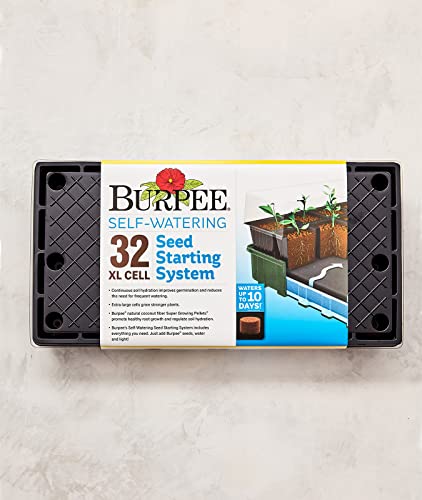
Burpee 32 XL Cell Self-Watering Growing System
Tomatoes, peppers and eggplant are started indoors and set out after frost (Minnesota, NC State).
Check price on Amazon
VIVOSUN 10 Gallon Grow Bags, 5-Pack
NC State lists tomatoes, peppers, eggplants and potatoes among vegetables that grow well in deep enough containers.
Check price on Amazon
Sources we used
We read all 16 pages in October 2026. Each figure above stays inside the region and crops its page names, and where pages differ, as on rotation length and seed-starting weeks, the tables show each one.
- "NC State Extension: Extension Gardener Handbook, Vegetable Gardening"
- "University of Minnesota Extension: Early blight in tomato and potato"
- "University of Minnesota Extension: Late blight of tomato and potato"
- "University of Maryland Extension: Verticillium Wilt of Vegetables"
- "University of Minnesota Extension: Colorado potato beetle"
- "University of Maryland Extension: Colorado Potato Beetle on Vegetables"
- "Illinois Extension: Colorado Potato Beetle"
- "University of Minnesota Extension: Flea beetles"
- "University of Minnesota Extension: Tomato hornworms in home gardens"
- "University of Minnesota Extension: Growing tomatoes in home gardens"
- "University of Minnesota Extension: Growing peppers in home gardens"
- "University of Minnesota Extension: Growing eggplant in home gardens"
- "University of Maryland Extension: Growing Eggplant in a Home Garden"
- "University of Minnesota Extension: Growing potatoes in home gardens"
- "University of Maryland Extension: Growing Potatoes in a Home Garden"
- "University of Minnesota Extension: Growing tomatillos and ground cherries"
Related guides
- How to grow tomatoes
- How to grow tomatoes in pots
- How to grow peppers
- Companion planting chart, including black walnut and the nightshades
- How to grow eggplant, from seed to harvest
Frequently asked questions
What vegetables are in the nightshade family?
Tomatoes, peppers (bell and chile), eggplant, potatoes and tomatillos, as NC State lists the family; ground cherries are close relatives of tomatillos, and tobacco belongs to the family too. Weeds such as black nightshade, hairy nightshade, horsenettle and jimsonweed share some of their diseases and pests.
How long should I wait to plant tomatoes where potatoes grew?
Minnesota Extension says tomatoes belong in a bed that has had no tomato, potato, pepper or eggplant for the past 3 to 4 years, because late blight and early blight both infect tomatoes and potatoes. Its early blight page sets a two-year floor; NC State's general rule lets any one family back into a spot at most once in three years.
Can I plant peppers where tomatoes grew last year?
Not if you want the rotation to help. Peppers and tomatoes share early blight and verticillium wilt in the sources we read, so a pepper bed after tomatoes is the same family in the same soil. Move the whole family to a bed none of them used for 3 or 4 years (Minnesota).
Do potatoes go in at the same time as tomatoes?
No. Potatoes are a cool-season crop that tolerates light frost; Maryland plants seed pieces between March 15 and May 1, by location, once the soil is at least 45 F. Tomatoes, peppers, eggplant and tomatillos wait until frost danger has passed, and peppers and eggplant until nights stay above 50 F (Minnesota).
Can tomatoes and potatoes cross-pollinate?
NC State says the family pollinates itself, so a cross is unlikely. Maryland adds that seed from the small fruits a potato plant sometimes sets does not come true to the variety; it plants seed pieces or small whole seed potatoes instead.
What pests attack all the nightshades?
The Colorado potato beetle feeds on potatoes, eggplant, tomatoes and peppers (Illinois, Maryland), plus tomatillos (Minnesota); the tomato hornworm on tomato, potato, eggplant and pepper (Minnesota); and flea beetles on eggplant, peppers, tomatoes and potatoes among other crops (Minnesota).