
Cantaloupe Plant: How to Grow Cantaloupe and Other Melons
Start melons indoors about a month before planting out, or sow 1 to 2 weeks after the last frost once the soil passes 70 F. Cantaloupe slips from the vine when ripe; Canary turns deep yellow; Charentais and honeydew are cut when the nearby leaf pales.
Sources: University of Illinois Extension, University of Minnesota Extension, University of Maryland Extension, Clemson and 2 more. See the sources we used. How we source our guides

On this page
To grow a cantaloupe plant or any other melon, give it warm soil, full sun and room to run: start seed indoors about a month before planting out, or sow outdoors 1 to 2 weeks after the last frost once the soil passes 70 F, as Johnny's Selected Seeds advises. Each type tells you it is ripe in its own way. A cantaloupe slips off the vine with a light tug, a Canary melon turns deep yellow and gives slightly at the blossom end, and a Charentais or honeydew must be cut when the leaf beside it pales. Cut back on water in the last week so the fruit stays sweet.
| Sun | Hot, sunny spot (Minnesota) |
|---|---|
| Sowing depth | 1/2 to 1 inch (Minnesota); 1 inch (Illinois) |
| Spacing | 18 to 24 inches, rows 5 to 8 feet (Illinois, Minnesota, Clemson) |
| Soil temperature | 65 F in the top 2 inches (Minnesota); above 70 F (Johnny's) |
| Water | 1 to 2 inches a week (Minnesota) |
| Days to maturity | 80 to 100 from transplanting (Maryland); 65 to 80 day varieties for the north (Minnesota) |
| Frost tolerance | None: very tender, plant after the last frost (Maryland, Clemson) |
When to plant melons
Melons are among the most frost-tender crops in the garden. Maryland Extension calls them very tender warm-season annuals, and Clemson says to plant only after the last chance of frost. Where you garden decides how much season you have to work with, so the table pins the calendar to four airport weather stations and the 32 F freeze dates NOAA computed from 1991 to 2020 records: in each case a frost is as likely before the date as after it. From those, it applies Johnny's timing: set out or sow 1 to 2 weeks after the spring frost, start seed indoors about a month before that, and allow 90 days before the fall frost.
| Weather station | Average first fall freeze | Average last spring freeze | Start melon seed indoors | Sow or set out, if soil is 70 F | Latest sowing, 90-day melon |
|---|---|---|---|---|---|
| Minneapolis-St. Paul, MN | Oct 18 | Apr 23 | Apr 2 to Apr 9 | Apr 30 to May 7 | Jul 20 |
| Baltimore (BWI), MD | Oct 31 | Apr 10 | Mar 20 to Mar 27 | Apr 17 to Apr 24 | Aug 2 |
| Raleigh-Durham, NC | Nov 4 | Mar 31 | Mar 10 to Mar 17 | Apr 7 to Apr 14 | Aug 6 |
| Dallas-Fort Worth, TX | Nov 24 | Mar 8 | Feb 15 to Feb 22 | Mar 15 to Mar 22 | Aug 26 |
Freeze columns: NOAA 1991 to 2020 normals, 32 F, 50 percent probability. Set-out = 1 to 2 weeks after the spring date; indoor start = about one month earlier; latest sowing = fall date minus 90 days.
Treat the set-out column as the earliest date, not the planting day. The soil has the final say: Minnesota Extension says most soils in the southern half of that state are not warm enough for melons until after May 20, and the north may wait until mid-June, weeks after the airport's frost date. The sources also disagree on the margin. Minnesota's quick facts sow seed a week to 10 days ahead of the average last frost, provided the soil is already warm, while Clemson and Maryland wait until frost danger is past. Hardiness zones do not give frost dates, so check the normals for a station near you.
In short-season areas, choose fast varieties. Minnesota says only melons under 90 days to maturity can ripen fruit in the north, and suggests 65 to 80 days to get more fruit ripening in warm weather.
Which melon to grow, and how to start it
Two questions settle most of the plan: how long your summer is, and how much room you have. The flow below walks through them.
Melon types: muskmelon, honeydew, Canary and Charentais
Most garden melons are one species, Cucumis melo, split into groups that ripen differently. Watermelon is a separate species with its own guide, how to grow watermelon, though both belong to the cucurbits, the cucumber family.
- Muskmelon, sold as cantaloupe. Maryland Extension notes that most American "cantaloupes" are muskmelons of the Reticulatus Group: netted, and usually slipping from the stem when ripe. Clemson adds that "cantaloupe" has become the American name for any netted, musk-scented melon.
- Charentais, the true cantaloupe. Maryland places Charentais in the Cantalupensis Group: usually smaller than a muskmelon, without netting, and not slipping from the stem. Johnny's describes it as a small French melon with thin skin and soft, very aromatic flesh, which is why it rarely appears in big stores.
- Honeydew, Canary and Crenshaw. Johnny's groups these smooth-skinned melons as inodorus types, milder in aroma than netted melons, and often later to mature. A Canary melon is oval to oblong, bright yellow and waxy when ripe, with sweet, cream-colored flesh. Minnesota notes that honeydew is more sensitive to cold than cantaloupe.
Starting melons indoors vs direct sowing
Both work. Transplants buy time: Clemson says transplants can bring the harvest up to two weeks ahead of direct-sown melons, Maryland says as much as four weeks, and Minnesota says transplanting can stretch the season by two to four weeks. Johnny's prefers indoor starts outside the warmest areas because seedlings escape cutworms, birds and damping off.
| Source | Seed depth | Soil to sow | Indoor start | Spacing | Days |
|---|---|---|---|---|---|
| U. of Illinois | 1 in | After frost, once warmed and dried | 3 to 4 weeks ahead of planting out | 18 to 24 in; rows at least 5 ft | Not given |
| U. of Minnesota | 1/2 to 1 in | 65 F in the top 2 in; ideal germination 70 to 90 F | 2 to 4 weeks before last frost, 4 in pots, heat mat | Groups 18 to 24 in; rows 5 to 6 ft | 65 to 80 suggested; under 90 in the north |
| U. of Maryland | Not given | After frost, soil warm | 3 weeks before transplanting | 24 in; rows 60 to 72 in | 80 to 100 from transplanting |
| Clemson HGIC | About 1/2 to 3/4 in | At least 60 to 65 F | Not given | 18 to 24 in; rows 6 to 8 ft | About 30 to 35 from pollination to harvest |
| Johnny's Selected Seeds | 1/2 in sown outdoors; about 1/4 in in cells | Above 70 F, 1 to 2 weeks after last frost | About a month before transplanting; 80 to 90 F to germinate, then 75 F | 18 in; rows 6 ft | From transplanting; add about 10 if direct sown |
Indoors: melon roots resent disturbance, so every source starts them in individual containers. Illinois sows single pots 3 to 4 weeks ahead of setting out; Minnesota uses 4-inch peat pots that go straight into the ground and calls bottom heat essential; Johnny's uses large cells on a heat mat, 80 to 90 F, until germination, then 75 F, with the mix kept a little drier than usual against damping off. Do not let them get leggy. Illinois warns that oversized transplants stunt, and Johnny's sows no sooner than a month before planting out. Transplant at two or three true leaves (Minnesota), after about a week of hardening off (Johnny's).
Direct sowing: 2 or 3 seeds per spot, thinned to the strongest one (Minnesota, Johnny's).
Warm soil and black plastic for melons
Cold soil is the main reason melons fail. Minnesota says planting into cool soil invites root diseases that can stunt or kill the plants, and plants that escape disease still grow slowly. Measure the top two inches with a thermometer and wait for warm nights as well as warm days.
- Black plastic mulch warms the bed faster and holds moisture; Illinois says all melons respond to it, especially early in the season. Clemson pairs it with drip line underneath, and Minnesota says to cut the planting holes at planting time, not before.
- Raised beds six to eight inches high warm faster and drain well (Minnesota).
- Row covers and low tunnels let you plant two or three weeks earlier, by Minnesota's count, and keep out early insects. Johnny's notes that growers cover new transplants right away against cucumber beetles, which can also spread bacterial wilt.
- Later in summer, Clemson suggests spray-painting the plastic white for a second crop, since black plastic runs too hot.
Watering melons
Melons drink a lot while the vines and fruit grow. Minnesota gives one to two inches a week, applied deeply and to the soil, not the leaves. Clemson waters until the soil is wet 6 inches down or more. Soil pH matters too: Minnesota aims for 6.0 to 6.5 and warns that below 6.0 plants yellow and set few fruit.
Trellising small melons
Vines need space: Clemson sets rows 6 to 8 feet apart. In a small garden, train a small-fruited variety up a fence or trellis instead (Illinois, Minnesota, Maryland). The catch is weight. Once the fruit starts to swell, cradle each one in a sling: Illinois uses mesh bags, Minnesota strips of wide fabric tied to the trellis, and Maryland asks for a quick-drying material so the fruit does not rot. On the ground, Maryland sets developing fruit on cardboard or straw for the same reason.
Melon pollination
Bees do the work. Cantaloupe and honeydew vines carry male flowers on thin stems and perfect flowers, with both male and female parts, that sit close to the vine on a short, thick ovary (Minnesota). Each flower is open for pollination for just one day; a poorly pollinated flower drops or grows into a lopsided melon.
The first flowers are male and fall off on their own (Illinois). If fruit set stays sparse, Illinois lists three culprits: too few bees, cool wet weather that keeps bees in, and plants so crowded that dense leaves hide the flowers. Maryland says to avoid pesticides during bloom.
Row covers must come off in time. The sources time it differently: Illinois says covers can stay until the plants start to flower, Johnny's says when female flowers appear, and Minnesota says once frost danger has passed, partly to avoid overheating.
Melon pests and diseases: cucumber beetles and powdery mildew
Johnny's calls cucumber beetles the primary melon pest in the Northeast: they can kill seedlings, chew the leaves and young fruit, and spread bacterial wilt. Minnesota says striped cucumber beetles eat leaves, flowers, stems and fruit, and spotted ones migrate into the state every year. Clemson finds insect problems are usually critical only while the plants are young, with cucumber beetles and aphids the most noticeable.
- Cover early. Johnny's says most growers put floating row cover on at transplanting to keep the beetles off.
- Squash bugs and vine borers hit melons too, not only squash and pumpkins: Minnesota says the borers tunnel into the crown and vines until the whole plant wilts.
- Powdery mildew shows as powdery white spots on leaves and vines (Minnesota). Illinois suggests varieties resistant to it, to fusarium wilt and to Alternaria blight.
- Sudden wilting may be bacterial wilt, Minnesota says, the disease the beetles carry.
- Rotate. Clemson calls rotation and resistant varieties two of the cheapest, most effective disease controls, and keeps melons out of any bed that grew melons, watermelon, cucumbers, squash or pumpkin within the last three years. Drip irrigation keeps the leaves dry, which cuts disease.
What to plant with melons
Minnesota Extension says blue Hubbard squash draws cucumber beetles off the other cucurbits nearby, and Maryland finds nasturtium and marigolds reduce damage from cucumber beetles and squash bugs. Minnesota also mixes root depths, counting melons with tomatoes among the deep-rooted crops. More pairs: our companion planting chart.
When each melon type is ripe: slip, color and aroma
Johnny's sorts melons by how the ripe fruit leaves the vine: full slip (a light tug), forced slip (a firm thumb push on the stem) and no slip (cut from the vine). Clemson counts about 30 to 35 days from pollination to harvest for most cantaloupes, and longer for most honeydews.
- Cantaloupe and muskmelon (full slip): the rind between the netting turns from green to tan or yellow, and the stem separates easily, leaving a crack at the attachment point (Illinois). Sugar stops building the moment the stem separates, and picked melons soften without getting sweeter, Illinois says. Minnesota's harvest guide adds that cantaloupe can be picked a little early and finished on the kitchen counter.
- Canary (forced slip): pick at a deep, even yellow, when a thumb pressed on the blossom end meets slight give (Johnny's). Cutting slightly earlier stretches shelf life.
- Charentais (no slip): cut when the small leaf next to the fruit goes pale and the tendril nearest the fruit browns; the skin warms to yellowish, and orange means overripe (Johnny's).
- Honeydew (no slip): cut when the leaf opposite the fruit turns yellow and the skin tone warms (Johnny's). Illinois cuts honeydew and Crenshaw once fully yellow and lets them mellow a few days at room temperature. Minnesota notes most honeydews do not keep ripening off the vine, so look for a sweet smell and a change in rind color before cutting.
Ease off the water. Clemson says heavy watering in the final week of fruit development lowers sweetness; Johnny's waters only until the fruit reaches full size, not full ripeness, and Maryland stops watering as fruit begins to ripen unless a long dry spell hits.
Storage: Johnny's keeps netted melons at 36 to 41 F and smooth-skinned ones at 45 to 50 F. Minnesota stores cantaloupe at 40 F and honeydew at 45 to 50 F.
Melon seeds and supplies
Choose melon seed by days to maturity first, especially in the north, where Minnesota says the first ripe melon might be the last one. Then pick by type: a netted cantaloupe for an easy slip test, a Canary for a long-keeping yellow melon, or a Charentais or honeydew if you are ready to judge ripeness by the leaf and tendril.
For the indoor start you need individual pots or large cells and a heat mat; for small gardens, a trellis and something to sling the fruit.
What you'll need for melons
As an Amazon Associate we earn from qualifying purchases.

Gardeners Basics Yellow Canary Melon Seeds
A forced-slip yellow melon that keeps.
Check price on Amazon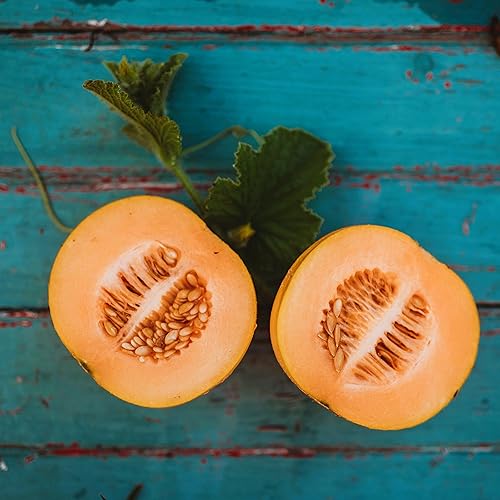
Thresh Seed Co. Minnesota Midget Melon Seeds
A full-slip melon with an easy ripeness test.
Check price on Amazon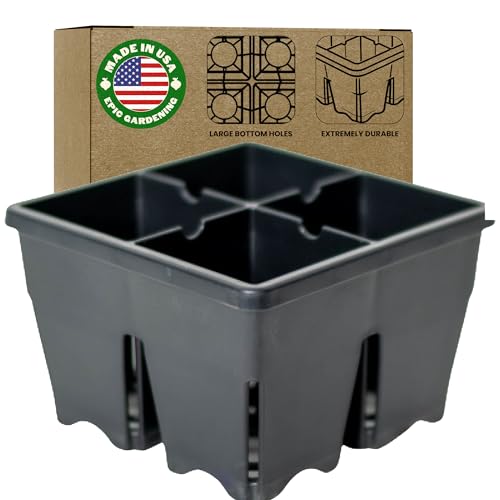
Epic Gardening 4-Cell Seed Starting Tray, 4 inch
Large cells for indoor starts.
Check price on Amazon
VIVOSUN Seedling Heat Mat and Digital Thermostat, 10 x 20.75 in
Bottom heat for the indoor start; the sources hold melon seed at 70 to 90 F until it sprouts.
Check price on Amazon
Tenax Hortonova SM Trellis Net
For small-fruited melons in tight beds.
Check price on Amazon
Sources we used
All growing figures here trace to pages read in October 2026. Conflicting figures are printed side by side.
- "University of Illinois Extension: Muskmelon"
- "University of Minnesota Extension: Growing melons in the home garden" and "Harvesting and storing melons, squash and pumpkins"
- "University of Maryland Extension: Growing Melons in a Home Garden"
- "Clemson HGIC 1304: Cantaloupe and Honeydew Melons"
- Johnny's Selected Seeds: "Melon Key Growing Information" and "Types of Melons and Melon Growing Basics"
- "NOAA NCEI: U.S. Climate Normals, 1991-2020": the melon stations' frost dates
Related guides
- How to grow blueberry bushes, a fruit for acid soil that bears for years
- How to grow squash and pumpkins, the melon's cucurbit cousins
- How to grow tomatoes, started indoors on a similar schedule
- How to grow peppers, another heat lover
- How to grow okra, for the same hot summer beds
- How to grow cucumbers, a cucurbit cousin that also wants warm soil
- How to grow zucchini, another warm-weather cucurbit
- How to grow beans, for a warm bed after the frost
- Cucurbits: the squash, cucumber and melon family, for the family rotation
- How to grow watermelon, with seedless types and their pollinizer
Frequently asked questions
When should I plant cantaloupe?
Plant cantaloupe after the last spring frost, once the top two inches of soil reach 65 F and nights stay warm, as Minnesota Extension advises. Johnny's Selected Seeds sows 1 to 2 weeks after the frost date, in soil above 70 F, and starts seed indoors about a month before setting plants out.
How do you plant cantaloupe seeds?
Sow cantaloupe seeds 1/2 to 1 inch deep, 2 or 3 to a spot, and keep the strongest seedling, as Minnesota Extension does. Space the spots 18 to 24 inches apart, with rows 5 to 6 feet apart. Indoors, Johnny's sows 1/4 inch deep in large cells with bottom heat of 80 to 90 F until they sprout.
How long does it take cantaloupe to grow?
Most melons take 80 to 100 days from transplanting, by Maryland Extension's figures, and Johnny's adds about 10 days for seed sown in the garden. Minnesota suggests 65 to 80 day varieties for short northern summers. Once a flower is pollinated, Clemson counts about 30 to 35 days to a ripe cantaloupe.
How do you know when a cantaloupe is ripe?
A ripe cantaloupe slips off the vine with a light tug. Illinois Extension says the rind between the netting turns from green to tan or yellow and a crack forms where the stem meets the fruit. Pick it then: sugar builds only until the stem separates, and a picked melon softens without getting sweeter.
Why are my melons not sweet?
Early picking, cool, wet or cloudy weather, low potassium, a poorly adapted variety and leaves lost to disease can all leave melons bland, Illinois Extension says. Clemson adds that too much water in the last week of fruit development lowers sweetness. Johnny's also limits water that final week, for its own reason: "overwatering can cause bland fruit."
Can you grow melons on a trellis?
Yes, with small-fruited varieties. Illinois, Minnesota and Maryland Extension all train melons up a fence or trellis to save space. Once each fruit starts to swell, cradle it in a sling: Illinois uses mesh bags, Minnesota wide fabric strips tied to the trellis, and Maryland a quick-drying material so the fruit does not rot.
Can you plant watermelon and cantaloupe together?
Yes. Illinois Extension says muskmelons, the netted melons sold as cantaloupe, do not cross-pollinate with watermelons, cucumbers, squash or pumpkins. Different muskmelon varieties do cross, but it shows only if you save and plant the seeds the next year, and crossing never makes melons bitter. Give watermelon more room: Maryland spaces it 3 to 4 feet apart.