
How to Grow Radishes: Radish Plant Timing for Spring and Winter Types
Sow spring radishes 1/4 to 1/2 inch down from early spring and pull them in 3 to 5 weeks at about 1 inch; sow daikon and other winter radishes in midsummer to late summer, space them 4 to 6 inches, and store them cold and humid.
Sources: Illinois Extension, University of Maryland Extension, Minnesota Extension, Johnny's Selected Seeds and 2 more. See the sources we used. How we source our guides

On this page
To grow radishes, sow spring types at 1/4 to 1/2 inch once the ground can be dug, thin them to 1/2 to 2 inches apart, and pull them 3 to 5 weeks later; sow winter radishes such as daikon from midsummer to late summer, 4 to 6 inches apart. Spring radishes are the small, fast ones, ready at about 1 inch across. Winter types such as watermelon and black Spanish sit in the ground longer, around the time you sow fall turnips, and Fedco Seeds lists 55 to 65 days for two of them. Water so the soil stays evenly moist, and harvest on time; a slow, dry or late radish turns hot, pithy or woody.
| Sun | At least 6 hours, ideally 8 to 10 (Maryland) |
|---|---|
| Sowing depth | 1/4 to 1/2 inch; large types up to 1 inch (Minnesota) |
| Spacing | Spring types thinned to 1/2 to 2 inches (Illinois, Minnesota); daikon 4 to 6 inches (Minnesota, Johnny's) |
| Germination soil temperature | 40 F minimum; 55 to 85 F optimal (Fedco) |
| Soil pH | 6 to 7 (Minnesota); 5.8 to 6.8 (Johnny's) |
| Water | 1 inch a week, more often on sandy soil (Minnesota) |
| Days to maturity | Spring types 25 to 35 days (Maryland); winter types 55 to 65 days (Fedco, two varieties) |
| Frost tolerance | Takes heavy frosts in spring and fall (Maryland) |
When to plant radishes
Spring radishes like cool weather. Illinois Extension's window runs from the first day the ground is workable to mid-spring, and Maryland Extension notes that radishes can take heavy frosts in spring and fall. Fedco Seeds puts the lowest soil temperature for germination at 40 F, with 55 to 85 F as the optimal range, so the earliest sowings come up slowly and later ones fast. Stop sowing the quick round types once hot weather is close: Minnesota Extension says radishes can bolt to seed, turn very hot or go woody in summer heat.
Winter radishes run on a fall schedule instead. Illinois pairs them with fall turnips, which usually means midsummer to late summer, and that on Illinois Extension's turnip count-back is 3 to 4 weeks after a date roughly 100 days ahead of your first fall frost. The table works that out for four NOAA weather stations from each station's 1991-2020 normal freeze dates. Fedco Seeds describes the same idea from the harvest end: an early August sowing for radishes ready in late September and October.
| Station (NOAA 1991-2020 normals) | Last spring frost | First fall frost | Sow winter radishes |
|---|---|---|---|
| Minneapolis-St. Paul airport, MN | Apr 23 | Oct 18 | Jul 31 to Aug 7 |
| Chicago O'Hare airport, IL | Apr 16 | Oct 28 | Aug 10 to Aug 17 |
| Washington Reagan airport, VA | Mar 24 | Nov 18 | Aug 31 to Sep 7 |
| Dallas-Fort Worth airport, TX | Mar 8 | Nov 24 | Sep 6 to Sep 13 |
The frost dates are 50 percent probability normals for 32 F (NOAA, 1991-2020), so the first fall freeze beats the listed date in about half of years. The sowing column is our arithmetic on the Illinois rule.
Spring-type radishes can also go in again in late summer for a fall crop. Minnesota Extension sows its fall crop between August 1 and September 1, and Illinois says late-summer sowings of spring types finish in the cool, damp weather of fall.
Spring radishes vs winter radishes
The familiar small red, pink, white or purple radishes are spring or summer types. They size up in about 25 to 35 days by Maryland Extension's count, or 3 to 5 weeks by Minnesota's, and they stay at their peak only briefly. Johnny's Selected Seeds starts harvest at about 3 to 4 weeks, when the roots are about as big as a large marble.
Winter radishes are a different crop in practice. Illinois Extension says they develop more slowly, grow much larger, stay crisp for more time, usually taste sharper and keep longer in the ground or in storage. The main groups:
- Daikon. The long white Asian radish, usually milder than garden radishes, per Minnesota Extension. Illinois says a fully mature daikon can reach about 18 inches long and weigh 5 or 6 pounds, though some varieties are short and round.
- Watermelon radish. Green-shouldered white skin over bright rose flesh. Fedco Seeds lists its Watermelon radish at 55 days. Johnny's says its Red Meat watermelon type is for summer to fall sowing only and may bolt from a spring sowing.
- Black Spanish. Black skin and sharply pungent white flesh; Fedco lists Round Black Spanish at 65 days and calls the roots 4 inches. Illinois advises using black radishes sparingly because of their bite.
| Illinois Extension | Maryland Extension | U. of Minnesota Extension | Johnny's Selected Seeds | Fedco Seeds | |
|---|---|---|---|---|---|
| Seed depth | 1/4 to 1/2 in | 1/4 to 1/2 in | 1/4 to 1/2 in; large types up to 1 in | 1/2 in | Not stated |
| Spring type spacing | Thin to 1/2 to 1 in | Sow 1 to 2 in; thin to 2 to 4 in by type | Sow 1 in; thin to about 2 in | Sow 3/4 to 1 in | Sow 1 to 2 in; thin to at least 2 in |
| Winter type spacing | 2 to 4 in or more | Not separate | Daikon 4 to 6 in | Daikon 4 to 6 in; rows 18 in | Thin to 6 in |
| Time to harvest | Spring types fast; winter types much longer | 25 to 35 days | Usually 3 to 5 weeks | From about 3 to 4 weeks | Watermelon 55 days; Round Black Spanish 65 days |
| Germination soil temperature | Not stated | Not stated | Not stated | Not stated | 40 F minimum; 55 to 85 F optimal |
| Storage | Fridge 5 to 7 days; winter types several months cold and moist | 32 to 40 F, 95% RH, 1 to 2 weeks | A week or two; daikon up to two months | Topped 3 to 4 weeks; daikon 6 to 10 weeks at 32 F, 95% RH | Root cellar in damp sand or leaves |
The sources agree on depth and disagree mainly on spacing for spring types, from 1/2 inch in Illinois to 2 to 4 inches in Maryland. Closer spacing gives a quick bunch of small roots; wider spacing gives bigger, more even ones. The sources that cover winter types all space them much farther apart.
Sowing and thinning
Loosen the bed first. Minnesota Extension says to work the soil at least six inches deep for small radishes and a foot or deeper for daikon and other long types, and suggests raised beds for daikon so the soil stays loose and harvest is easier. Any well-drained soil with a pH of 6 to 7 suits radishes there; Johnny's gives 5.8 to 6.8. Go easy on nitrogen: Maryland Extension says too much pushes leaves at the expense of roots.
Small radishes go in at 1/4 to 1/2 inch. Minnesota sows big varieties as deep as one inch and expects seedlings within ten days. In a row, space seed about one inch apart (Minnesota) or 1 to 2 inches apart (Maryland), or scatter it across a bed. Cover lightly. Hard rain can crust the surface and hold seedlings back; Minnesota suggests a light sprinkle to soften the crust.
Then thin. Illinois thins spring radishes to 1/2 to 1 inch apart, or 2 to 3 inches in all directions on a broadcast bed; Minnesota thins to about two inches as soon as the radishes reach a small, edible size. Winter radishes need far more space: 2 to 4 inches or more in Illinois, 4 to 6 inches for daikon in Minnesota and at Johnny's, and 6 inches at Fedco. Skipping this step is the most common reason for all leaves and no roots, which both Illinois and Minnesota list as a result of crowding.
For a steady supply rather than one big harvest, sow a short row every 5 days (Maryland) or every 10 to 14 days (Illinois). Radishes also make good row markers: Maryland suggests sprinkling a few seeds in the row when you sow slow crops such as carrots, beets or lettuce, then pulling the radishes before the main crop needs the room.
Watering radishes
Give them sun and steady water. Maryland wants 6 hours of direct light at least, ideally 8 to 10. Minnesota calls for an inch of rain a week, or a thorough soaking at least once a week if rain falls short, and more often on sandy soil.
What to plant with radishes
Minnesota and Maryland Extension both pair radishes with carrots, and Maryland pulls them before they crowd the row. Washington State matches taproots like radish with shallow roots such as onions. Utah State uses radishes as a trap crop that lures flea beetles and root maggots from the cabbage family. More pairs: what to plant with radishes.
Why radishes go pithy, hot or bolt
Almost every radish problem comes back to time and stress. Illinois Extension explains that heat in a radish comes from how long it has grown, not how big it is: a radish that grew slowly or sat too long gets hot. Slow growth also makes roots woody. Johnny's Selected Seeds says radishes do poorly in hot, dry weather and that a radish whose growth is checked can turn tough, pithy and too spicy.
- Pithy or spongy: left in the ground too long. Illinois says radishes stay in edible condition only a short time; a large radish that gives when you squeeze it is likely fibrous.
- Cracked or split: too old, or a flush of water after a dry spell (Illinois). Minnesota also links splitting to uneven moisture.
- All tops, no root: sown too thickly and not thinned, too hot for a spring type, or heavy shade (Illinois).
- Bolting: a flower stalk in summer heat (Minnesota), or a fall type sown in spring. Johnny's says to check each variety's planting season to reduce bolting. Fedco suggests pinching off the tops of winter radishes that start to bolt.
When to harvest radishes
Check spring radishes often. Illinois says to start pulling as soon as roots reach usable size, usually under 1 inch across, and to finish the planting quickly, before hot weather, a spongy texture or a flower stalk shows up. Maryland puts harvest at about one inch in diameter, before the roots crack or get too hot. The tops of the roots push up out of the soil as they grow, so you can see the size.
Winter radishes are harvested larger and are far more forgiving. Illinois says that once mature they hold their quality in the garden for a fairly long time, especially in cool fall weather, and keep growing. Johnny's harvests its Red Meat watermelon radish at 2 to 4 inches across. Dig daikon rather than pull it: Minnesota says to spade or fork under the row so long roots do not snap.
Storing winter radishes
Spring radishes are a short-term crop. Cut off the tops, since the leaves draw moisture out of the root in storage, and refrigerate the roots in a plastic bag: Illinois gives 5 to 7 days, Minnesota a week or two, and Maryland 1 to 2 weeks (32 to 40 F, 95 percent relative humidity). Johnny's says topped radishes keep 3 to 4 weeks in breathable packaging at 32 F with 95 percent relative humidity.
Winter radishes keep far longer when it is cold and humid. Illinois says to pull them before the ground freezes and keep them for up to several months somewhere cold and moist. Johnny's stores daikon types at 32 F and 95 percent relative humidity for 6 to 10 weeks after cutting the tops 2 inches above the crown. Minnesota gives daikon up to two months for fresh use. Fedco suggests a root cellar, with roots buried in barely damp sand or tucked between layers of wet leaves, the way you might keep carrots and beets. Johnny's says its Red Meat radish, kept well, lasts until early spring.
A few type-specific notes from Illinois: remove both the greens and the thin roots before storing black radishes, and remove the greens from Chinese radishes but leave the thin root on until you cook them.
Radish greens, pods and sprouts
Illinois Extension says all radish greens are edible, and the young thinnings of both spring and winter types can be eaten whole, tops and roots together. Store greens apart from the roots and use them within 2 to 3 days. Maryland Extension adds that the seedpods are edible too, especially on the Rat-Tailed variety. Radish seed is also a common sprouting seed; see our guide to radish sprouts and other sprouts at home for the jar method and food safety.
Flea beetles and root maggots
Minnesota Extension names the usual pests. Flea beetles chew tiny holes in the leaves and are worst in early spring when the plants are young. Cabbage maggots tunnel into the roots, and wireworms can bore into them as well. Illinois says root maggots are a bigger problem north of 40 degrees latitude.
Floating row cover laid down on sowing day keeps off both flea beetles and the maggots, according to Johnny's Selected Seeds. Fedco Seeds also recommends row cover against flea beetles, with wire hoops under it for winter radishes. Because radishes are harvested long before they flower, the cover can stay on for the whole crop.
Radish seeds and supplies
A spring type, a daikon and a watermelon radish give you radishes from early spring to winter. For spring, any quick round red variety works; Illinois Extension names French Breakfast and Icicle as the ones that handle heat better if you want to keep sowing into late spring. For fall and winter, choose a daikon and a watermelon type, and add Round Black Spanish if you like a sharp radish.
The one piece of gear the sources keep naming is floating row cover, with hoops for the taller winter types.
What you'll need for radishes
As an Amazon Associate we earn from qualifying purchases.

Survival Garden Seeds French Breakfast Radish Seeds
Illinois names French Breakfast and Icicle as the spring types that handle heat better.
Check price on Amazon
Sow Right Seeds Minowase Daikon Radish Seed
Winter storage radish; UMN: shorter daikon for stony or heavy soil.
Check price on Amazon
Seed Needs Watermelon Radish Seeds
Summer-to-fall sowing winter radish.
Check price on Amazon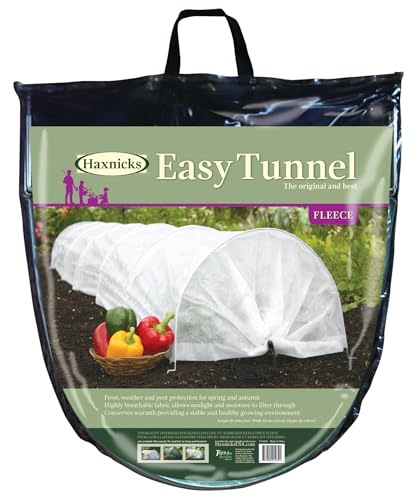
Haxnicks Easy Fleece Tunnel
Row cover laid on sowing day keeps flea beetles and root maggots off; hoops hold it up over the taller winter radishes.
Check price on Amazon
Sources we used
Radish depths, spacings and day counts here come from five pages, listed below and read on October 29, 2026. If they give different numbers, the guide prints each one.
- "Illinois Extension, Home Vegetable Gardening: Radish" and its "Turnip" page (for the fall count-back)
- "University of Maryland Extension: Growing Radishes in a Home Garden"
- "Minnesota Extension: Growing radishes in home gardens"
- "Johnny's Selected Seeds: Radishes, Key Growing Information", its "Daikon/Korean and Specialty Radishes" sheet and its "Red Meat" radish page
- "Fedco Seeds: Winter radishes" and its "Round Black Spanish" page
- "NOAA's U.S. Climate Normals, 1991-2020": spring and fall freeze dates (50 percent probability) at the table's four stations
Related guides
- Lettuce from seed, a slow crop to mark with a few radish seeds in the same row
- How to grow turnips and rutabagas, sown on the same fall schedule as winter radishes
- How to grow carrots, the slow crop radishes often mark
- How to grow chicory, another crop for fall and winter
- How to grow brassicas, the radish's own plant family
- How to grow onions, another crop for the early spring bed
- How to grow kale, another green for spring and fall sowing
- How to grow cauliflower, a slower cool weather crop to plan beds around
Frequently asked questions
When should I plant radishes?
Plant spring radishes once the soil is workable in early spring, through mid-spring, and sow winter radishes such as daikon in midsummer to late summer, with the fall turnips. That is Illinois Extension's calendar. Minnesota Extension also sows radishes again from August 1 to September 1 for a fall crop, and Fedco Seeds sows winter types in early August.
How do you plant radish seeds?
Sow radish seed at 1/4 to 1/2 inch, about 1 inch apart, then thin spring types to about 2 inches, as Minnesota Extension advises; give daikon 4 to 6 inches. Thin early. Illinois Extension blames radishes that are all leaves and no root on thick sowing without thinning, on heat, or on heavy shade.
How long do radishes take to grow?
Spring radishes are ready about 3 to 5 weeks after planting, Minnesota Extension says. Maryland Extension counts 25 to 35 days, and Johnny's Selected Seeds starts pulling at about 3 to 4 weeks. Winter radishes take much longer: Fedco Seeds lists 55 days for its Watermelon radish and 65 days for Round Black Spanish.
When should I harvest radishes?
Pull spring radishes at about 1 inch across, the size Maryland Extension gives, before they crack or turn pithy or hot. Illinois Extension starts as soon as roots reach usable size and finishes the planting quickly. Winter radishes are harvested bigger, and Illinois says they keep their quality in the garden a long while in cool fall weather.
Why are my radishes so hot?
A radish turns hot from growing too long or too slowly, not from its size, Illinois Extension explains. Keep spring radishes growing fast in cool, evenly moist soil and pull them on time. Johnny's Selected Seeds adds that hot, dry weather hurts radishes and that a radish whose growth is checked can turn tough, pithy and too spicy.
How do you store daikon and other winter radishes?
Cut off the tops and keep winter radishes cold and humid. Johnny's Selected Seeds stores daikon at 32 F and 95 percent relative humidity for 6 to 10 weeks, with the tops cut 2 inches above the crown. Illinois Extension gives up to several months in moist cold storage, and Fedco Seeds suggests a root cellar with damp sand.
Can you eat radish leaves?
Yes, radish leaves are edible: Illinois Extension says all radish greens are, and the young thinnings of spring and winter types can be eaten whole, tops and roots together. Store the greens apart from the roots and use them within 2 to 3 days. Maryland Extension adds that the seedpods are edible too, especially on Rat-Tailed.
What can I plant with radishes?
Plant radishes with slower crops such as carrots, a pairing Minnesota and Maryland Extension both describe; pull the radishes before they crowd the row. Maryland also tucks radishes around broccoli's base, and Utah State uses them as a trap crop to draw flea beetles and root maggots away from the cabbage family.