
Edamame Plant Guide: How to Grow Edamame, Plus Lentils
Sow edamame after the last frost once the soil is 60 F, about an inch deep and 2 inches apart, and pick the pods plump and still green, 80 to 100 days later. Use the soybean inoculant where soybeans have not grown. Lentils are a cool-season crop sown in early spring.
Sources: Iowa State University Extension, Utah State University Extension, Penn State Extension, Johnny's Selected Seeds and 3 more. See the sources we used. How we source our guides

On this page
To grow an edamame plant, wait for frost to pass and the soil to hit 60 F, sow seed about an inch deep and 2 inches apart, then pick the pods while they are plump but still bright green. Edamame is a soybean grown for its green beans, and Iowa State University Extension puts the harvest at 80 to 100 days. Inoculating the seed with the soybean strain of Rhizobium is optional in most gardens and worth doing where soybeans have not grown before. Lentils, a cool-season legume, get their own sections further down: when to sow them and how to grow them.
| Sun | Full sun (Utah State, for all beans) |
|---|---|
| Sowing depth | About 1 inch (Iowa State, Johnny's); about 1.5 inches (Utah State) |
| Spacing | 2 inches apart, rows 12 to 18 inches (Utah State); rows 15 to 30 inches (Johnny's) |
| Soil temperature | Above 60 F (Utah State, beans); at least 65 F for most beans (Iowa State) |
| Water | 1 inch a week, most of all at bloom and pod fill (Iowa State, beans) |
| Days to harvest | 80 to 100 (Iowa State); 70 to 90 (Utah State) |
| Plant height | About 18 to 24 inches (Utah State); about 3 feet (Iowa State) |
| Frost | Sow only once the danger of frost has passed (Utah State) |
When to plant edamame
Edamame is a warm-season crop. Utah State University Extension says beans of all kinds need soil and air above 60 F for good germination, and that germination drops sharply in colder soil; Iowa State puts most beans at 65 F or warmer. So sowing starts after the last spring frost and waits for the soil to warm.
The other end of the season is the first fall frost. Below, four weather stations stand in for four climates. Each row starts from NOAA's 1991 to 2020 normal for the 32 F freeze (even odds of an earlier or later one), and subtracting Iowa State's 80 to 100 days gives the last sowing date that can still ripen pods.
| Station | Last spring frost (50%) | Latest sowing, 100-day edamame | Latest sowing, 80-day edamame | First fall frost (50%) |
|---|---|---|---|---|
| Minneapolis-St. Paul, MN | Apr 23 | Jul 10 | Jul 30 | Oct 18 |
| Baltimore (BWI), MD | Apr 10 | Jul 23 | Aug 12 | Oct 31 |
| Raleigh-Durham, NC | Mar 31 | Jul 27 | Aug 16 | Nov 4 |
| Dallas-Fort Worth, TX | Mar 8 | Aug 16 | Sep 5 | Nov 24 |
Spring and fall columns: 32 F freeze normals from NOAA (1991 to 2020), 50 percent probability. Sow after the spring date once the soil is 60 F. Latest sowing = first fall frost minus 100 or 80 days (Iowa State's 80 to 100 days to harvest).
For a spring sowing, the last frost date is only the start: give the soil time to reach 60 F and measure it rather than guessing. Hardiness zones say nothing about frost dates; use the normals from a station close to home. Because the pods on one plant ripen together, Utah State suggests planting several varieties that mature at different times to spread the harvest out.
Edamame or lentils: which to sow, and when
Edamame and lentils sit at opposite ends of the bean family's calendar: one wants warm soil, the other a cool spring. Work through the questions below with your own frost dates in hand.
Edamame is a vegetable soybean
Edamame is Glycine max, the same species as the field soybean, picked green. Iowa State describes it as immature soybeans, about 3 feet tall, needing no support; Utah State puts mature plants at about 18 to 24 inches, roughly bush-bean size. The two figures differ, so leave room for the taller plant.
Unlike snap beans, edamame pods are not eaten. Iowa State groups it with lima beans: harvested at full size while still green, with the beans removed from the typically fibrous pod before eating. Utah State notes that each pod usually holds two to three beans.
Utah State's short version: anyone who grows green beans can grow edamame (our guide on how to grow beans covers those). The practical differences are the longer season and the short, all-at-once harvest.
Sowing edamame: warm soil, depth and spacing
Sow directly in the garden. On method there is no argument; on depth and row width the three sources part ways, as the table shows. For most home gardens, an inch deep and 2 inches apart in rows about 18 inches apart fits all three sources.
| Source | Seed depth | Spacing | Soil to sow | Days to harvest | Harvest cue |
|---|---|---|---|---|---|
| Iowa State (beans) | About 1 in | Rows 1.5 to 2 ft; thin to 2 to 3 in | At least 65 F for most beans | 80 to 100 (edamame) | Seeds plump and bulging in green pods |
| Utah State (2013 edamame note) | About 1.5 in | 2 in; rows 12 to 18 in | After frost; beans need above 60 F | 70 to 90 | Plump, well filled, before green turns to brown |
| Johnny's Selected Seeds | 1 in | 2 in; rows 15 to 30 in | After the last frost date | By variety | Highest fresh weight as pods start to lose bright green |
Read in October 2026. Iowa State's depth, spacing and soil figures are for beans in general; its days are for edamame.
Watering edamame
Keep the soil moist until the seedlings are up. Iowa State says beans need an inch of water a week, especially at bloom and while pods fill, and that hot, dry weather during bloom can make flowers drop without setting pods. Utah State warns that heavy clay can crust over and hold seedlings back, so watch the planting depth there.
Johnny's adds that in very rich soil soybean plants can grow so lush and tall they fall over; hilling soil up around the stems helps them stand. Edamame tolerates some dry spells, but Johnny's says to irrigate in a drought.
Edamame pests and problems
Few pests bother edamame, Utah State says. The common problem it names is iron chlorosis: yellow leaves with green veins, corrected with a chelated iron fertilizer applied between the rows.
Utah State's bean page, written for beans in general rather than edamame, says most beans grow fast and run into few problems, and that moving them to a new spot each year helps control most diseases. The insects it lists:
- Mexican bean beetle and leaf beetle. Round copper or tan beetles with black spots, much like large lady beetles; check under the leaves for clusters of yellow eggs. The damage is worst while plants are small, and Utah State says big plants in flower can take the feeding.
- Leafhoppers. Small green wedge-shaped insects that suck the leaves, which curl and dry out. Utah State calls them hard to control because they move around so much.
- Cutworms and armyworms. Caterpillars up to 2 inches long, green, reddish or black. Keep weeds down, since weeds give them cover.
Too much water is the other risk. Utah State warns that wet soil encourages root rot, and that damp weather favors bean blight, so water with care and let the soil dry between waterings.
Inoculant and nitrogen: what the sources say
Soybeans, like other legumes, can make their own nitrogen with the help of root bacteria called Rhizobia. Each group of legumes pairs with its own species. Penn State Extension's cross-inoculation table lists soybean in its own group, labelled S, with Rhizobium japonicum, separate from the pea and vetch group, C, that uses Rhizobium leguminosarum. An inoculant for peas will not serve soybeans.
- When to use it: Penn State recommends inoculating when the legume has not grown in that ground in the past three years. Iowa State says edamame seed is sometimes inoculated to help plants establish quickly. Johnny's says to use an inoculant made for soybeans.
- How to keep it alive: inoculant is live bacteria. Penn State says to check the expiration date, keep the package out of heat and sun, and store it in the refrigerator, not the freezer.
- How to tell it worked: two to four weeks after germination, Penn State digs up a few plants, washes the roots and slices some nodules. A red or pink inside means the nodule is fixing nitrogen; white or pale green means it is not.
Go easy on nitrogen fertilizer. Penn State explains that nitrogen in the soil discourages nodules from forming, and Utah State says extra nitrogen on beans pushes leaves, delays flowering and cuts pod set.
What to plant with edamame
Oregon State Extension pairs legumes such as edamame with the cabbage family, kale and turnips included. The gain is nitrogen, and it comes only after the legume roots decay in the soil. West Virginia, writing about beans in general, says onions stunt them, so do not interplant the two. More pairs: our companion planting chart.
The edamame harvest window
This is where edamame differs most from green beans. Utah State notes that a plant's pods all ripen together, so the harvest comes in one burst.
- The cue: pick when the pods are plump and well filled, with the beans bulging, before the pods turn from green toward yellow or brown (Utah State, Iowa State).
- Johnny's timing: the beans are at their heaviest right as the pods start to fade from bright green, so that is the moment to pick.
- Days: Iowa State says 80 to 100 days; Utah State's 2013 note says 70 to 90 days, by variety.
Because the whole plant ripens at once, Johnny's simply clips plants near the base when the beans are plump and strips the pods. To freeze them, Utah State blanches washed pods for 3 minutes in boiling water, cools and dries them, and packs them in freezer bags.
Left on the plant, the beans dry into ordinary soybeans. For dry beans, Johnny's pulls the plants once 90% or more of the leaves have dropped and the pods have dried.
Growing lentils in a home garden
A lentil plant is the opposite of edamame in one way that matters: it is a cool-season crop. The figures below come from the Alternative Field Crops Manual, written by University of Wisconsin and University of Minnesota agronomists in 1990 for farm fields, so treat them as field guidance and scale the method down to a bed.
- Timing: young lentil plants tolerate spring frosts, so lentils go in early. The manual seeds them in late April to early May, when small grains are planted in the upper Midwest. Later sowings give shorter plants and late pods.
- Depth: 1.5 inches, or as deep as 2.5 inches if the top layer of soil is very dry. Some lentil varieties have small seed that cannot push up through soil that is too deep or crusted.
- Soil: any texture with good internal drainage, since even short spells of waterlogged soil kill the plants. The manual names a pH near 7.0 for lentils.
- Inoculant: unless field peas or lentils have grown there recently, inoculate the seed with Rhizobium leguminosarum within 24 hours of planting. That is the pea group's species, not the soybean strain, so edamame and lentils need different inoculants.
- The plant: slender and semi-erect, 12 to 20 inches tall, with tendrils at the leaf tips and one or two seeds per short pod. Weak stems mean the plants tend to flop at maturity.
- Harvest: when the plants start to yellow and the lower pods turn brown to yellow-brown. Watch closely, because ripe pods split open and drop their seed. The varieties in the manual's trials took 110 to 119 days from planting to maturity.
Lentils do poorly in humid, rainy summers, the manual says, because wet weather pushes leafy growth and can lower seed quality. A dry spell during bloom and pod fill also hurts. They suit a dry, cool spring and early summer better than a muggy one.
Lentil and mung bean sprouts
Lentils and mung beans are also sprouted for eating, which is a different project from growing the plant: seeds are soaked and rinsed in a jar for a few days rather than grown in soil. Our guide to lentil sprouts and other jar sprouts covers the method.
One food safety point belongs here. The U.S. Food and Drug Administration explains that the warm, humid conditions sprouts need also suit bacteria, so even a home jar can let a few seed-borne bacteria multiply. Its advice for children, older adults, pregnant women and anyone with a weakened immune system is to skip raw or lightly cooked sprouts of every kind, mung bean and radish included.
Edamame and lentil seeds and supplies
For edamame, choose varieties by days to harvest so they fit your season, and consider two with different maturity dates to stretch the picking. Utah State's list runs from Soy Good, Envy and Beer Friend through Midori Giant and Sayamusume, in order of ripening. For lentils, buy seed sold for planting.
The one supply that matters is inoculant: the soybean type for edamame and the pea and lentil type for lentils, kept cool until use.
What you'll need for edamame
As an Amazon Associate we earn from qualifying purchases.

Seedville Green Envy Edamame Seeds
An early variety for short seasons.
Check price on Amazon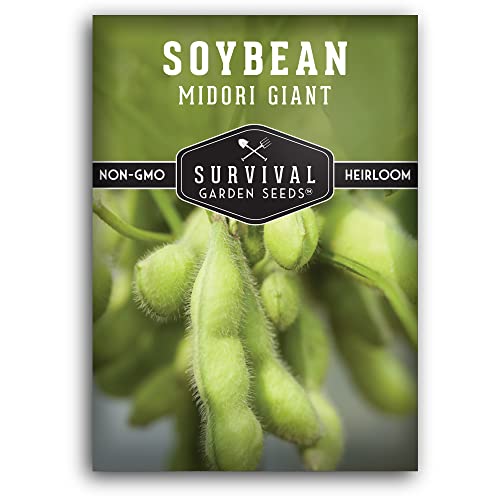
Survival Garden Seeds Midori Giant Edamame Seeds
A second variety to stretch the harvest.
Check price on Amazon
Sustainable Seed Co Red Lentil Seeds
For a cool-season spring sowing.
Check price on Amazon
Sources we used
Every figure on this page comes from published advice read in October 2026; if two sources differ, the page prints both.
- "Iowa State University Extension: All About Beans"
- "Utah State University Extension: How to Grow Beans in Your Garden" and the 2013 note "What is Edamame and Should I Grow It?"
- "Penn State Extension: Inoculation of Forage and Grain Legumes"
- "Johnny's Selected Seeds: Soybean Key Growing Information"
- "Alternative Field Crops Manual: Lentil" (University of Wisconsin and University of Minnesota, 1990, field guidance)
- "U.S. Food and Drug Administration: Selecting and Serving Produce Safely"
- "NOAA NCEI: U.S. Climate Normals, 1991-2020": frost dates for the edamame and lentil stations
Related guides
- How to grow sprouts, for lentil and mung bean sprouts in a jar
- How to grow squash and pumpkins, another crop that waits on warm soil
- How to grow melons, another warm-season crop that counts back from frost
- How to grow okra, for the hottest part of summer
- How to grow beans, for snap, pole and dry beans
- Kale, one of the cabbage family crops Oregon State pairs with edamame
Frequently asked questions
When should I plant edamame?
Plant edamame after the last spring frost, when the soil reads 60 F or warmer. Utah State Extension says bean germination drops sharply in colder soil, and Iowa State puts most beans at 65 F or warmer. For the latest date, count 80 to 100 days back from your first fall frost, the harvest range Iowa State gives.
How do you plant edamame?
Sow edamame seed straight into the garden about an inch deep and 2 inches apart, as Johnny's Selected Seeds advises, in rows 15 to 30 inches apart. Utah State Extension plants a little deeper, about 1.5 inches, with 12 to 18 inches between rows. Water so the seedbed stays moist until the seedlings emerge.
How long does edamame take to grow?
Edamame takes about 80 to 100 days from sowing to harvest, Iowa State Extension says; Utah State gives 70 to 90 days, depending on the variety. Check the days on your seed packet against your first fall frost, and sow two varieties that ripen at different times to spread the picking, as Utah State suggests.
How do I know when edamame is ready to pick?
Edamame is ready when the pods are plump, well filled and still green. Utah State Extension says to pick before the pods turn from green to brown, and Johnny's finds the beans at their heaviest just as the pods start to fade from bright green. Every pod on a plant ripens at about the same time.
Do I need inoculant for edamame?
Not always: inoculant helps most where soybeans have not grown recently. Penn State Extension recommends inoculating when the legume has not grown in that ground in the past three years. If you use one, buy the soybean type; Penn State's table puts soybean in its own group, so a pea inoculant will not serve.
How do lentils grow?
Lentils grow as slender, semi-erect plants 12 to 20 inches tall, with tendrils at the leaf tips and one or two seeds in each short pod. The Alternative Field Crops Manual sows them in early spring, about 1.5 inches deep in well-drained soil, and its field trials took 110 to 119 days to reach maturity.
Is edamame the same plant as soybean?
Yes, edamame is Glycine max, the soybean, grown in varieties picked while the beans are green and full size. Iowa State Extension calls it immature soybeans and groups it with lima beans: the beans come out of the typically fibrous pod before eating. Left on the plant, the beans dry into ordinary soybeans.
What can I plant with edamame?
Plant edamame near the cabbage family, such as kale, broccoli or turnips. Oregon State Extension pairs legumes like edamame with those crops for nitrogen, which is released only after the legume roots decay in the soil. West Virginia Extension says onions stunt beans in general, so keep onions out of the edamame rows.