
How to Grow Asparagus: Asparagus Plant from Seed or Crowns
Plant one-year crowns in early spring in a trench about 6 inches deep, or start seed indoors 6 to 14 weeks ahead; skip harvest the first season and build up to 8 to 10 weeks a year.
Sources: University of Maryland Extension, University of Minnesota Extension, Illinois Extension, Clemson Cooperative Extension and 3 more. See the sources we used. How we source our guides

On this page
To grow asparagus, plant one-year-old crowns in early spring in a trench about 6 inches deep and roughly 12 to 18 inches apart, fill the trench as the ferns grow, and skip the harvest the first season; starting from seed adds about a year. Asparagus is a perennial: one bed can produce for 15 years or more, so most of the work happens in the first season. Seed can be started indoors (soaked for 24 hours, sown 1/2 inch deep) roughly 6 to 14 weeks before transplanting, depending on the source. After the first season, pick lightly for a few weeks, and only cut for the full 8 to 10 weeks once the bed is established.
| Sun | Full sun, at least 6 hours a day, 8 to 10 preferred; two seed companies also allow part shade |
|---|---|
| Planting stock | One- or two-year-old crowns; seed adds a year |
| Crown depth | 5 to 12 inches, usually 6 to 8; shallower in heavy clay, deeper in very sandy soil |
| Crown spacing | 8 to 18 inches |
| Soil pH | 6.0 to 7.0 in two guides; 7.2 or higher in a third |
| Soil temperature | 60 F before sowing seed outdoors |
| Seed | 1/2 to 3/4 inch deep indoors at 60 to 80 F; up in 10 to 21 days |
| Water | At least 1 inch a week |
| First harvest | A light cut in year 2 in some guides, year 3 or 4 in others; a year later from seed |
| Bed life | Can last 10 to 20 years or more |
| Cold | Needs a dormant season; Jersey types can be hurt at -30 F without snow cover |
Seed or crowns: what each costs you in time
Most gardeners start with crowns, the dormant root clusters of one-year-old plants. Plants grown from seed take one year longer to reach the first harvest: one guide starts cutting two years after the crowns go in and three years after the seed is sown. Growing your own adds a year to establishing the bed, though it gives you fresh plants and the widest choice of varieties.
The guides differ on the age of the crowns. One prefers one-year-old crowns or plants; two others start from crowns one to two years old, and one of those suggests buying the larger 2-year-old crowns. Either way, crowns need care before planting. Good crowns are full and slightly moist, not shriveled; dry brown or soggy black roots point to poor storage. Keep them moist and cool until planting, and heel them into moist soil in the shade if you have to hold them more than a few days.
When to plant asparagus
Crowns go in early: the first spring day the soil is workable, or about 3 to 4 weeks before the average last frost date in one guide's count. In Maryland, crowns usually ship and go in during March or April; in Minnesota, farther north, they go in between early May and early June. Crowns planted too late may sprout before they are in the ground, which can injure the buds.
Seed is where the guides split widely on timing. One sows indoors just 6 weeks ahead of the last frost. Another starts seed 8 to 12 weeks before the outdoor planting date, and a third 12 to 14 weeks before the transplant date, with seedlings set out after the last frost. The table puts the two frost-tied seed rules and the crown rule on the calendar for four weather stations, starting from the 1991-2020 normal date of the last 32 F freeze at each.
| Station (1991-2020 normals) | Last spring frost | First fall frost | Start seed, 6 weeks before | Start seed, 12 to 14 weeks before | Plant crowns, 3 to 4 weeks before |
|---|---|---|---|---|---|
| Minneapolis-St. Paul airport, MN | Apr 23 | Oct 18 | Mar 12 | Jan 15 to Jan 29 | Mar 26 to Apr 2 |
| Chicago O'Hare airport, IL | Apr 16 | Oct 28 | Mar 5 | Jan 8 to Jan 22 | Mar 19 to Mar 26 |
| Washington Reagan airport, VA | Mar 24 | Nov 18 | Feb 10 | Dec 16 to Dec 30 | Feb 24 to Mar 3 |
| Dallas-Fort Worth airport, TX | Mar 8 | Nov 24 | Jan 25 | Nov 30 to Dec 14 | Feb 8 to Feb 15 |
Each frost date is a 50 percent probability normal (1991-2020) for 32 F, so the last spring freeze falls after it in about half of years. We computed the other columns from each guide's rule; the 12 to 14 week column assumes transplanting on the frost date itself, the earliest day that rule allows. One seed company warns that asparagus may not do well in Texas because it may not go dormant there, so the Dallas row shows what the rules give, not a crop the guides agree on for that climate.
The spread is real, not a typo: a 6-week start gives a small transplant, a 14-week start a bigger one. Pick the window that fits your indoor space, and plant out after the frost date either way.
Starting asparagus from seed indoors
Asparagus seed is slow. Soak it for 24 hours, then sow one seed per cell of at least 2 by 2 inches, 1/2 to 3/4 inch deep. Sprouts take about 10 to 21 days. The warmth varies by guide: 60 to 75 F in one, 75 to 80 F by day and 65 F at night in another.
You can skip the indoor step. Sow seed outdoors in a nursery row once the soil reaches 60 F, setting seeds 1 to 3 inches apart and about 1/2 inch to 2 inches deep; the seed can take three weeks to come up. Keep that nursery row weeded, because asparagus seedlings cannot compete with strong weeds. Two guides dig the young plants the next spring, before growth begins, and move them to their permanent bed.
When indoor seedlings go out after the last frost, plant them in the middle of a W-shaped furrow for drainage and fill in gradually, taking care not to bury the small ferns.
Planting the bed: trench and spacing
Pick the spot as if it were permanent, because it nearly is: a bed can last 10 to 20 years or more. Most guides call for full sun, though two seed companies also allow part shade. Asparagus needs good drainage, and its tall ferns can shade neighbors, so the north end of the vegetable garden suits it: the ferns then do not shade other crops, such as beans or kale (our examples). Soil pH is a point of difference: the guides aim for 6.0 to 6.5, 6.5 to 7.0, or 7.2 or higher. A soil test before planting settles it.
Then dig a trench. The guides agree on the method and differ on depth and spacing:
| The range the guides give | |
|---|---|
| Trench depth | 5 to 12 in, usually 6 to 8; shallower in heavy clay, 10 to 12 in for very sandy soil; 12 in is the traditional depth |
| Trench width | 12 to 18 in |
| Crown spacing | 8 to 18 in |
| Row spacing | 3 to 6 ft; 2 1/2 to 4 ft in one guide |
| First cover | 2 to 3 in |
| First harvest (crowns) | Light, from 7 days to about a month: in year 2 in some guides, year 3 or 4 in others |
| Full harvest | Up to 4 to 6 weeks in year 3 in two guides; up to 8 to 10 weeks a year from year 4 in another; about 6 to 8 weeks, to June 30, in MN |
Whatever the depth, the steps are the same. Set crowns with the buds up, cover them with about 2 to 3 inches of soil, and water right away. Thin spears come up within 2 to 3 weeks in one guide's count; another says they may take 6 to 8 weeks. As the ferns grow over the summer, pull the rest of the soil back into the trench a little at a time until it is level, finishing during the first summer. Go gently: dry clods can snap the brittle young spears.
Watering and weeding asparagus
Water matters most in the first two months. Water until the soil is moist at least 6 inches deep: water stress while the roots establish can reduce harvests for the life of the bed. After that, the bed needs at least 1 inch of water a week: in a week with less than an inch of rain, soak the soil, and water sandy soil more than once a week. Keep weeds out by hand or with a 2- to 3-inch mulch kept all year. Hoe less than 2 inches deep, and only before spears emerge or right after the harvest ends.
Years one to three: when to cut and for how long
Patience is the whole method. The spears that come up early on feed the roots that will carry the bed for years, and cutting hard in the early years often leaves plants weak and spindly. The guides agree on the direction and differ on the details:
- The planting season: no harvest at all.
- The first cut: a light one, from 7 to 10 days up to about a month. Three guides take it the year after planting crowns; the others wait until the third or fourth year, one of them only if the ferns the year before were vigorous and shoulder-high.
- Building up: the season lengthens each year, to 4 to 6 weeks by the third year in two guides and up to 8 to 10 weeks a year from the fourth year in another. In Minnesota the season runs about 6 to 8 weeks and ends June 30; then let the ferns grow.
- From seed: add a year. No harvest for two seasons, a light one in the third, and up to 8 to 10 weeks a year from the fourth season.
Pick spears daily in season, at 5 to 9 inches tall; most guides say 6 to 8. Snap or cut them at the soil line. Do not cut deep, which can injure buds that have not come up yet. Stop for the year when new spears shrink to pencil size, and let the rest grow into ferns.
To keep spears fresh for 2 to 3 days, stand them in 1 to 2 inches of water in a glass, cover them with a plastic bag and refrigerate them. Stored upright at 36 F and high humidity, they keep for up to 2 weeks.
All-male varieties
Asparagus plants are either male or female. Female plants spend energy on red berries, and the seeds sprout into weedy seedlings that crowd the bed. Male plants put nothing into seed and tend to live longer. The guides split on what that does to the spears: one says male plants send up more spears, smaller and more uniform, and another that female spears are often larger across; a third says the females send up more stems but male spears are thicker. Several guides point gardeners to all-male hybrids.
The older open-pollinated types are still sold. The old Washington varieties (Mary, Martha and Waltham) carry a higher share of female plants. Mary Washington is very cold-hardy, with smaller harvests than the Jersey all-male series, and it may self-seed, which some gardeners like and others do not. One guide says the Jersey varieties were recently discontinued, though they still grow in many Minnesota gardens; another still lists five of them among its better-producing male cultivars. Purple Passion has purple spears that turn green when cooked, and its crowns may be half female.
Fall ferns and winter
After the harvest ends, the ferns are doing the work: they make the energy the roots bank for the following spring, so look after them through the summer. Do not cut the ferns until they die back. Then cut them down, to 2-inch stubs or to ground level, either in fall once frost has yellowed or browned them or in late winter before the spears emerge. One guide cuts in fall, before any red berries drop, and then mulches 4 to 6 inches deep to control weeds.
Asparagus needs a cold season. One seed company warns that it may not do well in the warmest states, naming Texas, Mississippi, Georgia, Louisiana, Alabama and Florida, because it may not go dormant there. In the north the risk runs the other way: the Jersey varieties can be damaged at -30 F without enough snow cover, while Mary Washington is very cold-hardy.
Asparagus beetles and other problems
The main pest is the asparagus beetle: the adults and the larvae both eat spears and ferns. The damage shows as browned, scarred spears, and shoots that can bend over like a shepherd's crook. The beetles are common in home plantings and can be handpicked, or controlled with a suggested insecticide if there are many. Cutworms can cut spears off at the base, and aphids sometimes build up on the ferns.
Asparagus rust can trouble Midwest plantings, so plant resistant varieties; all the newer varieties resist rust and fusarium. Rust shows as yellow and rusty orange spots on the stems after harvest. Removing the tops after a fall freeze lowers the chance that the rust overwinters on the foliage.
Asparagus seeds and supplies
If you start from seed, Mary Washington is the classic open-pollinated variety, and an all-male hybrid is worth looking for if you can find seed of one. Crowns are planting stock, sold in season, and we will list them only when they are in season.
For starting seed indoors, the useful gear is a seed-starting tray with a dome and a heat mat to hold the mix at 75 to 80 F, the same kit that starts tomatoes and peppers indoors. Before you dig the trench, a soil test kit tells you whether the bed needs lime to reach the pH asparagus likes.
What you'll need for asparagus
As an Amazon Associate we earn from qualifying purchases.
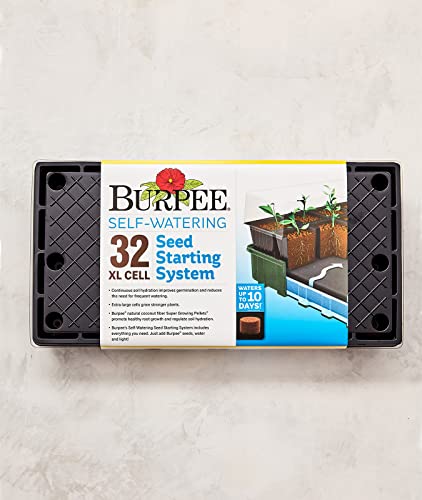
Burpee 32 XL Cell Self-Watering Growing System
Indoor start.
Check price on Amazon
VIVOSUN Seedling Heat Mat and Digital Thermostat, 10 x 20.75 in
Bottom heat for the indoor start; the sources germinate asparagus seed at 60 to 80 F.
Check price on Amazon
Luster Leaf 1601 Rapitest Soil Test Kit
pH before the permanent bed.
Check price on Amazon
Sources we used
Every asparagus depth, spacing and harvest figure above is drawn from these pages, read October 29, 2026; where the pages differ, both figures or their full range appear above.
- "University of Maryland Extension: Growing Asparagus in a Home Garden"
- "University of Minnesota Extension: Growing asparagus in home gardens"
- "Illinois Extension, Home Vegetable Gardening: Asparagus"
- "Clemson Cooperative Extension, HGIC 1300: Asparagus"
- "Johnny's Selected Seeds: Asparagus, Key Growing Information"
- "Kitchen Garden Seeds: asparagus growing notes" and "Burpee: Asparagus"
- "U.S. Climate Normals 1991-2020 (NOAA NCEI)": 50 percent probability freeze dates for the four asparagus table stations
Related guides
- How to plant a strawberry bed, a perennial bed that is replanted every few years
- Blueberry bushes, another long-lived planting that stays in one spot for years
- How to grow tomatoes, another crop started indoors in late winter
- How to grow peppers, which also need a long head start indoors
- How to grow cauliflower, a spring crop to plant in the same season
- How to grow beans, an annual crop for the sunny side of the asparagus bed
- How to grow kale, a cool-season green for spring and fall
- Companion planting chart, for the beds around your asparagus; no extension page we read pairs a companion with asparagus itself.
- Weeding without herbicides, by hand, hoe and mulch, for a bed that stays put for years
Frequently asked questions
When should I plant asparagus crowns?
Plant asparagus crowns in early spring, on the first day the soil is workable; one guide sets them out about 3 to 4 weeks before the average last frost. In Maryland crowns usually go in during March or April, and in Minnesota later, from early May to early June. Crowns planted too late may sprout first, which can injure the buds.
How do you plant asparagus crowns?
Set asparagus crowns buds up in a trench about 6 inches deep, cover them with 2 to 3 inches of soil, and water right away. Trench depths run from 5 to 12 inches, usually 6 to 8, with the deepest for very sandy soil. Space crowns 8 to 18 inches apart, then fill the trench as the ferns grow.
How long does asparagus take to grow from seed?
From seed, asparagus takes about a year longer than crowns to reach its first harvest. One guide begins cutting three years after planting seed and two years after planting crowns. The seed itself is slow as well, taking about 10 to 21 days to sprout.
When should I start asparagus seeds indoors?
Start asparagus seed indoors 6 to 14 weeks before transplanting, depending on the guide: 6 weeks before the last frost in one, 8 to 12 weeks in another and 12 to 14 weeks in a third. Give the seed a 24-hour soak first and sow it 1/2 to 3/4 inch deep.
How do you harvest asparagus?
Snap or cut asparagus spears at the soil line at 5 to 9 inches tall; most guides say 6 to 8. Skip the planting season, cut lightly at first, in year 2 or in year 3 or 4 depending on the guide, and build the season up to 8 to 10 weeks a year from the fourth year. Stop when spears shrink to pencil size.
How do you care for an asparagus bed?
Keep the bed weeded, watered and mulched, and leave the ferns standing until they die back. Give it at least 1 inch of water a week, and hoe less than 2 inches deep. Keep a 2 to 3 inch mulch all year. Cut the dead ferns to 2-inch stubs or to ground level, in fall after frost, before any red berries drop, or in late winter before the spears emerge.
Why are all-male asparagus varieties recommended?
All-male asparagus varieties put nothing into seed, so they skip the red berries and weedy seedlings that female plants leave in the bed. Male plants tend to live longer. One guide says they send up more spears, smaller and more uniform, while another says male spears are thicker. Several guides point gardeners to all-male hybrids.
How do you control asparagus beetles?
Handpick asparagus beetles, or use a suggested insecticide if there are many. The beetle is the main insect pest: adults and larvae feed on both spears and ferns. The feeding browns and scars spears and can bend shoots over into a shape like a shepherd's crook.