
Bean Plant Guide: How to Grow Beans, Bush, Pole, Shelling and Dry
Sow beans about 1 inch deep once frost has passed and the soil reaches 60 to 65 F. Bush beans need no support and are ready in about 50 to 60 days; pole beans climb a 6 to 8 foot support and bear until frost. Pick snap beans young, shelling beans plump, dry beans when they rattle.
Sources: University of Maryland Extension, University of Minnesota Extension, Utah State University Extension, Iowa State University Extension and Outreach and 6 more. See the sources we used. How we source our guides

On this page
To grow a bean plant, wait until frost has passed and the soil has warmed to at least 60 F, then sow the seed straight into the garden about 1 inch deep. Bush beans stand on their own and give one big flush of pods; pole beans climb a 6 to 8 foot support and keep picking for weeks. Pick snap beans while the seeds inside are still small, shelling beans once the seeds are full size but soft, and dry beans when the pods rattle. Bush beans are ready in about 50 to 60 days, so sow a fresh row every 2 to 3 weeks into midsummer.
When to plant beans
Beans are tender (University of Maryland Extension notes that frost damages the plant), and soil warmth matters more than the calendar. Utah State and the seed seller Johnny's Selected Seeds set the floor at 60 F soil; Iowa State and Botanical Interests (another seed company) ask for 65 F. Below that, Minnesota Extension says, seed may rot instead of sprouting.
The sources also differ on timing around the last frost. Utah State starts sowing one week before the frost-free date, or 2 to 3 weeks before it under plastic mulch or a row cover. Botanical Interests, on its 'Royal Burgundy' packet, waits until 1 to 2 weeks after the average last frost; for that 55-day bush variety it allows repeat sowings up to 80 days ahead of the average first fall frost.
Below, each rule becomes a 2027 date at four NOAA stations. The freeze dates are 1991 to 2020 normals for a 32 F low; in any year a freeze is equally likely before or after them.
| Station | Spring freeze date | Earliest sowing (Utah State, 1 week before) | Sowing window (Botanical Interests, 1 to 2 weeks after) | Last sowing, 'Royal Burgundy' packet rule (our count, 80 days) | Fall freeze date |
|---|---|---|---|---|---|
| Minneapolis-St. Paul, MN | Apr 23 | Apr 16 | Apr 30 to May 7 | Jul 30 | Oct 18 |
| Baltimore (BWI), MD | Apr 10 | Apr 3 | Apr 17 to Apr 24 | Aug 12 (Maryland Extension stops snap beans at mid-to-late July) | Oct 31 |
| Raleigh-Durham, NC | Mar 31 | Mar 24 | Apr 7 to Apr 14 | Aug 16 | Nov 4 |
| Dallas-Fort Worth, TX | Mar 8 | Mar 1 | Mar 15 to Mar 22 | Sep 5 | Nov 24 |
Our arithmetic from each source's rule and the station's freeze normal: earliest sowing = 1 week before the spring date; sowing window = 1 to 2 weeks after it; last sowing = 80 days before the fall date, a packet rule for one 55-day bush variety, not an extension date for any station. Every column still waits on soil of 60 to 65 F, which can lag the calendar.
Soil can lag well behind those dates: Minnesota Extension says that in much of its state the ground often stays too cold for beans until the end of May or into June. A soil thermometer at seed depth settles it (our advice), and frost dates come from the nearest NOAA station, not from a USDA hardiness zone. For the last sowing, the extension pages give their own local cutoffs, which run earlier than the packet column: mid-July (Utah State), mid-to-late July (Maryland), early August for bush beans (Minnesota) and August 1 (Iowa State's last practical date for snap beans). Where an extension cutoff exists for your area, it wins (our rule). Dry beans need longer; Utah State says those sown after July 1 usually fail to ripen in its cooler valleys.
Which bean fits your garden
Three questions sort it out.
Warm soil and sowing
Depth. Most of the sources put bean seed about 1 inch down. Iowa State goes a little deeper, 1 to 1 1/2 inches, while Maryland covers seed with just a 1/4 to 1/2 inch layer of soil or compost. Minnesota sets small-seeded beans shallower than big ones, and Utah State watches depth in heavy clay, where a crust can stop seedlings.
Spacing. Bush bean spacing runs from 2 inches (Johnny's) to 4 inches (Minnesota) in the row; the table below has the extension and Johnny's figures. Utah State says a thick stand needs no thinning, and Minnesota notes that a dense row of bush beans discourages weeds.
Germination and soaking. Utah State expects seedlings in 7 to 10 days in soil of 65 to 85 F, and Johnny's notes that dark-colored seed copes with cool soil better than white seed. None of these sources tells you to soak bean seed overnight; Maryland's one note is pre-germinating seed for a sowing in cool spring soil, which it says may help prevent rot and seed maggot damage.
Inoculant. Maryland says beans begin fixing nitrogen after their roots are well established, and that inoculation speeds the process; separately, it notes a possible benefit from inoculating seed on land newly planted in beans. Minnesota notes that many soils already carry the Rhizobium bacteria; if you buy one, get the type made for beans, not peas, and shake a little powder with the seed before sowing.
Feeding and water. Maryland rates beans' nutrient need as medium and says side-dressing is usually unnecessary; Maryland and Utah State both warn that extra nitrogen delays flowering. Water matters most at flowering and pod fill: Iowa State asks for about 1 inch a week, and Utah State says wet soil invites root rot.
Bush beans and pole beans
Bush beans grow about 2 feet tall by Minnesota's figure (1 to 3 feet across Iowa State's two pages) and need no support. They set most of their pods over a short span, so a row gives a large picking all at once, which suits canning and freezing. Utah State expects 50 to 60 days to harvest and 2 to 3 weeks of picking, which is why the sources sow bush beans again every 2 to 3 weeks or so. NC State adds that bush types suit containers.
Pole beans are twining vines. Minnesota says they reach six feet or more, Iowa State often more than 5 to 6 feet. They start bearing later, 60 to 90 days by Iowa State's count and 60 to 110 by Maryland's, then set pods until frost (Minnesota), with 5 to 6 weeks of picking by Utah State's figure. Minnesota adds that they take less ground than bush beans for a similar harvest.
Supports. Put the support in on sowing day (Minnesota). Maryland wants a trellis 6 to 8 feet high, built to stand up to summer storms, and points out that beans will not weave through horizontal wires. Iowa State uses 6 to 7 foot poles, a fence or a teepee of poles; seeds per pole run from 2 to 4 (Minnesota) to 4 to 6 (Johnny's).
Half-runners, with vines of about 3 feet, are grown like bush beans (Maryland).
The sources compared side by side:
| Who says it | Depth | Spacing, bush | Spacing, pole | Soil temperature | Days to harvest | Sow again / picking |
|---|---|---|---|---|---|---|
| U. of Maryland | Cover 1/4 to 1/2 in | 2 to 4 in; rows 24 to 30 in | 4 to 8 in; rows 24 to 36 in | After frost danger | Snap 50 to 60; pole 60 to 110 | Every 2 to 3 weeks to mid-to-late July; pick regularly |
| U. of Minnesota | About 1 in | 4 in; rows 2 to 3 ft | 4 in, or 2 to 4 seeds per pole | Once soil has warmed | Not given | Bush: some gardeners sow every two weeks to early August; pole not needed |
| Utah State | 1 in | 2 to 3 in; rows 18 to 24 in | Not given separately | Above 60 F | Bush 50 to 60 | Every 14 to 21 days to mid-July; pick 7 to 14 days after bloom |
| Iowa State | 1 to 1 1/2 in | 1 to 2 in, thin to 3 to 4 | 3 in, thin to 4 to 6 | At least 65 F for most types (not fava) | Bush 50 to 60; pole 60 to 90; dry 70 to 110 | Every 2 to 3 weeks; pick often |
| Johnny's (seed company) | 1 in | 2 in; rows 20 to 36 in | 3 in; rows 4 ft; 4 to 6 per pole | At least 60 F; ideal 70 to 90 F | By variety | Every 2 to 3 weeks to midsummer; filet beans every 36 to 48 hours |
What to plant with beans
Oregon State says corn stalks can stand in as poles for pole beans, and beans can grow in corn's shade. Add squash for the three sisters, though Washington State finds no compelling published evidence the trio helps productivity or soil. Keep beans away from onions, which stunt them (West Virginia). More bean pairings: our companion planting chart.
Snap, shelling and dry beans: when to pick each
One species, Phaseolus vulgaris, gives all three (Minnesota); the difference is how long the pods stay on the plant.
- Snap beans (green beans, string beans) are eaten pod and all, picked before the seeds make the pod bulge (Minnesota). Maryland looks for seeds about a quarter of full size and a pod that breaks cleanly with a snap; Iowa State's ready pod is about pencil-thick, 4 to 6 inches in length.
- Shelling beans (horticultural or fresh shell beans) are picked later, when the seeds are full size but still soft. Minnesota waits until the pods turn thin and tough, but not dry; Johnny's picks when the beans are plump inside. Keep shelled beans in the refrigerator.
- Dry beans (kidney, navy, pinto, black and many more) stay on the plant until the pods have dried and the seeds rattle (Minnesota, Iowa State). Iowa State gives them 70 to 110 days. If cold autumn rain comes first, Minnesota pulls the whole plant and hangs it upside down indoors to finish. Shell them once dry and store them in closed jars somewhere dark and dry. Cook dry beans thoroughly before eating: Minnesota Extension says that "of all common beans, only kidney beans are toxic when raw" and that red and white kidney beans "contain toxins that cooking can remove", and NC State warns that "raw or undercooked beans (especially kidney beans) cause severe nausea, vomiting, and diarrhea."
Keep picking. Iowa State says mature pods left hanging turn the plant's effort to seed instead of new pods, so Maryland and Johnny's pick regularly; for thin filet beans, Johnny's picks every 36 to 48 hours. Utah State reads stringy pods as a sign of heat or water stress.
Storing snap beans. Maryland keeps them refrigerated in a perforated plastic bag, a week at most, and blanches them for one minute before freezing.
Purple and yellow beans
Pods can be green, yellow, purple or striped (Minnesota). Yellow snap beans are usually sold as "wax" beans. The purple does not survive the pot: Minnesota says purple coloring disappears in cooking and the beans come out dark green, and Iowa State agrees that purple pods turn green when cooked.
- 'Royal Burgundy' is a purple bush snap bean. Botanical Interests describes round, bright violet-purple pods 5 to 6 inches long, held high on the plant, with buff-colored seeds, and lists 55 days to maturity and says it resists white mold and two strains of bean mosaic virus. Utah State includes it in its bush bean list.
- 'Neckargold' is a yellow wax pole bean. McKenzie Seeds lists stringless pods about 10 inches long, plants about 7 feet tall, 68 days to maturity and resistance to bean common mosaic virus.
Iowa State also suggests bush 'Provider' and pole 'Kentucky Wonder', which it notes has strings.
Runner, lima and fava beans
These are separate species, grown a little differently. Edamame (the vegetable soybean) has its own guide.
- Scarlet runner beans (Phaseolus coccineus) climb with red flowers that draw hummingbirds. Maryland gives vines of 6 to 15 feet and 75 to 85 days to picking, and says they prefer cooler weather.
- Lima beans (Phaseolus lunatus) want more heat. Johnny's waits for soil of at least 75 F; Maryland says germination needs 65 F soil for five days. Bush limas take 65 to 75 days and pole limas 85 to 110 (Maryland). Minnesota says not to eat them raw.
- Fava beans (Vicia faba) are the cool-weather exception, sown like peas in early spring as soon as you can dig the bed. Maryland says they take light frost but not a hard freeze. Iowa State says plants set fewer pods once days run above 80 F. Minnesota advises cooking favas fully before eating them.
Common bean problems
Flowers falling off. Heat and dry soil are the usual cause, and the sources give different cutoffs: Maryland says bean flowers die above 85 F, Iowa State names temperatures above 90 F, and Utah State points to hot, dry weather above 95 F. Botanical Interests advises that in very hot summer areas you skip sowing as high heat approaches, since days consistently above 90 F stop beans from forming. Keep the soil evenly moist and mulched through bloom; Minnesota says pole beans lose only a few pods and keep bearing.
Mexican bean beetle. Maryland describes an orange to copper beetle about 1/3 inch long with 16 black spots, and fuzzy yellow larvae that leave leaves lacy. Check leaf undersides in early summer for yellow egg clusters and crush what you find, or keep row cover on from sowing to harvest. Maryland notes that plants can lose up to 20 percent of their leaves before the crop suffers.
Other pests. Bean leaf beetles eat holes in leaves, which can be hardest on small plants (Minnesota); Iowa State hand-picks them and uses row covers early in the season. Aphids can spread viruses, and Iowa State hoses them off with a hard stream of water.
Rust, blight and white mold. Rust shows as small reddish-brown pustules; Iowa State's answer is resistant varieties, rotation, clearing plant debris and better air flow. Bacterial blight shows as brown spots ringed in yellow (Iowa State, Minnesota); for blight, Iowa State's prevention is disease-free seed, no overhead watering, staying out of wet plants and crop rotation. White mold rots and wilts stems (Minnesota); for white mold, Johnny's adds wider rows so leaves dry and a 3-year rotation.
Poor emergence. Cold, wet soil, seed planted too deep and old seed can all lead to gaps in the row (Iowa State, Utah State). Iowa State says a later sowing sidesteps most of this.
Seeds and supplies
Beyond seed, the kit is short: a 6 to 8 foot support for pole beans, up on sowing day, and an optional bean inoculant for ground where beans are new. When picking by hand, Botanical Interests advises holding the stem with one hand so you do not pull off branches that will keep bearing.
What you'll need for beans
As an Amazon Associate we earn from qualifying purchases.

Sow Right Seeds Royal Burgundy Bush Bean Seed
A purple bush snap bean; Minnesota and Iowa State say the purple turns green when cooked.
Check price on Amazon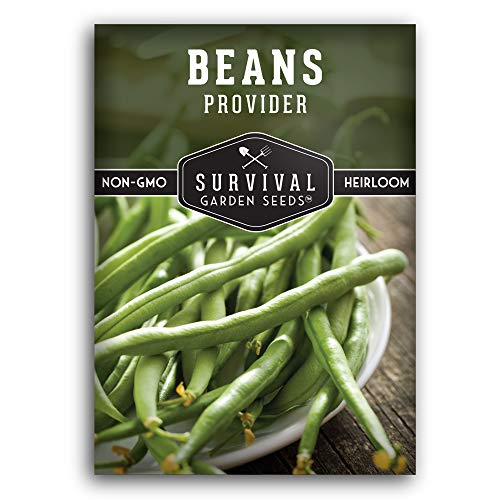
Survival Garden Seeds Provider Bush Bean Seeds
Iowa State suggests bush 'Provider'.
Check price on Amazon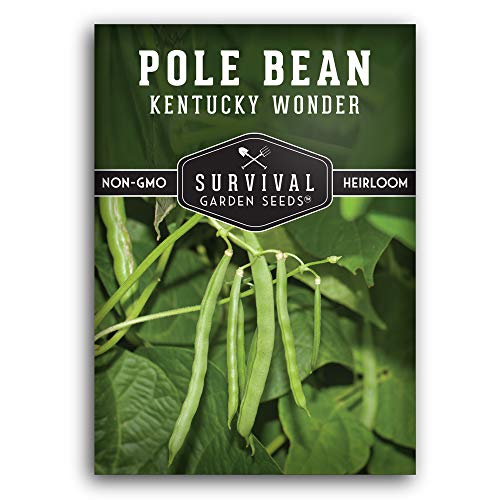
Survival Garden Seeds Kentucky Wonder Pole Bean Seeds
Iowa State's pole pick; it notes the pods have strings.
Check price on Amazon
Tenax Hortonova Trellis Net
Maryland wants a trellis 6 to 8 feet high, built to stand up to summer storms.
Check price on Amazon
Sources we used
Read in October 2026. Where sources differ, the page shows each.
- "University of Maryland Extension: Growing Beans in a Home Garden", plus its pages on the Mexican bean beetle and on poor blossom and fruit set
- "University of Minnesota Extension: Growing beans in home gardens"
- "Utah State University Extension: How to Grow Beans in Your Garden"
- "Iowa State University Extension and Outreach: All About Beans", plus its Growing Green Beans and Common Problems of Green Beans pages
- "NC State Extension Plant Toolbox: Phaseolus vulgaris"
- Companion pairs: "Oregon State University Extension: Companion Planting", "West Virginia University Extension: Companion Planting" and "Washington State University Extension: Gardening with Companion Plants"
- "Johnny's Selected Seeds: Bush Bean Key Growing Information", plus its pole, fresh shell, lima and fava bean sheets (seed company)
- "Botanical Interests: Royal Burgundy Bush Bean" (seed company)
- "McKenzie Seeds: Neckargold Wax Pole Bean" (seed company)
- "NOAA NCEI: U.S. Climate Normals, 1991-2020", the source of each station's freeze dates (1991 to 2020 normals)
Related guides
- How to grow garlic: one of the neighbors Illinois lists as a poor match for beans
- How to grow potatoes: Wisconsin rotates them with beans, a crop potato scab does not infect
- Edamame and lentils: the soybean picked green, and a cool-season legume
- Squash and pumpkins: more warm-soil crops for after frost
- How to grow okra, a heat lover for the same summer bed
- How to grow tomatoes, whose flowers also drop in high heat
- How to grow melons, vines that also want warm soil
- How to grow cucumbers, another crop to sow once frost is over
- How to grow zucchini, for the same after-frost sowing
- Companion planting chart, for the three sisters and what to keep away from beans
Frequently asked questions
How long do beans take to grow?
Bush snap beans take about 50 to 60 days from sowing, pole beans about 60 to 90 days or more, and dry beans 70 to 110 days, depending on the variety and the source.
When should I plant beans?
Once spring frosts are over and the soil has reached 60 F (65 F to some sources). Utah State starts a week before its frost-free date; Botanical Interests waits until 1 to 2 weeks after.
Should I soak bean seeds before planting?
None of the sources here calls for soaking. Maryland mentions pre-germinating seed for cool spring soil, which may help head off rot and seed maggots.
Are bush beans or pole beans better?
Bush beans come in sooner and need no support; pole beans need a 6 to 8 foot support but bear for weeks, and Maryland and Iowa State find them more productive for their space.
Why do bean flowers drop off without making pods?
Heat and drought, at anywhere from 85 F to 95 F depending on the source. Keep the soil moist and mulched through bloom.
Do purple beans stay purple when cooked?
No. Minnesota and Iowa State both say purple pods turn green in cooking.
When are dry beans ready to harvest?
Once the pods have dried and the seeds rattle. If wet autumn weather arrives first, pull the plants and hang them indoors to finish drying.