
How to Grow Tomatoes: Tomato Plant Care from Seed to Harvest
Start tomato seed 5 to 8 weeks before planting out at 75 to 85 F, set plants out after frost into warm soil, support them at planting, water evenly and pick as color changes.
Sources: University of Minnesota Extension, University of Maryland Extension, Illinois Extension, Clemson Cooperative Extension and 6 more. See the sources we used. How we source our guides

On this page
To grow tomatoes, start seed indoors 5 to 8 weeks before you plan to plant out, sow it 1/4 inch deep and keep it at 75 to 85 F until it comes up. Set plants out once frost is over and the ground is warm, burying part of the stem, about 1 to 3 feet apart. Put the stake or cage in at planting, water deeply about once a week (every day for plants in pots), and pick as soon as color starts to change. Depending on the variety, the first harvest comes 52 to 90 days later. Most problems, from blossom end rot to cracking, trace back to uneven water.
| Sun | Full sun, at least 6 hours a day, 8 to 10 preferred |
|---|---|
| Start seed indoors | 5 to 6 weeks before planting out, or 6 to 8 weeks before the last frost; the guides differ |
| Sowing depth | 1/4 inch |
| Germination temperature | 75 to 85 F until seedlings emerge; typically up in 5 to 7 days |
| Planting out | After all danger of frost, once the soil has warmed |
| Spacing | 12 inches for dwarf plants to 3 feet for vining ones, up to 4 feet for very vigorous vines; rows 3 to 6 feet apart |
| Water | 1 inch a week in the ground; at least daily in pots |
| Days to first harvest | 52 to 90, by cultivar |
| Frost tolerance | None: frost injures the top growth |
When to plant tomatoes
Tomatoes are tender, warm-season plants, and frost injures the top growth, so plants go out only when frost is over and the ground has warmed up. They do well with days of 70 to 80 F and nights of 60 to 70 F, and unprotected plants should not sit out through a run of nights below 45 F. A plant set out too early can stall for up to two weeks after cold nights.
Count back from your last spring frost to schedule the seed-starting. The guides split on how far: one counts six to eight weeks back from your last frost for the indoor sowing, while two use a shorter window, five to six weeks before the plants go outside, and one of those warns that plants started earlier are hard to manage and do not necessarily bear sooner. The table shows both windows at four weather stations, using each station's 1991-2020 normal date for the last 32 F freeze.
| Station (1991-2020 normals) | Last spring frost | First fall frost | Start seeds (6 to 8 weeks before frost) | Start seeds (5 to 6 weeks before planting out) |
|---|---|---|---|---|
| Minneapolis-St. Paul airport, MN | Apr 23 | Oct 18 | Feb 26 to Mar 12 | Mar 12 to Mar 19 |
| Chicago O'Hare airport, IL | Apr 16 | Oct 28 | Feb 19 to Mar 5 | Mar 5 to Mar 12 |
| Washington Reagan airport, VA | Mar 24 | Nov 18 | Jan 27 to Feb 10 | Feb 10 to Feb 17 |
| Dallas-Fort Worth airport, TX | Mar 8 | Nov 24 | Jan 11 to Jan 25 | Jan 25 to Feb 1 |
Frost dates are the 1991-2020 climate normals for a 32 F freeze at 50 percent probability, so in about half of years the last spring freeze comes later than the date shown. Seed-starting columns are our arithmetic on each rule; the 5 to 6 week column assumes planting out on the frost date, the earliest you would.
The 5 to 6 week dates assume you plant out right at the frost date, which is the earliest you would; if your soil is still cold then, slide everything a week or two later. In the fall, bring every fruit inside ahead of the first frost.
Starting tomato seeds indoors
Sow seed 1/4 inch deep in a sterile, soilless seed-starting mix. Warmth is the key at this stage: keep the mix at 75 to 85 F until seedlings emerge. A heat mat helps here, though it dries the mix faster, so watch the moisture. Tomatoes typically germinate in 5 to 7 days.
Once they are up, lower the heat: grow the seedlings at 60 to 70 F, with 70 F soil the ideal after emergence. Give them bright light directly overhead, or the stems stretch and lean. When true leaves appear, thin or move the seedlings so they stand two inches apart, or pot them up into larger cells or 4-inch pots at the first true leaf.
Harden the plants off across one to two weeks: more hours outdoors each day, starting in bright, indirect light, with less water. If you buy plants, choose stocky ones about 6 to 10 inches tall.
Planting out: depth and spacing
Tomatoes root along any part of the stem you bury, so plant deep: bury transplants up to the point where only the top two or three leaf sets stay above ground. For leggy plants, dig a shallow trench, 3 to 4 inches deep, strip the lowest leaves and lay the stem on its side so new roots form along it. Avoid setting the root ball deep into cold soil, which is why the sideways method helps early in the season.
Choose a bed where no tomatoes, potatoes, peppers or eggplant, all nightshade vegetables, have grown for at least three years (one guide says three or four). Spacing depends on the plant and how you support it:
- Dwarf plants: 12 inches.
- Determinate (bush) plants: 12 to 24 inches; bush types can go closer than vining ones.
- Indeterminate (vining) plants: 24 to 36 inches, or 2 to 3 feet in all directions; very vigorous vines may need 4 feet.
- By support: 15 to 24 inches for staked plants, 24 to 36 for trellised ones.
- Guides that give one figure for every tomato set plants 18 to 36 inches apart, or 24 inches. Rows run 3 to 6 feet apart.
What to plant with tomatoes
Our reading: basil and thyme have the most research support. Basil helps mask tomatoes from thrips, and thyme planted underneath deters yellow-striped armyworm moths, though one guide cautions that scented herbs such as basil, planted beside vegetables to keep pests away, still lack enough research behind them. Carrots set beside tomatoes get shade, a layout tip with no study behind it. Keep tomatoes outside a mature black walnut's toxic zone, on average 50 to 60 feet out from the trunk. More pairs: what to plant with tomatoes.
Determinate or indeterminate: which tomato to choose
This is the first thing to check on a seed packet. Determinate (bush) tomatoes stop growing once the tip of the main stem ends in a flower cluster. They typically reach 24 to 30 inches, or 3 to 4 feet in most modern varieties; they ripen their fruit within a four- to six-week stretch, which suits canning and small spaces. Indeterminate (vining) tomatoes keep growing and fruiting until cold or disease stops them, easily reaching 6 feet or more. Most varieties are vining, and most of the older, open-pollinated cultivars are indeterminate.
| Across the guides | |
|---|---|
| Start indoors | 5 to 6 weeks before planting out, or 6 to 8 weeks before the last frost |
| Germination | 1/4 in deep; 75 to 85 F; typically 5 to 7 days |
| Spacing | 12 to 36 in by type and support, up to 4 ft for vigorous vines; rows 3 to 6 ft |
| Pruning | Staked: 1 to 3 main stems; caged, if pruned: usually once, to 3 or 4; severe pruning increases cracking |
| Time to harvest | 52 to 90 days to first harvest, by cultivar |
| Water | 1 in a week; deeply at least weekly, and a mature plant may need 2 to 3 gal a week; pots may need daily water |
The sources differ mainly on when to start seed (5 to 8 weeks) and on spacing, because they describe different plant types and layouts.
How to grow tomatoes in pots
A tomato does well in a pot when the pot is big enough and the mix never dries out. Pot sizes vary by guide: one sets a minimum of 4 to 6 gallons of mix for a dwarf tomato and 8 to 10 gallons for full-size plants, and another finds four to five gallons usually enough for one plant. Water potted tomatoes at least once a day. Our guide to growing tomatoes in pots compares pot sizes, container varieties, potting mix, watering and feeding.
Staking and caging
Put stakes or cages in at planting time or soon after.
- Stakes. Use wood or steel stakes 1 1/2 to 2 inches thick and 6 to 8 feet tall, sunk a foot deep and set 4 to 6 inches out from the stem, with stems tied loosely as they grow.
- Cages. One design uses fencing 5 feet wide with 6-inch openings, sets the cages 4 or more feet apart and stakes them down against storms. Leave at least 6 inches between wires so a hand fits through to pick. Cages also improve air flow.
- Height. Pick a cage tall enough for the variety: determinates typically reach 2 to 4 feet, while indeterminates can top 6 feet. Anchor cages with stakes or steel posts so loaded plants do not blow over in late-summer storms.
Pruning suckers
Suckers are the shoots that grow in the angle between a leaf and the main stem. On stakes, keep one to three main stems. Caged plants, if pruned, usually need only a single pruning, to three or four stems, and early and patio types are usually not suited to pruning. Our guide to pruning tomatoes covers each plant type, the lower leaves and when to top the plant.
Even watering and blossom end rot
Blossom end rot shows up as a dark, shrunken, leathery patch on the bottom of the fruit. It comes from too little calcium reaching the growing fruit, and low soil pH and low calcium, inconsistent or shallow watering, drought and too much nitrogen all encourage it. Wide swings in soil moisture are part of the same mix, and it is worse in hot weather. It most often hits large paste and plum types and is rarely seen on cherry tomatoes.
- Water deeply and regularly. One inch of rain or irrigation a week is ideal; when rain is short, water deeply at least once a week. A mature plant may use 2 to 3 gallons a week.
- Mulch. Mulching and even watering both help prevent it.
- Check pH and calcium with a soil test. To head off blossom end rot, keep the pH in the 6.3 to 6.8 range (general tomato guides give 6.0 to 6.8) and, where calcium is low, stir 1/4 cup of gypsum into each hole's soil before planting.
- Limit nitrogen. Too much gives big leafy plants that are slow to fruit.
Once a fruit shows the black end, it cannot be saved; pick it off and keep the watering even for the fruit still to come.
Flowers that drop without fruit
Tomatoes do not set fruit and the flowers drop when nights fall below 55 F, or days climb above 95 F with hot, drying winds. The problem usually goes away when the weather improves, so patience is the fix.
Old open-pollinated, hybrid and black or purple tomatoes
The old-time varieties gardeners pass down are older, open-pollinated cultivars valued for flavor, color and shape, and kept going to preserve them. So many survive mainly because tomatoes rarely cross: saved seed of a non-hybrid comes back much like its parent. Many modern varieties carry disease resistance, shown by letter codes such as F for Fusarium wilt and V for Verticillium wilt. One guide says to always choose disease-resistant cultivars, and most of those old cultivars have little to no resistance, so in a bed with a history of wilt, a resistant variety carries less risk.
Many black and purple tomatoes come from these older lines, and purple and brown fruit are becoming more common in seed catalogs. Cherokee Purple is an indeterminate old variety at 72 days to harvest, and Black Cherry an indeterminate cherry at 64 days.
Among the other types, cherry tomatoes are small salad fruit; paste tomatoes are meaty, less juicy and few-seeded, for sauce and canning; and beefsteaks are large fruit that is prone to cracking and usually late to ripen.
Cracking and early blight
Cracking. Growth cracks form when fruit grows too fast, most often during heavy rain and warm weather. Cracking varies by variety: many newer varieties resist it, and uneven moisture and severe pruning make it worse. Picking as soon as the color starts to change avoids many fruit problems, including cracking.
Early blight. This is a common leaf disease. It starts as small brown spots on the older, lower leaves that quickly enlarge, usually ringed by a yellow halo and marked with concentric rings like a target; leaves can die, and the disease can reach stems and fruit. The steps against it: space plants for air flow, mulch, water at the base, and remove the lowest 3 to 4 leaf branches once plants are setting fruit.
When to harvest tomatoes
Count on 52 to 90 days to the first ripe fruit, varying by cultivar; counted from transplant, one guide puts days to maturity at 65 to 90, with early cultivars at 55 to 65 days. Pick when fruit reaches full size and color starts to change. Fruit picked then finishes ripening on the counter with no difference you can taste, and light is not needed for ripening. Do not refrigerate ripe tomatoes: cold makes them mealy, and flavor fades below 54 F.
At the end of the season, pick everything before frost. Hold green tomatoes at 50 to 70 F for 1 to 3 weeks, then ripen them at 70 F. Full-size fruit already fading from green toward white or pink ripens well indoors, while truly green fruit rarely does.
Tomato seeds and supplies
Four packets cover most gardens: a cherry tomato, a paste tomato for sauce, a slicer, and one of the older, open-pollinated varieties such as Cherokee Purple or Brandywine. For pots, look for a determinate patio type.
For starting and growing, the gear the sources keep naming is a cell tray under a clear dome, a heat mat set to keep the mix at 75 to 85 F, a sturdy cage or stake, a container that holds at least 4 to 6 gallons of mix for a dwarf tomato or 8 to 10 for a full-size one, and a soilless potting mix.
What you'll need for tomatoes
As an Amazon Associate we earn from qualifying purchases.

Survival Garden Seeds Black Cherry Tomato Seeds
Small salad fruit; rarely gets blossom end rot.
Check price on Amazon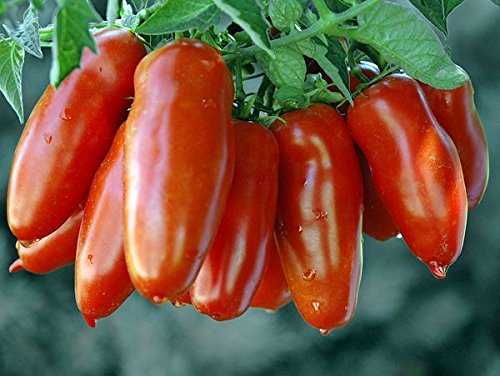
Harley Seeds San Marzano Paste Tomato Seeds
Meaty sauce and canning fruit.
Check price on Amazon
Burpee 72 Cell Greenhouse Kit
Indoor start 5 to 8 weeks ahead.
Check price on Amazon
Gardener's Supply Company Titan Tall Tomato Cages
Support at planting.
Check price on Amazon
Smart Pot Fabric Planter, 20 gallon
Four to five gallons is usually enough for one plant; one guide sets 8 to 10 as the minimum for a full-size one.
Check price on Amazon
Sources we used
Every planting number on this page comes from these pages, read on October 29, 2026. Where the figures differ, this page gives a range or names the split.
- "University of Minnesota Extension: Growing tomatoes in home gardens"
- "University of Maryland Extension: Growing Tomatoes in a Home Garden", its "Blossom End Rot on Vegetables" and its "Early Blight of Tomatoes" pages, plus its "Types of Containers for Growing Vegetables" page
- "Illinois Extension, Home Vegetable Gardening: Tomato"
- "Clemson Cooperative Extension, HGIC 1323: Tomato"
- "UNH Extension: growing tomatoes in a container (2020)"
- "Penn State Extension: Herbs Make Good Plant Partners and Companions"
- "Johnny's Selected Seeds: Tomatoes, Key Growing Information"
- "Ohio State University Extension: Growing Tomatoes in the Home Garden (HYG-1624)"
- "Oregon State University Extension: Companion Planting"
- "University of Minnesota Extension: Companion planting in home gardens"
- "NOAA NCEI U.S. Climate Normals, 1991-2020" (freeze dates at 50 percent probability for the four stations in the table above)
Related guides
- How to grow tomatoes in pots, pot size, varieties and daily watering
- How to prune tomatoes, suckers, lower leaves and topping
- How to grow peppers, a slower start from seed than tomatoes
- How to grow squash and pumpkins, sown direct once the soil is warm
- How to grow melons, for a long, hot summer
- How to grow okra, a southern summer crop
- How to grow beans, sown direct once the soil is warm
- Companion planting chart, for what to grow beside tomatoes
- Nightshade family vegetables, for rotating tomatoes with their relatives
- How to protect plants from frost, for a cold snap before the last fruit ripens
Frequently asked questions
When should I plant tomatoes outside?
Set tomatoes outside once frost is over and the ground is warm. Tomatoes do well with days of 70 to 80 F and nights of 60 to 70 F, and a plant chilled by cold nights may need up to two weeks to resume growing.
When should I start tomato seeds indoors?
Start tomato seeds indoors five to eight weeks before you plant out: one guide counts six to eight weeks back from your last frost, and two say five to six weeks before the plants go outside. Sow 1/4 inch deep and keep the mix at 75 to 85 F; seedlings typically appear within 5 to 7 days.
How deep do you plant tomatoes?
Plant tomatoes deep, so just the top two or three leaf sets stay above ground. For a leggy plant, dig a trench 3 to 4 inches deep and lay the stem on its side. Space plants 12 to 36 inches apart by type and support, up to 4 feet for very vigorous vines, in rows 3 to 6 feet apart.
How long do tomatoes take to grow?
Tomatoes take 52 to 90 days to the first harvest, depending on the variety. Counted from transplant, one guide puts days to maturity at 65 to 90, with early cultivars at 55 to 65. If you raise your own transplants, add the 5 to 8 weeks of indoor seed starting before that transplant clock begins.
What causes blossom end rot?
Blossom end rot comes from too little calcium reaching the growing fruit, made worse by uneven or shallow watering, wide swings in soil moisture, drought, low soil pH and too much nitrogen. Water deeply and regularly, about 1 inch a week, and mulch the bed to keep moisture even.
What can I plant with tomatoes?
Plant basil or thyme with tomatoes: basil helps mask tomatoes from thrips, and thyme underneath deters yellow-striped armyworm moths. A few studies show basil can cut thrips in tomatoes, though one guide says scented herbs still lack enough research. Keep tomatoes outside a mature black walnut's toxic zone, on average a 50 to 60 foot radius.