
Best Tomato Cages (2026): 3 Picks
One cage for each tomato and pepper support job.
As an Amazon Associate we earn from qualifying purchases.
Top picks

Our pick for tall vining tomatoes
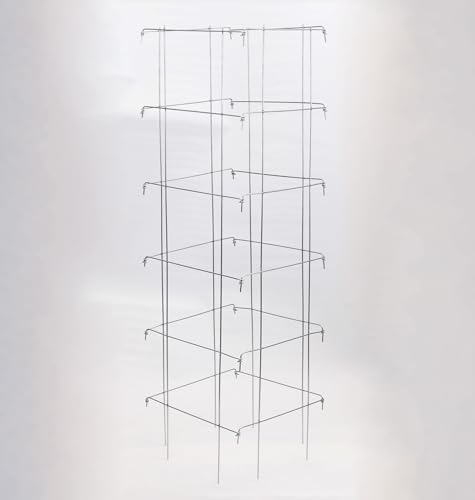
1. Gardener's Supply Titan Tall Tomato Cages
The tallest of our picks: 80 inches high, with over 5.5 feet of steel-core support for vines that keep growing until frost.
Our pick for bush tomatoes
2. Burpee Pro Series Tomato Cage, 48 Inch
A 14-inch square cage of 10-gauge wire that stands about 40 inches above the soil, inside the 3 to 4 feet most modern determinates easily grow.

Our pick for peppers and eggplant
3. Gardener's Supply Pepper and Eggplant Cages
A short, square, powder-coated cage that holds peppers and eggplant on all four sides with nothing to tie.

On this page (12)
The best tomato cages for tall vining tomatoes are the Gardener's Supply Titan Tall Tomato Cages, because at 80 inches high, with over 5.5 feet of steel-core support, they are the tallest of our picks, for vines that keep growing until frost. For bush tomatoes, our pick is the Burpee Pro Series Tomato Cage, 48 Inch; for peppers and eggplant, the Gardener's Supply Pepper and Eggplant Cages. For a Florida weave row or staked stems, add Greenes Fence 6-foot stakes and VELCRO Brand Garden Ties.
Below: each pick's job, how tall a cage stands once its legs are in the ground, whether to cage, stake or weave, and how to set up a Florida weave, with seven extension services compared.
Start here: which tomato cage for your plants
- Vining (indeterminate) tomatoes that keep growing until the cold: Gardener's Supply Titan Tall Tomato Cages (pick 1).
- Bush (determinate) tomatoes that stop at a set size: Burpee Pro Series Tomato Cage, 48 Inch (pick 2).
- Peppers and eggplant: Gardener's Supply Pepper and Eggplant Cages (pick 3).
The main fork is the plant's habit: bush types stop growing once they set a fixed number of fruits, while vining types go on flowering and ripening fruit until the weather turns too cold for them.
The picks, by job
1. Gardener's Supply Titan Tall Tomato Cages: our pick for tall vining tomatoes
Best for: Indeterminate (vining) tomatoes
- Height: 80 inches
- Build: Poly-coated steel stakes
Its polyethylene rings are UV-resistant. Each cage is 19.5 inches across, and the set goes together without tools and stores flat.
Why it is our pick: The tallest plants need the tallest cage, and this is the tallest of our picks. Indeterminate tomatoes keep getting taller until frozen in the fall, and vining plants need support such as a cage, stake or trellis. Vining plants grow 3 to 5 feet, sometimes more, and indeterminates can easily reach at least 6 feet; this cage gives over 5.5 feet of support, the most of the three. The rings snap on wherever the plant needs holding up and can be moved higher as it grows, and the maker says the poly coating makes the frame gentler on stems and on tender-skinned fruit.
Good to know: The set arrives in parts and needs assembly. Spacing advice for caged plants runs from 2 to 3 feet apart to at least 4 feet between cages; stake each cage down so summer storms cannot tip it, and plan the row before you plant.
2. Burpee Pro Series Tomato Cage, 48 Inch: our pick for bush tomatoes
The cages are from Burpee's Pro Series line, each a 14-inch square frame of rust resistant 10-gauge (3.5 mm) wire, anchored by eight prongs. They fold flat for storage and are made in Illinois from American-made steel.
Why it is our pick: Its height fits a bush plant. Most modern determinates easily reach 3 to 4 feet, though bush types are also put at a typical 24 to 30 inches, and bush vines are simpler to keep in hand and hold up through the season. With its 8-inch prongs in the ground, the 48-inch cage stands about 40 inches above the soil (computed), inside the 3 to 4 feet and above the lower figure, and its openings are wider than the minimum of 6 inches between wires that lets a hand fit in to pick.
Good to know: It is also sold for large varieties such as Better Boy, but at about 40 inches above the soil it stands well short of the 6 feet or more an indeterminate can easily reach; for those, take pick 1. The same cage comes in a 40-inch size, and the line comes in powder-coated green as well as silver galvanized steel.
3. Gardener's Supply Pepper and Eggplant Cages: our pick for peppers and eggplant
Best for: Peppers and eggplant
- Frame: 11 inch square, 10 gauge wire
- Openings: 5 by 8 inches
The cages are 11 inches square. You push the legs into the ground to set them, and they fold flat for off-season storage.
Why it is our pick: Pepper stems can turn brittle and should be held up with cages or short trellises, and this is a short cage made for bushy plants like peppers and eggplants: it holds the plant on all four sides, so there is nothing to tie.
Good to know: Pepper plants can reach 3 to 4 feet, and this cage keeps them upright over the lower 24 inches, with the fruit held off the ground. Our peppers guide covers the crop from seed to harvest.
You will also need
For a Florida weave row, Greenes Fence 6 ft Wooden Garden Stakes: untreated, pointed at one end, 6 feet long and 15/16 inch square, 50 to a pack, at the 6-foot length the weave calls for; they are slimmer than the 1 1/2 to 2 inches a stake needs to carry one plant on its own, so keep them for the weave. To tie stems to a stake or cage, VELCRO Brand Garden Ties: a 75-foot roll of 1/2 inch hook-and-loop tape that you cut to length, leaving at least a 2-inch overlap, and readjust as the plant grows.
Spec by spec: height, width and openings of the cages
| Pick | Best for | Material | Height overall (inches) | Width (inches) | Openings (inches) | Cages in the set |
|---|---|---|---|---|---|---|
| 1. Gardener's Supply Titan Tall Tomato Cages | Indeterminate (vining) tomatoes | Poly-coated steel-core stakes, polyethylene rings | 80 | 19.5 across | Not given; the rings move | 3 |
| 2. Burpee Pro Series Tomato Cage, 48 Inch | Bush (determinate) tomatoes | Galvanized steel, 10-gauge wire | 48, with 8-inch prongs | 14 square | 8 by 8 | 3 |
| 3. Gardener's Supply Pepper and Eggplant Cages | Peppers and eggplant | Powder-coated steel, 10 gauge wire | 32; 24 installed | 11 square | 5 by 8 | 3 |
How we chose these
The jobs came first: the supports a tomato and pepper bed needs. We compared tomato cages, stakes, twines and ties from Amazon's catalog and maker sites, read each candidate's maker page, and chose one cage for each job, plus the stakes and ties a weave or staked row needs. Heights, spacing and setup come from the pages of the seven extension services in the Sources list below. We did not set these cages over plants ourselves.
Our editorial policy says how we find, check and number the picks in every buying guide.
Also considered
Gardener's Supply Tomato Cages, Set of 4. Square, powder-coated cages of 10 gauge wire, 14.25 inches square, that fold flat for off-season storage and stand 32 inches high installed: below the 3 to 4 feet most modern determinates easily grow, though above the typical 24 to 30 inches also given for bush types. The Burpee stands about 40 inches above the soil.
Burpee XL Pro Series Tomato Cage. An 18-inch square cage of 9-gauge wire, 58 inches overall, with at least 48 inches of support above the ground, or 82 inches in all with its 24-inch extenders. Without its extenders it stands 58 inches overall, under the Titan Tall's more than 5.5 feet of support.
How tall should a tomato cage be?
As tall as your variety grows, counted above the soil. Use cages that match the height of the variety and anchor them firmly with stakes or steel posts, so plants heavy with fruit do not pull themselves out of the ground in late summer windstorms. Part of every cage goes into the ground, so the height that counts is the part left standing:
| Support | Maker's height | Above the soil | Extension plant height it meets |
|---|---|---|---|
| Titan Tall Tomato Cages (pick 1) | 80 inches high | Over 5.5 feet (66 inches) of support (maker) | Vining plants at 3 to 5 feet, sometimes more; within half a foot of the 6 feet or more indeterminates can reach (72 inches or more) |
| Burpee Pro Series, 48 inch (pick 2) | 48 inches overall, 8-inch prongs | About 40 inches (computed) | Most modern determinates at 3 to 4 feet (the higher bush figure) |
| Gardener's Supply Tomato Cages, Set of 4 (also considered) | 39 inches overall, 7-inch legs | 32 inches (maker) | A typical 24 to 30 inches for bush types (the lower bush figure) |
| Pepper and Eggplant Cages (pick 3) | 32 inches overall | 24 inches (maker) | Under the 3 to 4 feet pepper plants can reach |
| Greenes Fence stake, driven 1 foot (add-on) | 6 feet (72 inches) | 5 feet (60 inches, computed) | A 6-foot weave stake; the short end of the 6 to 7 feet given for indeterminates |
The sources split on bush plants: typically 24 to 30 inches, with no pruning, staking or trellising needed, or most modern determinates at 3 to 4 feet. In our reading, a cage about 40 inches above the soil covers both figures. For vining plants the figures run from 3 to 5 feet, sometimes more, to at least 6 feet. Single stakes run 6 to 8 feet long. Our tomatoes guide covers spacing for caged, staked and trellised plants.
Should you cage, stake or weave tomatoes?
Cage to skip most pruning and tying; stake or weave to prune harder and plant closer. A cage lets the plant grow in its natural manner while keeping fruit and leaves off the ground, and many gardeners count the freedom from pruning and staking as worth it, though wire cages cost more at the start and need a large storage area. Wire cages also let air circulate and cut the spread of disease, and if caged plants are pruned, once is usually enough, down to three or four main stems.
Staking means pruning: keep a staked plant to one or two main stems, or as many as three, and the plants can then go closer together. Set the stake soon after transplanting, 1 foot deep, with about 4 to 6 inches between stake and plant. Our tomato pruning guide compares six extension services on suckers and stems, and the guide to the best pruning shears picks a pruner for each kind of cut.
The Florida weave sits between the two: it holds the fruit off the ground as stakes and cages do, with better leaf cover than staked plants get and fruit that is easier to reach than in a cage. At season's end, stakes are also easier to sanitize than wire cages, which helps keep diseases from carrying over to next year's crop. Whatever you choose, set the supports when you plant, or drive stakes soon after transplanting.
How do you set up a Florida weave?
Set stakes along the row, then hold the plants between runs of twine on both sides. The steps:
- Drive the stakes. Space the plants 18 to 24 inches apart and drive tall stakes, such as 6-foot ones, halfway between plants. Put them anywhere from one at every plant or every second one to about one every two or three plants. Drive each one 1 foot down and very securely, to prevent wind damage, since woven rows can catch much wind.
- Brace the row. With wooden stakes, consider a metal stake every four or five to make the row stronger, and set a sturdier stake at both ends of the row, for instance a metal T-post.
- Start early. Begin once the plants stand about 12 inches tall, before they topple, with the first run of twine 8 to 10 inches above the ground.
- Weave. Use a strong, durable tomato twine; it comes in a box that hangs from your belt. Run the twine down one side of the row, outside the plants and stakes, looping it around the back of each stake and pulling it tight; tie it off at the last stake and come back along the other side.
- Add runs as the plants grow: about every 10 inches of height, or a new layer 6 to 8 inches above the last after a week or two, up to the top of the stakes.
A trick for the low loops: thread the twine through a 12- to 36-inch length of plastic pipe, which works as a longer arm.
What to look for in a tomato cage
- Height above the soil: match the cage to the variety's height, and subtract the legs or prongs that go into the ground.
- Wire spacing: wires at least 6 inches apart, so a hand reaches in to pick; a cage built from fencing uses a 6-inch mesh.
- Anchoring: stake each cage down so a summer storm cannot tip it.
- Storage: wire cages need a large storage area. The Titan Tall stores flat, and the Burpee and Gardener's Supply cages fold.
- Spacing: caged plants 2 to 3 feet apart, or cages at least 4 feet apart, depending on the advice you follow.
Sources
- "Gardener's Supply Company: Titan Tall Tomato Cages, Set of 3"
- "Gardener's Supply Company: Pepper and Eggplant Cages, Set of 3"
- "Gardener's Supply Company: Tomato Cages, Set of 4"
- "Burpee: Pro Series Silver Tomato Cage" and "XL Pro Series Cage, Silver"
- "Greenes Fence: Wooden Garden Stake 6 ft RC86N"
- "VELCRO Brand: Garden Ties"
- "Clemson Cooperative Extension, Home and Garden Information Center: Tomato"
- "University of Illinois Extension: Tomato"
- "Iowa State University Extension and Outreach: Growing Tomatoes in the Home Garden"
- "University of Maryland Extension: Growing Tomatoes in the Home Garden"
- "University of Maryland Extension: Growing Peppers in the Home Garden"
- "University of Minnesota Extension: Growing tomatoes in home gardens"
- "University of New Hampshire Extension: Growing tomatoes in a container"
- "Penn State Extension: Stake your Tomatoes"
Related guides
- How to grow tomatoes, including when the stake or cage goes in.
- How to prune tomatoes, for staked and woven plants.
- How to grow peppers, the other crop these cages hold up.
- Nightshade family vegetables, for rotating tomatoes, peppers and eggplant.
- Best pruning shears, with a pick for each kind of cut.
Frequently asked questions
What are the best tomato cages for vining tomatoes?
The Gardener's Supply Titan Tall Tomato Cages, at 80 inches the tallest of our picks. For bush (determinate) tomatoes, the Burpee Pro Series Tomato Cage, 48 Inch; for peppers and eggplant, the Gardener's Supply Pepper and Eggplant Cages.
How tall should a tomato cage be?
About 40 inches above the soil for bush tomatoes, in our reading; an indeterminate can easily reach at least 6 feet. Figures vary: bush types are typically 24 to 30 inches tall, while most modern determinates easily reach 3 to 4 feet; vining plants grow 3 to 5 feet, sometimes more.
How far apart should the wires on a tomato cage be?
At least 6 inches apart, so your hand fits through to pick; a cage built from fencing uses a 6-inch mesh. The Burpee Pro Series cage has 8-inch by 8-inch openings, and wire cages let air move around the plant.
How do you do the Florida weave?
Drive stakes along the row, then run twine down both sides of the plants. Set 6-foot stakes between every plant or every second one, or as far apart as every third, loop the twine around each stake, and add a run about every 10 inches of height or 6 to 8 inches above the last. Start the weave at about 12 inches of plant height.
Should I cage or stake my tomatoes?
Cage to skip most pruning; stake to prune to a few stems and plant closer together. A cage lets the plant grow in its natural manner and keeps the fruit off the ground, and many gardeners think skipping the pruning and staking is worth it. Staked plants are pruned to one to three main stems.
Does a tomato in a container need a cage?
Yes, most do: tomatoes in containers usually need support to stay upright, and a conical wire trellis with two rings works quite well in most containers. Choose a compact variety too: bush plants may be the only choice for containers.
How thick should a tomato stake be?
For a single staked plant, use a wood or steel stake 1.5 to 2 inches across, 6 to 8 feet in length; a 6-foot wooden stake 1 1/2 or 2 inches wide sits at the short end. Our sources give no width for the stakes of a Florida weave.
When should you put a tomato cage in?
At planting time, or shortly after. Stake or cage plants when you plant them, or drive stakes soon after transplanting. For a Florida weave, the twine starts once plants stand about 12 inches tall, before they flop over, so the stakes need to be in by then.