
Watermelon Plant: How to Grow Watermelon from Seed
Sow watermelon seed about 1 inch deep after the last frost, once the soil has warmed to 60 to 70 F, in full sun with about 24 square feet per plant. Seedless types need a seeded pollinizer nearby. Pick when the tendril by the fruit browns and the ground spot turns yellow.
Sources: University of Illinois Extension, Iowa State University Extension and Outreach, Utah State University Extension, University of Georgia Extension and 10 more. See the sources we used. How we source our guides
On this page
As an Amazon Associate we earn from qualifying purchases.
To grow a watermelon plant, sow the seed about 1 inch deep after the last frost, in soil that has reached 60 to 70 F. Give it full sun and room to sprawl: a rule of thumb is 24 square feet per plant. The fruit ripens about 35 days after it sets. Pick it when the tendril closest to the melon has turned brown and the patch where it lies on the soil has gone from pale to yellow.
This guide covers watermelon, Citrullus lanatus, alone; cantaloupe and honeydew are in our melons guide. It draws on twelve university extension services and a seed company, listed under Sources at the end; where their figures differ, we give the range.
| Sun | Full sun, 6 to 10 hours a day |
|---|---|
| When to plant | After frost, once the soil is 60 to 70 F |
| Seed depth | About 1 inch; 1/2 to 2 inches in all |
| Room | 24 square feet per plant, as a rule of thumb; vines 6 to 20 feet long |
| Water | Usually 1 to 2 inches every 7 to 14 days, less as the fruit ripens |
| Days to harvest | 70 to 100, by variety |
| Ripe when | Tendril by the fruit brown and withered, ground spot yellow, rind tends to turn dull |
When to plant watermelon
Watermelon goes in late. It is a tender, warm-season crop, and seed sown too early into cold soil can rot. So the soil sets the date more than the calendar does: plant after all danger of frost has passed, once the soil has warmed to 60 to 70 F. Check it with a soil thermometer 2 to 4 inches down.
Our reading: 65 F, the middle of that range, is a fair minimum, and some guides wait for soil above 70 F, 1 to 2 weeks past the last frost. On the calendar, that is mid-May in central Iowa, where June 20 is the last practical sowing date for early varieties, and April 15 to June 15 in the South Carolina Piedmont. Elsewhere, count forward from the average last frost near you (see our frost dates page). With black plastic and row covers both in place, sowing or setting out can begin 2 to 3 weeks before the average last frost.
How to grow watermelon from seed
Watermelon is usually sown in hills, a few seeds to a spot later thinned to the strongest plants. Keep the seedbed moist: dry soil during germination gives poor and uneven emergence.
- Seeds: 2 to 6 to a hill, or 3 every 18 to 36 inches.
- Depth: about 1 inch, within a range of 1/2 to 2 inches.
- Thinning: down to the strongest 1 to 3 plants per hill once the seedlings are established.
- Hills: 2 to 8 feet apart; in rows, plants 5 to 6 feet apart, or 4 feet in 6-foot rows and 3 feet in 8-foot rows.
- Rows: 6 to 10 feet apart.
The spread is wide. In our reading, vine length explains much of it: vines run from 6 feet on bush types to 20 feet. Rows 6 to 8 feet apart suit a standard vine.
Starting watermelon seeds indoors
Transplants buy time where summers are short. In northern areas, choose early varieties and use transplants; a transplanted crop can be ready as much as two to four weeks before a seeded one. Guides split on whether it pays, though: one prefers transplanting, and another does not recommend it.
- When: 3 weeks to a month before planting out, or about 2 to 5 weeks before the last frost, and no sooner.
- Warmth: ideally 80 to 85 F for the transplants; another approach holds 80 to 90 F until the seed sprouts, then 75 F.
- Seeds: 2 to 4 per pot or cell (one guide thins them to two); plant out at 1 to 3 true leaves.
Peat pots and other pots that go into the ground whole are planted pot and all; from cell trays, lift the plants out carefully so the roots do not tear. Watermelon roots are sensitive, and large seedlings transplant poorly, so do not start too early. Harden them off first; one schedule sets them outdoors for 2 or 3 days, bringing them in at night, then leaves them out for 24 hours on the fourth day. More in our guide to starting seeds indoors.
Seedless watermelon and its pollinizer
A seedless watermelon is a triploid. Its seed comes from crossing an ordinary seeded watermelon with a tetraploid one, and the plant it grows is sterile. The pale "seeds" in the fruit are soft, undeveloped seed coats you eat almost without noticing, though an occasional black seed may form if the plants are stressed.
A seedless vine cannot set fruit on its own pollen, so you must plant a seeded variety with it:
- How close: within 10 feet.
- How many: at least one for every three seedless plants.
- Which one: one that looks different in color, shape or rind pattern, so you can tell the two crops apart at picking time. Its fruit is edible too.
- Where to get it: pollinizer seed often comes in seedless packets.
Seedless vines need more bee traffic. A seedless flower usually needs around 21 bee visits, against around eight for a seeded one, because bees also carry infertile pollen from the seedless male flowers.
Starting seedless seed. It has lower germination and weaker seedlings. The seed is costly too, so sow it singly, in its own pot or cell, and throw out any that fail to sprout. Keep the mix at 85 F in a growth chamber or on a heat mat, moist but not wet, and sow 1/2 inch deep with the pointed end up or tilted at 45 degrees; seedlings usually appear in 2 to 3 days. Another method runs hotter: air around 92 to 95 F for around 48 hours, then 70 F and full sun. Hold back on nitrogen, too: seedless types are considerably more prone to hollow heart, which excess nitrogen can cause. The reward is flesh that is often sweeter than seeded types.
Watermelon varieties: icebox, large, yellow and seedless
Choose by size first. Small "icebox" types can be great for gardeners short of space, and they are easier to pick and store and fit in a refrigerator. Bush-type varieties exist for small gardens too, and one plant fits a 5- to 7-gallon container. Watermelon takes up so much room it makes a small garden much less productive.
| Type | Varieties | Size or days |
|---|---|---|
| Large, seeded | Crimson Sweet, Jubilee, Charleston Grey, Sangria | Crimson Sweet 15 to 30 lb, 85 days |
| Small or icebox, seeded | Sugar Baby, Mickylee, Minilee, Mini Love | Sugar Baby 8 to 10 lb, 72 days; Mickylee and Minilee 10 to 15 lb; Mini Love 3 to 5 lb |
| Yellow or orange flesh | Yellow Baby, Yellow Doll, Golden Crown, Sunshine, New Orchid | Yellow Doll 5 to 7 lb; New Orchid (orange) 7 to 9 lb; Sunshine 8 to 10 lb |
| Seedless | Millionaire, Crunchy Red, Sweet Gem, Orange Crisp, Cotton Candy, Liberty | The first four 13 to 20 lb; Orange Crisp 87 days |
| Bush | Bush Sugar Baby | Bush vines 6 ft |
Crimson Sweet, a big melon with a striped rind, turns up on eight of the variety lists we read, more than any other; Sugar Baby is next with five. Match days to maturity to your summer: from transplanting, varieties take 65 to 100 days, and sowing direct adds about 10 to 20 more.
Soil, black plastic and row covers
Give watermelon loose, well-drained ground. It prefers a sandy loam and does not tolerate heavy soils; on clay, cover raised rows with black plastic. The pH ranges given run from 5.5 to 8.0, and most include 6.5 to 7.0.
Black plastic warms the soil, holds moisture and keeps weeds down. Lay it on moist soil when there is no wind and bury the edges in furrows 2 or 3 inches deep. Rain cannot get through it, so run drip line or a soaker hose underneath. Hold off on straw and other organic mulches until the soil passes 75 F.
Row covers soften the temperature around young plants and give some frost protection, and put on at planting they can keep insects off too. They come off for the bees: at first bloom, when female flowers appear, or once the air under them passes 90 F. See our row cover buying guide and how to protect plants from frost.
Watering and feeding watermelon
Keep the soil steadily moist from sowing to harvest. A dry spell at bloom brings poor fruit set and misshapen fruit, and even watering is extremely important while fruit sets and grows. Most guides that give an amount say 1 to 2 inches every 7 to 14 days.
How often is where the advice splits. Two guides say to water deeply and infrequently. Another finds most of the roots within 12 inches of the surface, so it gives only what that layer holds, which may mean several short waterings a day by drip line on a timer. Depending on the soil, you may need to water several times a week, says a third, while a fourth calls the roots moderately deep and says watering is seldom needed unless a dry spell runs on.
Ease off as the fruit ripens. Give half as much water per watering as the fruit nears maturity, and stop in the last week, since overwatering can make the fruit bland. Too much water in the final week or two can also crack or burst the fruit.
Feeding. Base fertilizer on a soil test where you can. Without one, work in an all-purpose fertilizer before planting: 1 to 3 pounds of 10-10-10 or similar per 100 square feet. Side-dress with nitrogen as the vines start to run, and again after bloom while fruit develops. Too much nitrogen can mean more vine and less fruit growth.
Watermelon pollination
A watermelon vine bears male flowers and female ones, and a female shows a small melon-shaped bump at its base. The pollen is big and sticky, so it takes insects such as bees, not wind, to move it. Each female flower is open for one day, and more bee visits mean more seeds and larger fruit; misshapen fruit most often comes from poor pollination. Avoid spraying insecticides while bees forage, especially from 8 a.m. to 4 p.m.
What to plant with watermelon
None of the watermelon fact sheets we read names a companion plant. The pairings we found aim at the pests watermelon shares with its cousins; its most harmful insect pests are cucumber beetles, squash bugs and aphids.
- Nasturtium and marigolds help lower the damage squash bugs and cucumber beetles do.
- Trap crops: blue Hubbard squash can help pull cucumber beetles away from the other cucurbits, and zucchini such as 'Black Sack' can help lure them away from the main crop.
What not to plant is clearer. Leave at least 3 to 4 years before watermelon or another cucurbit, such as cantaloupe, cucumber, squash or pumpkin, goes back into the same bed. Our companion planting chart and cucurbits guide have more.
How to tell if a watermelon is ripe
A watermelon never slips off the vine the way a ripe cantaloupe does, and it does not keep ripening once picked, so judge it in the patch. Count about 35 days from fruit set, or 35 to 45 days from flowering, by temperature and variety. Then read the fruit:
| Sign | What to look for |
|---|---|
| Ground spot | The patch on the soil turns from white or pale green to yellow or cream |
| Tendril | The curly tendril by the fruit stem usually browns and dries |
| Rind | Tends to lose its gloss and turn dull |
| Feel | Rough to the touch, and it resists a thumbnail |
| Leaf | The leaf closest to the fruit turns yellow |
The tendril can mislead. On some varieties it may brown 7 to 10 days ahead of ripeness, so pair it with the ground spot, whose color change is especially clear on dark green melons.
The thump test splits the guides. The spot and the tendril are more reliable. Several guides also listen for a dull or hollow sound; others find thumping generally not a good indicator, since most people have trouble telling the sounds apart, and many ripe melons give no dull thud at all; on those, a dull thud may mean an overripe, mushy melon. When you pick, leave 2 inches of stem on the fruit.
Storing watermelon
A whole melon keeps 2 to 3 weeks at 45 to 60 F, or about a week at room temperature. The fridge splits the guides. One gets about two weeks refrigerated against a little over a week on the counter. Others say uncut melons have a shorter refrigerator life, so keep them at room temperature until you chill them to eat; watermelon is also more cold-sensitive than cantaloupe, so eat it the day you pick it or refrigerate it for only a day or two. Wrap cut pieces tightly and refrigerate them for 2 to 3 days, and keep whole melons away from ethylene producers such as tomatoes, bananas and apples.
Watermelon pests and diseases
Insect trouble is usually worst while the plants are young.
| What you see | Likely cause |
|---|---|
| Striped or spotted beetles on leaves and vines | Cucumber beetles; striped beetle larvae can also feed on rinds touching the soil, and smooth-skinned melons such as watermelon are highly susceptible |
| Small insects under the leaves; crinkled, curled leaves | Aphids, which may spread viruses such as watermelon mosaic |
| White powdery patches, starting on older leaves | Powdery mildew |
| Wilting on one or more vines | Fusarium or Verticillium wilt, which can cause it |
| Brown or white stem lesions that occasionally ooze amber gum | Gummy stem blight |
| The blossom end of the fruit rots | Blossom-end rot, linked to an uneven water supply |
Bacterial wilt, which beetles spread and which can bring severe losses in cucumbers and muskmelons, does not affect watermelon. For the rest, crop rotation is one of the cheapest and most effective disease controls; water in the morning so the leaves can dry; and buy seed from a reputable company with a clean record on gummy stem blight. For aphids, use insecticidal soap or a strong stream of water; see our aphids guide.
Watermelon seeds and supplies
Pick seed to suit your summer and space. For an indoor start, use pots that go into the ground whole or cell trays; seedless seed goes singly into a pot or cell, kept at 85 F in a growth chamber or on a heat mat. For watering, a timer at the water source can run drip line in several short cycles a day. We sell one, the Gardena Water Control Bluetooth: it connects to an outdoor tap and can store 3 watering schedules, each set by start time, run length and weekdays.
Our Amazon pick for this job
Melnor AquaTimer 2-Zone Digital Hose Timer
For now, this slot links to our Amazon pick for the same job.

Our pick for a large seeded melon
Best for: Room for big vines and a long summer
Sow Right Crimson Sweet Watermelon Seeds
- Fruit (maker's spec): 20 to 25 pounds
The large striped melon on the most variety lists we read.

Our pick for a small icebox melon
Best for: Less room, or a melon that fits the fridge
Sow Right Sugar Baby Watermelon Seeds
- Fruit (maker's spec): 6 to 10 pounds
The icebox type next most listed after Crimson Sweet.

Our pick for starting seedless seed
Best for: Holding seedless seed mix at 85 F
VIVOSUN Seedling Heat Mat and Digital Thermostat, 10 x 20.75 in
- Thermostat (maker's spec): 68 to 108 F
A heat mat whose thermostat range takes in that 85 F.
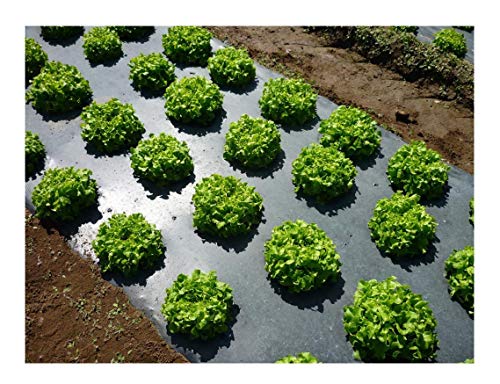
Our pick for black plastic on the rows
Best for: Warmer soil and fewer weeds, with drip line under it
Grower's Solution 1.0 mil Black Plastic Mulch, 4 x 100 ft
- Film (maker's spec): 1.0 mil, embossed
Black film that, by the maker's account, lets no light through, so weeds will not grow under it.
Our Amazon picks. The seed maker lists Crimson Sweet at 20 to 25 pounds and Sugar Baby at 6 to 10, figures of its own. The heat mat is 10 by 20.75 inches, with a thermostat its maker rates at 68 to 108 F. The black film is 1.0 mil thick, in 4 by 100 foot rolls.
More in our shop: watering tools.
What you'll need for watermelon
Picks on Amazon
- Melnor AquaTimer 2-Zone Digital Hose Timer Check price on Amazon
- Sow Right Crimson Sweet Watermelon Seeds Check price on Amazon
- Sow Right Sugar Baby Watermelon Seeds Check price on Amazon
- VIVOSUN Seedling Heat Mat and Digital Thermostat, 10 x 20.75 in Check price on Amazon
From our shop

Sources we used
Our watermelon numbers trace to these pages (copies kept, October 2026).
- "University of Illinois Extension: Watermelon"
- "Iowa State University Extension and Outreach: Growing Watermelon in the Home Garden" (reviewed 2024)
- "Utah State University Extension: How to Grow Watermelon in Your Garden" and "Cucumber Beetles"
- "University of Georgia Extension, Circular 1035: Home Garden Watermelon" (2022)
- "Clemson Cooperative Extension, HGIC 1325: Watermelons" (2023)
- "UF/IFAS Gardening Solutions: Watermelon"
- "NC State Extension, Plant Toolbox: Citrullus lanatus"
- "Texas A&M AgriLife Extension: Watermelon"
- "Alabama Cooperative Extension System: Watermelon" (2022)
- "University of Delaware Cooperative Extension: Grow Your Own Watermelon"
- "University of Minnesota Extension: Growing melons in the home garden", "Harvesting and storing melons, squash and pumpkins", "Bacterial wilt" and "Companion planting in home gardens"
- "University of Maryland Extension: Growing Melons in a Home Garden" and "Vegetable Succession and Companion Planting"
- "Johnny's Selected Seeds: Watermelons Key Growing Information" and "Seedless Triploid Watermelon Production"
- Maker pages: Gardena, "Water Control Bluetooth"; Sow Right Seeds, "Crimson Sweet" and "Sugar Baby"; VIVOSUN, heat mat; Grower's Solution, plastic mulch
Related guides
- Cantaloupe and other melons, ripe by slip, color and aroma.
- Cucurbits, the family's rotation and shared pests.
- Frost cloth and row covers, with the weights compared.
- Starting seeds indoors, with hardening off.
- Strawberries, in beds and pots.
- Blueberries, a fruit bush for acid soil.
- Fig trees, in the ground or a pot.
Frequently asked questions
When should you plant watermelon?
Once the frosts are over and the soil, 2 to 4 inches down, has warmed to 60 to 70 F. 65 F is a fair minimum, and some guides wait for soil above 70 F. In central Iowa that means mid-May.
How do you grow watermelon from seed?
Sow 2 to 6 seeds about 1 inch deep in each hill, with hills 2 to 8 feet apart, and thin to the strongest 1 to 3 plants. For an earlier crop, start seed indoors in peat pots 3 to 4 weeks before planting out.
How much space does a watermelon plant need?
A rule of thumb is 24 square feet per plant, with rows 6 to 10 feet apart. Vines run from 6 feet on bush types to 20 feet; for a small garden, choose bush or icebox types.
Do seedless watermelons need a pollinator?
Yes. A seedless plant cannot set fruit on its own pollen, so a seeded variety must grow with it: at least one for every three seedless plants, within 10 feet.
How do you know when a watermelon is ripe?
The spot it rests on changes from white or pale green to yellow or cream, the tendril nearest the fruit browns, and the rind tends to turn dull. On some varieties the tendril may brown 7 to 10 days early. Some guides also listen for a dull, hollow thump; others find thumping generally not a good indicator.
How long do watermelons take to grow?
70 to 100 days, depending on the variety. Once fruit sets, count about 35 days to a ripe melon.
What can you plant with watermelon?
Nasturtium and marigolds help lower the damage squash bugs and cucumber beetles do, and blue Hubbard squash can help pull cucumber beetles away. Avoid beds where watermelon or its relatives grew within the past 3 to 4 years.