
Best Mushroom Grow Kits (2026): 5 Picks
Five mushroom kits: countertop blocks and outdoor spawn.
As an Amazon Associate we earn from qualifying purchases. Some links are paid.
The best mushroom grow kit overall is the North Spore Blue Oyster Spray & Grow Kit: a 4-pound box of blue oyster mycelium that you open, mist daily and can harvest from in as little as 7 days.
Top picks
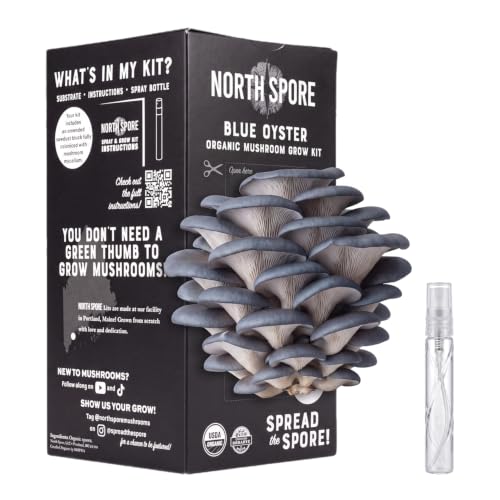
Best overall: first harvest on the counter
1. North Spore Blue Oyster Spray & Grow Kit
A 4-pound oyster block in its box, with a mister.

For lion's mane
2. Far West Fungi Lion's Mane Mini-Farm Grow Kit
A fully colonized block, misted twice a day.

For a warm room
3. Far West Fungi Pink Oyster Mini-Farm Grow Kit
A tropical oyster strain on sawdust, misted daily.
| Pick | Mushroom | Where it grows | You add | Where to buy |
|---|---|---|---|---|
| 1. North Spore Blue Oyster | Blue oyster | Kitchen counter | Water | Check price on Amazon |
| 2. Far West Fungi Lion's Mane | Lion's mane | Indoors | Water, a mister | Check price on Amazon |
| 3. Far West Fungi Pink Oyster | Pink oyster | Indoors, warm | Water | Check price on Amazon |
| 4. North Spore Shiitake Plug Spawn | Shiitake | Hardwood logs | Logs, drill bit, wax | Check price on Amazon |
| 5. North Spore Wine Cap | Wine cap | Garden bed | Wood chips or straw | Check price on Amazon |


Sources: North Spore, Far West Fungi, University of Vermont Extension, Cornell Small Farms Program and 2 more. See the sources we used. How we source our guides

On this page (11)
A mushroom grow kit is live mushroom mycelium already at home in its food, so the work is mostly misting and waiting. The five picks below differ in four ways: the mushroom, where it grows, what you add, and how long the first harvest takes. Three are blocks for indoors that fruit within weeks; two are spawn for outdoors, for a log or a garden bed, that pay off over seasons.
How we chose these: what each kit holds, measures and yields is its maker's own figure.
Start here: pick by room, yard and mushroom
- A first harvest from the kitchen counter: North Spore Blue Oyster Spray & Grow Kit (pick 1).
- Lion's mane, the white mushroom that grows in clusters like cauliflower: Far West Fungi Lion's Mane Mini-Farm Grow Kit (pick 2).
- Bright pink caps, in a room that stays warm: Far West Fungi Pink Oyster Mini-Farm Grow Kit (pick 3).
- Fresh-cut oak, maple or beech logs and a shady corner: North Spore Shiitake Mushroom Plug Spawn (pick 4).
- A garden bed you mulch with wood chips or straw: North Spore Wine Cap Mushroom Sawdust Spawn (pick 5).
- A gift that may wait a while before it is opened: North Spore Blue Oyster Spray & Grow Kit (pick 1), which keeps in the refrigerator for up to 6 months before you start it.
By the makers' list prices, the shiitake plugs and the two Far West Fungi blocks are the budget picks, though the plugs' logs, drill bit and sealing wax are extra; the blue oyster box and the wine cap spawn are the premium picks. Each one grows a mushroom you cook and eat.
Five kits, from a kitchen counter to a backyard log
Every figure for what a kit holds, measures and yields comes from its maker, and a comparison table follows the five picks.
1. North Spore Blue Oyster Spray & Grow Kit: our pick for a first harvest on the counter
Best for: A first kit, or a gift opened later Price class: premium
- Mushroom: Blue oyster
A box 10 inches tall, 5 wide and 5 deep that weighs 4 pounds, holding a sawdust block already grown through with blue oyster mycelium, plus a spray bottle and instructions. It is made for indoors only. You take off the perforated front panel, cut an X in the plastic behind it, and mist it every day.
Why it made the list: Oysters are considered the most reliable mushroom for a first-time grower: they grow quickly and put up with a range of household conditions, including the dry air a wood stove often leaves in a home. This box needs nothing but water, and its maker says fresh mushrooms can come in as little as 7 days. The first flush is usually somewhere between half a pound and 2 pounds, and more flushes are possible with care.
Before you order: Start it when it arrives if you can; if you need to wait, it can go in the refrigerator for up to 6 months. Give the cut area 5 to 10 sprays each time, and a bit more water if the surface looks very dry at the next misting. In an air-conditioned room or a dry climate, a humidity tent, which is not in the box, can help keep the block from drying out.
2. Far West Fungi Lion's Mane Mini-Farm Grow Kit: our pick for lion's mane
Best for: A cook who wants lion's mane Price class: budget pick
- Mushroom: Lion's mane
A block of lion's mane grown on sterilized sawdust, which arrives fully colonized and ready to fruit, with printed instructions and a link to a video guide. You open the window cut, mist it twice daily, and can typically pick a first cluster 7 to 14 days later. Its maker expects 1 to 2 pounds in all, spread over three to four flushes across about two months, though each kit is handmade and results vary.
Why it made the list: Lion's mane forms thick white clusters closer in look to a head of cauliflower than to a supermarket mushroom, and its maker says chefs liken its cooked texture to crab or lobster. It grows well indoors from a kit, though it can take longer to mature than an oyster.
Before you order: There is no spray bottle in the box: you need one, filled with water, and a spot in indirect light. Mist the clear bag morning and evening, enough to leave a light bead of water on the inside; spray the plastic, not the block, and never leave standing water in the bottom. As a gift, it is best set up within 7 to 10 days of arrival. White growth on the block before you open it is expected with lion's mane and means the block is ready to fruit.
3. Far West Fungi Pink Oyster Mini-Farm Grow Kit: our pick for a warm room
Best for: Pink caps in a house kept warm Price class: budget pick
- Mushroom: Pink oyster
A block of pink oyster mushroom on sterilized sawdust, from the same farm as pick 2. Open the box and mist daily, and its maker expects 1 to 2 pounds across three to four harvests.
Why it made the list: Pink oysters are a tropical strain that prefers warmer temperatures, so this is the block for a room that stays warm. The color is the draw. If the first mushrooms come up bright pink and quickly fade to white, harvest them anyway and open a few more holes in the bag: with pink oysters the second flush is usually better.
Before you order: Unlike the maker's other blocks, this one should stay out of the refrigerator, at room temperature for up to two weeks, before you start it; it will not perform well after being chilled. As a gift, set it up within 7 to 10 days of arrival. The maker does not say whether a mister comes in the box.
4. North Spore Shiitake Mushroom Plug Spawn: our pick for logs in the backyard
Best for: Fresh oak, maple or beech logs in shade Price class: budget pick
- Mushroom: Shiitake
100 plugs, each a piece of hardwood inoculated with shiitake spawn, for logs and stumps outdoors. You drill holes in the log, insert the plugs and seal them with wax, so you also need a drill bit, sealing wax and wax daubers. Plug spawn suits a smaller project of 1 to 10 logs. If it will wait more than 3 weeks, you may refrigerate it for up to 6 months.
Why it made the list: Logs are the method shiitake grows best by, and a log seeded once can keep producing for two to four years on average, depending on the strain, the wood, the log's size and the weather. The mushrooms tend to come in summer and fall and after rain, with brown, umbrella-shaped caps, medium to large, and a meaty texture once cooked. Oak, maple and beech are the woods to look for.
Before you order: This is the slow pick. Depending on the strain and the weather, expect to wait from about 6 months to 2 years before the first mushrooms. Use logs cut from live, healthy trees, about 4 to 6 inches across with the bark intact. After the plugs go in, keep the logs moist, shaded and sheltered from wind.
5. North Spore Wine Cap Mushroom Sawdust Spawn: our pick for a garden bed
Best for: A bed mulched with wood chips or straw Price class: premium
- Mushroom: Wine cap
A bag of wine cap spawn on sawdust, made only for outdoor beds. It fruits only once it is mixed into a woody substrate such as wood chips or straw, and logs are no use for wine cap. One bag inoculates approximately 16 square feet.
Why it made the list: Wine cap is the mushroom for a gardener's beds. Its first mushrooms can come within as little as two months; one bed then keeps producing for several years. It does best in partial shade: at the foot of a tree, in a perennial border, or mixed into the mulch of a vegetable garden, where the crops shade it. Its flavor is mild and earthy, reminiscent of artichokes and potatoes.
Before you order: You supply the wood chips or straw (not hay), and the bed must sit in contact with the soil. The bed can be watered in dry spells, but do not overdo it, since too much water can suffocate the mycelium; a fresh layer of woody material such as hardwood chips can go on each year to keep the bed healthy. Until you use it, keep the spawn refrigerated, and use it within 6 months. Mushrooms soak up almost anything in what they grow on, so use clean, untreated wood and a spot whose soil is free of contaminants.
How we chose these
We started from what a grow kit brings: live mushroom mycelium, either in the block it will fruit from or as spawn to start outdoors. We searched Amazon's catalog for culinary mushroom kits and spawn, kept only those whose maker publishes what ships and how to grow it on its own site, and checked each pick against that page. Grow bags sold with no mushroom in them were left out, and so were kits with no maker page we could find, or with maker pages that contradict each other on block weight and yield. From what remained we took one pick per job: a first countertop block, two blocks for other mushrooms, a log spawn and a garden-bed spawn.
The blue oyster box ranks first because oysters suit a first-time grower best, it needs only water, and it can wait months in the refrigerator before it starts. The two other indoor blocks follow, then the two outdoor picks, which ask for the most work and the longest wait. We did not grow these kits ourselves.
Our editorial policy says how we find, check and number the picks in every buying guide.
How the five kits compare
| Pick | Grows on (maker's spec) | Size (maker's spec) | In the box (maker's spec) | You add | First harvest (maker's spec) | Yield (maker's spec) | Before you start it (maker's spec) |
|---|---|---|---|---|---|---|---|
| 1. North Spore Blue Oyster Spray & Grow | Sawdust block, fully colonized | 10 x 5 x 5 in box, 4 lb | Block in its box, spray bottle, instructions | Water | In as little as 7 days | First flush usually 1/2 to 2 lb; more possible | Refrigerated, up to 6 months |
| 2. Far West Fungi Lion's Mane Mini-Farm | Sterilized sawdust block, fully colonized | Not given | Block, printed instructions, video guide link | Water and a spray bottle | Typically 7 to 14 days | 1 to 2 lb over 3 to 4 flushes, about 2 months | Refrigerated, up to 2 weeks (30 days at most) |
| 3. Far West Fungi Pink Oyster Mini-Farm | Sterilized sawdust block | Not given | Block; instructions, FAQs and videos | Water, misted daily | Not given | 1 to 2 lb over 3 to 4 harvests | Room temperature, up to 2 weeks; never refrigerated |
| 4. North Spore Shiitake Plug Spawn | Hardwood plugs, for logs or stumps | 100 plugs | Plugs | Fresh hardwood logs, drill bit, sealing wax, wax daubers | After at least 12 months | Not given; for years | Refrigerated, up to 6 months |
| 5. North Spore Wine Cap Sawdust Spawn | Sawdust spawn, for outdoor beds | 1 bag, about 16 sq ft of bed | Spawn | Wood chips or straw, a bed on the soil | In as little as 2 months | Not given; the same bed for several years | Refrigerated, used within 6 months |
Starting a countertop kit
Every indoor block here starts the same way, though the details vary from maker to maker, so read the instructions that come with yours. Leave the block in its plastic, open the cut the box marks (an X, or a window), and keep that cut damp. Some kits elsewhere ask you to soak the block or stand it in a dish of water; these three are misted. Set the kit in indirect light, such as beside a north-facing window. Mushrooms are fungi: they need no soil and no sunlight to fruit.
Expect about one to two weeks before anything shows. Then small knobs, called pins, appear, and they grow fast, sometimes doubling in size in a day. Harvest when the caps reach the size and shape your instructions describe, before they pass their prime: hold the cluster near its base and twist, or cut the stems with a knife or sharp scissors.
Temperature matters too. The lion's mane block does best below 70 F, ideally between 50 and 65 F; the pink oyster, a tropical strain, prefers it warmer. A block that dries out or gets very hot or cold is less likely to give you a second flush.
- Soft white fuzz: mycelium, the body of the fungus, not mold.
- A white patch on the bag: a filter that lets the block breathe while keeping contamination out.
- Yellow droplets on the block: a by-product of the mycelium as it grows, normal and harmless.
- Long, stringy stems: most likely too little fresh air. The mushrooms are fine to eat; harvest them and cut a few more X's in the bag for the next flush.
Getting a second flush
A block can give more than one harvest, and each later flush will likely be smaller as the mycelium uses up its food. After you pick, give the block about a week of rest somewhere cool and dry, then start it again as your instructions say. With ideal conditions, the Far West Fungi blocks could give 2 to 3 flushes and maybe up to 5. When a block is spent, add it to the compost or break it up into a garden bed or around the base of a tree, where, kept a little moist and shaded, it will likely fruit again.
Growing outdoors: shiitake logs and wine cap beds
Shiitake on logs. Drill the logs, fill the holes with plugs right away, and seal each one with melted wax, which keeps the spawn from drying out and keeps contamination out. Keep the logs moist and in shade, and water them well in hot, dry weather. When the mycelium has worked through the wood, small brown pinheads appear at the waxed holes. Pick the mushrooms while they are still firm, before they start to release spores; a twist or a sharp knife will do it.
Wine cap in a bed. Clear the spot of leaves down to bare ground or plain grass, with no trench needed. Spread wood chips or straw about 1 inch deep, break up the spawn and sprinkle it evenly over that layer, cover it with a second layer 2 to 3 inches thick, and water the bed thoroughly. Wine cap seems to do better with a mix of particle sizes, such as sawdust and wood chips together; branches and other big pieces take longer to colonize. Good hardwoods for the bed include poplar, magnolia, box elder and soft maple, and the mix can include some softwood, generally no more than 25%. Once a bed is going, its inoculated material can start a new one.
Eating, storing and drying the harvest
Cook home-grown mushrooms thoroughly. The first time you eat a kind you have not had before, eat only a little at first, even cooked, in case of an allergy.
Fresh mushrooms keep about a week in the refrigerator if you store them in a paper bag. For longer, slice them about 1/4 inch thick and dry them at 110 to 120 F for 4 to 8 hours, until dry and leathery; sealed airtight and kept somewhere cool and dry, they last for up to a year. Soak dried mushrooms in your recipe's liquid for about 30 minutes, or add them straight to a soup or stew.
Related guides
- Microgreens, another crop to grow indoors through the winter.
- Indoor herb gardens, for fresh herbs on the same counter.
- Raised garden beds, for the vegetable beds a wine cap mulch can share.
- Compost bins, where a spent mushroom block can go when it is done.
Frequently asked questions
What is the best mushroom grow kit?
For most people, the North Spore Blue Oyster Spray & Grow Kit: a 4-pound box of blue oyster mycelium that you open, mist every day and can harvest from in as little as 7 days. For lion's mane, see pick 2; for a log or a garden bed outdoors, picks 4 and 5.
How long does a mushroom grow kit take?
Indoors, pins usually show within one to two weeks, and the first harvest can come in as little as 7 days to 3 weeks; lion's mane can take longer to mature than an oyster. Outdoors is slower: a wine cap bed can give its first mushrooms within as little as two months, and shiitake logs take from about 6 months to 2 years.
Do mushroom grow kits need sunlight?
No. Mushrooms are fungi and need no soil or sunlight to fruit. Indirect light, such as beside a north-facing window, is enough.
How many times can you harvest a mushroom kit?
More than once with care. A block could give 2 to 3 flushes and maybe up to 5 in ideal conditions, each one likely smaller than the last. Rest the block about a week between flushes.
Can you grow mushrooms outside?
Yes, from spawn rather than a countertop block: shiitake plugs go into fresh hardwood logs, and wine cap spawn goes into a bed of wood chips or straw. The three indoor blocks here are made for indoors.
Is the white fuzz on a mushroom kit mold?
No. The soft white growth is mycelium, the body of the fungus, and it is completely normal on a kit.
Sources
- "North Spore: Blue Oyster Spray & Grow Mushroom Growing Kit"
- "Far West Fungi: Lion's Mane Mushroom Mini-Farm Grow Kit"
- "Far West Fungi: Pink Oyster Mushroom Mini-Farm Grow Kit"
- "Far West Fungi: Mini-Farm Frequently Asked Questions"
- "North Spore: Shiitake Mushroom Plug Spawn"
- "North Spore: Log Cultivation FAQ"
- "North Spore: Wine Cap Mushroom Sawdust Spawn"
- "University of Vermont Extension: Grow Gourmet Mushrooms At Home"
- "University of Vermont Extension: Growing Mushrooms Indoors"
- "Cornell Small Farms Program: Guide to Urban Farming, Mushrooms"
- "University of Illinois Extension: Your Guide to Growing Shiitake Mushrooms at Home"
- "Ohio State University Extension: Shiitake Mushroom Production, Inoculating Logs with Spawn (F-0040)"