
How to Grow Microgreens at Home: Seeds, Trays, Light and Harvest
Sow microgreen seed thickly on 1 to 1 1/2 inches of moist soilless mix, keep it covered until it sprouts, then give it about 16 hours of light a day. Cut just above the mix at the first true leaves, usually 7 to 21 days after sowing. Skip tomato, pepper, eggplant and potato seed.
Sources: University of Maryland Extension, Utah State University Extension, Clemson Cooperative Extension, Iowa State University Extension and Outreach and 7 more. See the sources we used. How we source our guides
On this page
Sow microgreen seed thickly on 1 to 1 1/2 inches of moist soilless mix (University of Maryland Extension), cover the tray until the seeds sprout, then move it under a grow light or into a bright window. Cut the stems just above the mix when the first true leaves appear, usually 7 to 21 days after sowing.
Microgreens are vegetable and herb seedlings eaten young: a winter crop for a kitchen counter, most of it ready within three weeks of sowing. Below: seeds to use and skip, the covered start, light hours, harvest days by crop from two extension tables, microgreens vs sprouts, and what the food safety sources say.
| Seed | Sold for microgreens or sprouting, or marked untreated (Clemson, Penn State) |
|---|---|
| Container | A shallow tray with drainage holes; 1020 trays work well (Utah State) |
| Growing mix | Soilless mix, coconut coir or a grow mat; no garden soil (Maryland, Utah State) |
| Mix depth | 1 to 1 1/2 inches (Maryland) |
| Temperature | 70 to 75 F (Maryland); 74 F to germinate (Utah State) |
| Light | About 16 hours a day (Maryland); 18 on and 6 off (Utah State) |
| Harvest | At the first true leaves, 2 to 3 inches tall, 7 to 21 days after sowing (Maryland) |
| Regrowth | None: cut seedlings do not regrow (Maryland) |
| Skip | Tomato, pepper, eggplant and potato seed (Penn State) |
What are microgreens? Microgreens vs sprouts vs baby greens
Microgreens are seedlings cut at the true leaf stage: the first seed leaves (cotyledons) have opened and the first true leaves are just showing. University of Maryland Extension harvests stems, seed leaves and emerging true leaves together and notes that most of the flavor sits in the leaves. At harvest they stand about 1 to 3 inches tall (Clemson); Penn State's growing guide says about 1.5 to 3 inches.
| Stage | What you eat | How it grows | Size and timing |
|---|---|---|---|
| Sprouts | The whole sprout, seed and root included (Penn State, Iowa State) | Soaked seed, often in the dark (Penn State) | Harvested 1 to 2 days after germination (Iowa State) |
| Microgreens | Stems and leaves, cut above the mix (Penn State, Iowa State) | In soil or a soilless mix, with light (Clemson) | 7 to 21 days after sowing, at 2 to 3 inches (Maryland) |
| Baby greens | The leaves (NC State) | In a mix; may need some fertilizer (NC State) | 21 to 40 days after sowing, at 4 to 6 inches (Maryland) |
The difference matters for food safety, not only for the menu. The FDA treats microgreens and sprouts as different products and separates them mainly by how far the leaves have grown: sprouts are usually harvested before true leaves emerge, while microgreens are harvested later, at a stage it says is typically linked to the appearance of true leaves. Microgreens also usually grow in soil or a substrate and are cut above it, where a sprout is eaten with its seed attached. For sprouts in a jar, see our sprouting seeds guide.
What do food safety sources say about homegrown microgreens?
Microgreens are normally eaten raw (Penn State), so the sources put their weight on clean seed, clean growing mix and clean hands. Penn State's food safety article rates microgreens' risk slightly lower than that of sprouts, because light exposure can reduce bacteria and sprouts keep their seed and often grow in water. But the warm, moist conditions microgreens like suit bacteria too. The FDA explains why seed matters for sprouts: a few bacteria on a seed can multiply to high levels in warm, humid sprouting conditions, even in a clean kitchen.
What the sources ask of home growers:
- Seed. Use seed labeled for microgreens or marked untreated, since some seed is pre-treated with fungicide (Clemson). Penn State wants seed sold for sprouts and microgreens, neither chemically treated nor coated, because that seed should be produced to food safety standards.
- Growing mix. No garden soil, manure or compost, which Clemson says may carry bacteria. Penn State's food safety article for commercial growers adds that growing media can harbor E. coli, Listeria and other pathogens, and rules out mixes containing raw manure.
- Containers and tools. Clean reused containers with soap and water (Clemson). Iowa State calls sanitation key during harvest and storage: wash your hands and every container and tool. NC State starts with a sterile tray.
- Harvest. Cut above the mix and leave the roots; because microgreens grow in media, NC State says not to eat the root.
- Water. For commercial growers, Penn State requires water free of E. coli for soaking, rinsing, irrigation and washing, and says a municipal supply needs no testing.
To wash or not. The sources split. Maryland and Iowa State rinse microgreens after cutting and pat them dry; Clemson stores them unwashed until you are ready to use them; Penn State's commercial guidance advises against washing after harvest unless absolutely necessary, because washing can spread contamination.
Sprouts are a separate case. The FDA says people more vulnerable to foodborne illness should avoid sprouts of any kind eaten raw or lightly cooked, and Kansas State's home sprouting sheet highly recommends treating sprout seed before soaking it. For microgreen growers on farms, the FDA also recommends considering the sprout practices voluntarily (UNH Extension). Among the seven home microgreen guides we read, Clemson covers seed, mix and containers, Iowa State hands, containers and tools, NC State a sterile tray, and Illinois untreated seed; Maryland and Oregon State mention only clean scissors and containers, and Utah State none. None of the seven prescribes a seed treatment.
Which seeds grow well as microgreens?
Most leafy vegetables and many herbs work. Maryland singles out two plant families: the amaranth family (beets, Swiss chard, amaranth) and the cabbage family (kale, cabbage, radish, mustard, arugula), with the cabbage family faster to sprout and grow. Penn State's brassicas take 7 to 8 days at most. Peas, sunflower, cilantro, basil, carrots and onions can be grown as microgreens too (Maryland, Penn State).
| Crop | Clemson: days to harvest | Utah State: estimated time to harvest | Utah State: soak and covered time |
|---|---|---|---|
| Arugula | Not listed | 6 to 8 days | No soak; covered 1 to 2 days |
| Basil | 8 to 12 | 12 to 16 days | No soak; covered 4 to 7 days |
| Beet | 11 to 21 | Not listed | Not listed |
| Broccoli | 8 to 10 | 8 to 12 days | No soak; covered 2 to 4 days |
| Cilantro | Not listed | 21 to 28 days | No soak; covered 7 to 14 days |
| Kale | 10 to 15 | 8 to 12 days | No soak; covered 1 to 2 days |
| Pea | 10 to 15 (green pea) | 8 to 10 days | 6-hour soak; covered 3 days |
| Radish | Not listed | 8 to 12 days | No soak; covered 1 to 2 days |
| Sunflower | 8 to 12 | 9 to 10 days | 12-hour soak; covered 3 days |
As each table gives them; neither says whether it counts from sowing or from sprouting. Clemson also lists nasturtium at 14 to 16 days.
Where the sources disagree: lettuce. NC State says lettuces are too delicate to make good microgreens. Maryland counts lettuce among the greens that grow acceptably in lower light, and Penn State lists it with other common microgreen vegetables.
One kind per tray, mostly. Maryland advises against mixing species, because each sprouts and grows at its own pace, and Penn State and NC State generally sow one type per tray unless the types grow at similar rates. Iowa State usually plants one species per container, though it adds that mixed species are generally preferred; Penn State combines types after harvest.
Seeds to skip
Penn State rules out tomato, pepper, eggplant and potato: their seedlings are not edible, because they contain alkaloids that are toxic to people at high levels. Oregon State's list of seeds to avoid adds tomatillos. Penn State also warns against wild plants unless you are an expert, since many wild species contain toxic compounds even when they may look edible, and against any species that may cause you an allergic reaction.
Old garden seed? Oregon State says seed from past seasons works for microgreens, and suggests sowing extra if you are unsure it will sprout. Penn State's growing guide steers away from pesticide-treated seed, because on some species the seedling keeps its seed coat, which can be eaten. In our reading, check the old packet for a seed treatment before you sow it for eating.
What you need to grow microgreens
- A shallow tray with drainage holes. Clemson uses trays 1 to 2 inches deep with clear lids; Oregon State uses a clean container 2 to 3 inches deep, such as a recycled berry or mushroom box; Utah State finds 1020 trays work well. The standard greenhouse flat is 10 inches by 20 inches (Maryland), which in our reading is where the name 1020 comes from. Maryland describes the common setup: a tray with holes that holds the mix and seed, set inside one without holes that serves as a water reservoir.
- A growing medium. Utah State uses a hydroponic grow mat, coconut coir or seed-starting mix; Maryland and NC State use a lightweight soilless mix. Garden soil is too dense for indoor trays (Maryland).
- Or a mat. Single-use mats of jute, hemp, bamboo, coir or wood fiber, cut to fit a flat, replace the mix, and the seeds root into them (Maryland). Penn State finds mat-grown microgreens come out cleaner than those grown in potting soil.
- Seed, a spray bottle, clean scissors and a light: a sunny window or a grow light (Clemson, Utah State).
- No fertilizer. Maryland says the seed holds the nutrients the seedlings need before harvest; Penn State uses little or none.
How to grow microgreens, step by step
- Soak big seeds. Maryland soaks pea, sunflower, beet, Swiss chard, cilantro and buckwheat for 6 to 12 hours to speed germination. Utah State soaks pea for 6 hours and sunflower for 12; Oregon State soaks large seed overnight.
- Fill the tray. Moisten the mix first (Clemson) and spread it 1 to 1 1/2 inches deep (Maryland); NC State uses 1/2 to 1 inch. Utah State wets coconut coir to the feel of a wrung-out sponge, puts 2 quarts in a 1020 tray with holes, sets that in a solid tray holding 2 cups of water, and pours off what is left after 30 minutes.
- Sow thickly. Microgreen seed goes on far denser than garden seed, because the crop is cut before crowding causes trouble, and nothing needs thinning (Maryland). Rates are below.
- Press it in and cover lightly. Press seed into the mix by hand or with a flat block of wood (Maryland). Clemson says a light covering of mix can go over larger seeds, and Penn State scatters a thin layer of mix or vermiculite over the seed for more even moisture.
- Cover it until it sprouts. Clemson and Maryland cover the tray with a clear lid or plastic to trap warmth and moisture, and Clemson sets the covered tray under a light; Oregon State blocks out light with foil or a plate and mists every 12 hours. Utah State sets a second 1020 tray directly on the seed with 2 to 5 pounds on top for the first half of the covered time, so roots push down, then flips that tray over as a loose cover. A few days of darkness after sprouting lengthens the stems, which makes cutting easier (Maryland).
- Uncover and give light once the seedlings are up, around 3 to 4 days for Oregon State; light hours are in the next section.
- Water gently. Mist for the first few days, then water from the bottom or from the top (Maryland). Iowa State bottom-waters to keep foliage dry, and Penn State sets home trays in a tub of shallow water and lifts them out once the mix is wet. Keep the mix moist but never saturated (Maryland).
Temperature. Maryland grows microgreens at 70 to 75 F and finds cabbage family seed sprouts at 72 F in about 36 hours. Utah State holds 74 F during germination, then 72 F with the lights on and 68 F with them off; Iowa State keeps the seed bed at 70 F, and Penn State gives 60 to 75 F for the soil and 60 to 70 F for the air as ideal.
How much seed per tray?
Sow by weight, by volume or by eye (Maryland, Penn State). Larger seed goes on less densely, because it makes bigger shoots (Penn State).
- Maryland: about 1 tablespoon, roughly 10 to 15 grams, per 10-by-20-inch flat, or seeds 3/16 to 1/4 inch apart.
- Penn State's growing guide: it has had success with 10 to 15 grams per standard 12-by-20-inch tray; a tablespoon of brassica seed weighs about 11 to 12 grams.
- Penn State's ABCs: as a general rule, large seed at about 2 per square inch, small seed at up to 12, with a seed density calculator to do the math.
- Utah State, per 1020 tray: 10 grams of arugula; 28 of broccoli, kale or basil; 42 of radish; 48 of sunflower; 150 of pea.
How much light do microgreens need?
Plan on about 16 hours of light a day once the seedlings are up.
| Source | Hours of light | Distance or note |
|---|---|---|
| University of Maryland Extension | About 16 a day, from any source | Typically 6 to 12 inches over the leaves |
| Utah State | 18 on, 6 dark, on a timer | A south-facing window can also work |
| Oregon State | 15 a day is ideal | A lamp can sit just 3 inches over the plants |
| Clemson | Not given | About 4 inches above the sprouts |
| Illinois | At least 4 a day | Leggy seedlings may need a grow light |
Window or lights? A window can do it, but winter days are short: Utah State notes a Utah winter day can bring as little as 8 hours of sun. Maryland finds microgreens generally do better under lights, though lettuce, arugula, mustards and Asian greens manage in less light, and Penn State calls microgreens a low-light crop. Dim light makes seedlings lean and stretch, leggy but still edible, so Oregon State turns the container to keep stems straight.
Keep the air moving. Utah State runs a gentle fan, especially near a sunny window, and Maryland adds a breeze and vents any tray cover now and then so trapped moisture does not lead to mold.
When and how to harvest microgreens
Cut microgreens when the first true leaves appear (Utah State, Iowa State, Illinois); Maryland waits until the true leaves have expanded. Timing varies by crop and by source: typically 7 to 21 days after sowing (Maryland, NC State), as few as 7 and up to 21 days after seeding (Penn State), 10 to 14 days for many kinds (Oregon State) and usually within 10 to 14 days (Illinois), with the first true leaves usually about 2 weeks after germination (Iowa State).
- How to cut: cut just above the mix using a clean knife or sharp scissors (Maryland, Clemson), leaving the roots behind (NC State).
- Then resow: the seedlings will not regrow, so wash the tray and sow the next batch (Maryland).
- Reusing mix: the sources disagree. Maryland screens used mix once the roots dry and refreshes it half and half with new; Penn State finds new mix for each crop better for keeping disease down.
Storage. Times range widely: Maryland refrigerates rinsed microgreens for up to 10 days; Iowa State and Illinois keep them up to a week; Oregon State prefers to eat them right away and stores them only 1 to 2 days, wrapped in a paper towel in a plastic bag. For growers, Penn State cites research in which storing at 41 F in the dark can extend shelf life up to 10 to 14 days, against 2 to 4 days at room conditions.
Pea shoots and sunflower shoots
Big seeds make larger shoots (Penn State) and need different handling: a soak first (Maryland, Utah State, Oregon State) and a lighter sowing rate (Penn State). Utah State sows 150 grams of pea per 1020 tray after a 6-hour soak, keeps it covered 3 days and puts its estimated harvest at 8 to 10 days; Clemson gives 10 to 15 days for green pea. Sunflower takes 48 grams after a 12-hour soak and an estimated 9 to 10 days at Utah State, or 8 to 12 days in Clemson's table.
Microgreen problems: mold, damping off and leggy seedlings
- Rot and mold. Seed and seedlings can rot or mold when the mix stays too wet and cold (Oregon State), and Iowa State warns that overwatering can lead to root rot or damping off.
- Damping off. The only disease Penn State met in its class trays; it is favored by warm, humid conditions. The sources' defenses: good air circulation and vented covers (Maryland), watering from below without overwatering (Iowa State) and fresh mix for each crop (Penn State).
- Leggy, leaning seedlings. Too little light. Clemson keeps its light about 4 inches above the sprouts to guard against it; Illinois adds a grow light.
- Patchy stands. Dark seed can be hard to see on dark mix, so practice sowing evenly (Maryland); Penn State seeds a tray's edges first, then the middle, for full coverage.
Microgreen seeds and supplies
You need seed sold for microgreens or sprouting, or untreated seed (Penn State, Clemson), a shallow tray with drainage holes over a solid tray (Maryland), soilless mix or a grow mat, and a light. Utah State's examples of seeds labeled for microgreens are radish, broccoli, sunflower and pea shoots.
What you'll need for microgreens
As an Amazon Associate we earn from qualifying purchases.

Survival Garden Seeds Pea Microgreen Seeds
Utah State's examples of seeds labeled for microgreens are radish, broccoli, sunflower and pea shoots.
Check price on Amazon
Todd's Seeds Broccoli Sprouting Seeds
Utah State's examples of seeds labeled for microgreens are radish, broccoli, sunflower and pea shoots.
Check price on Amazon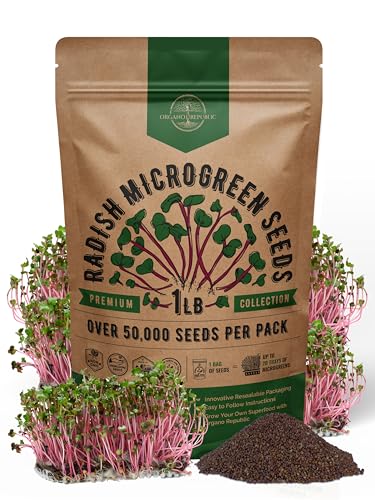
Organo Republic Radish Sprouting and Microgreens Seeds
Utah State's examples of seeds labeled for microgreens are radish, broccoli, sunflower and pea shoots.
Check price on Amazon
Survival Garden Seeds Sunflower Microgreen Seeds
Utah State's examples of seeds labeled for microgreens are radish, broccoli, sunflower and pea shoots.
Check price on Amazon
Bootstrap Farmer 1020 Trays with Holes, 10 Pack
A shallow tray with drainage holes; 1020 trays work well (Utah State).
Check price on Amazon
Bootstrap Farmer Shallow 1020 Trays, No Holes, 5 Pack
A shallow tray with drainage holes over a solid tray (Maryland).
Check price on Amazon
Emsiok Hemp Fiber Microgreen Grow Mat Roll, 10 x 236 in
Single-use mats of jute, hemp, bamboo, coir or wood fiber, cut to fit a flat, replace the mix (Maryland).
Check price on Amazon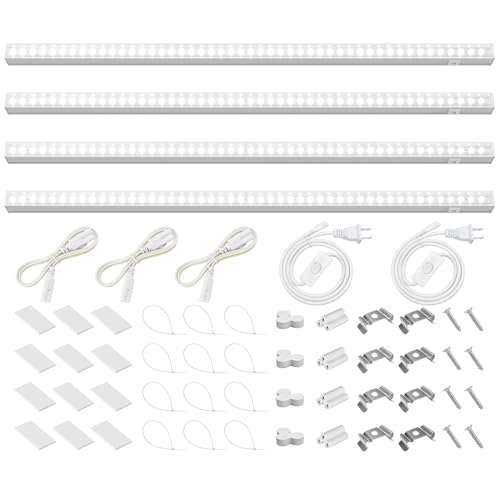
Barrina T5 LED Grow Lights, 2 ft, 4 Pack
A light: a sunny window or a grow light (Clemson, Utah State).
Check price on Amazon
Sources we used
Each of these pages was read, and a copy saved, on October 29, 2026; if two pages disagree on a figure, both figures are on this page.
- "University of Maryland Extension: Growing Microgreens and Baby Greens Indoors"
- "Utah State University Extension: Grow Your Own Microgreens"
- "Clemson Cooperative Extension HGIC: Growing Microgreens"
- "Iowa State University Extension and Outreach: How to Grow Your Own Microgreens"
- "Penn State Extension: The ABCs of Microgreens", "Growing Microgreens" and "Ensuring Food Safety in Microgreens Production"
- "Oregon State University Extension Service: Microgreens"
- "Illinois Extension: Microgreens are a big deal"
- "N.C. Cooperative Extension, Caldwell County: What Are Microgreens?"
- "U.S. FDA: Sprout standards, Guidance for Industry (Produce Safety Rule)" and "Selecting and Serving Produce Safely"
- "UNH Cooperative Extension: Sprouts or Microgreens, Where does your farm fall under FSMA?"
- "Kansas State Research and Extension: Sprouting Seeds at Home, Safely"
Related guides
- Sprouting seeds, for sprouts grown in a jar, with the FDA's advice on raw sprouts.
- How to grow kale to full size in the garden.
- How to grow radishes, from seed to root outdoors.
- How to grow arugula, the peppery salad green, outdoors.
- How to grow sunflowers to full flower in the garden.
- Grow lights for indoor plants, including linkable bars for a shelf of microgreen trays.
- Indoor herb gardens, lit countertop gardens for growing herbs indoors.
Frequently asked questions
How do you grow microgreens at home?
Sow seed thickly on 1 to 1 1/2 inches of moist soilless mix in a shallow tray, per University of Maryland Extension, and keep it covered and warm, about 70 to 75 F, until it sprouts. Then give it about 16 hours of light a day, keep the mix moist, and cut just above it when true leaves appear.
How long do microgreens take to grow?
Most microgreens are ready 7 to 21 days after sowing, per University of Maryland Extension, and many in 10 to 14 days (Oregon State, Illinois). Clemson's table runs from 8 to 10 days for broccoli to 11 to 21 for beet; Utah State's runs from 6 to 8 days for arugula to 21 to 28 for cilantro.
What is the difference between microgreens and sprouts?
Microgreens are grown in a mix and cut above it at the true leaf stage, while sprouts are germinated seeds eaten whole, seed and root included, per Penn State Extension. The FDA separates the two mainly by leaf stage: sprouts are usually harvested before true leaves emerge, and microgreens at a later stage, typically linked to true leaves.
What food safety steps do extension guides give for home microgreens?
They focus on seed, mix and hygiene: Clemson Extension asks for seed labeled for microgreens or marked untreated, and for potting mix rather than garden soil, manure or compost. Iowa State washes hands, containers and tools during harvest and storage. Penn State rates microgreens slightly lower in risk than sprouts, but their warm, moist trays also suit bacteria.
How much light do microgreens need?
About 16 hours of light a day, per University of Maryland Extension, from grow lights typically 6 to 12 inches above the leaves, or from a sunny window. Utah State runs its lights 18 hours on and 6 off, and Oregon State calls 15 hours ideal. Too little light gives leaning, leggy seedlings, still edible (Oregon State).
Do microgreens grow back after cutting?
No. University of Maryland Extension says cut microgreen seedlings will not regrow, so wash the tray and sow a new batch. Baby greens are different: Maryland lets them reach 4 to 6 inches before cutting, and they come back for 1 to 2 more cuts. Penn State finds fresh mix for each crop better for limiting disease.
Can you grow microgreens without soil?
Yes. Utah State University Extension grows microgreens on a hydroponic grow mat, coconut coir or seed-starting mix, and Maryland notes that potting mixes contain no true soil. Maryland also lists single-use mats of jute, hemp, bamboo, coir or wood fiber, cut to fit a flat, and Penn State finds mat-grown microgreens come out cleaner.
What seeds should you not use for microgreens?
Skip tomato, pepper, eggplant and potato: Penn State Extension says their seedlings are not edible, because they contain alkaloids that are toxic at high levels, and Oregon State adds tomatillos. Avoid pesticide-treated seed too, since some seedlings keep their seed coat, which can be eaten (Penn State), and wild seed unless you are an expert.