
Best Compost Bins (2026): 5 Picks
Our pick for batch composting is the Lifetime 60072 Dual Compost Tumbler: one 50-gallon drum cures while you fill the other, the two-bin setup University of Missouri Extension calls always better where space permits. For fall leaves, the Geobin Compost Bin; for a small yard, the FCMP Outdoor Half Size Rolling Composter; for worms, the FCMP Outdoor Essential Living Composter; for the counter, the simplehuman Compost Caddy.
On this page
As an Amazon Associate we earn from qualifying purchases.
Our top picks

Our pick for batch composting
1. Lifetime 60072 Dual Compost Tumbler
Best for: Filling in loads, one batch curing while the next fills
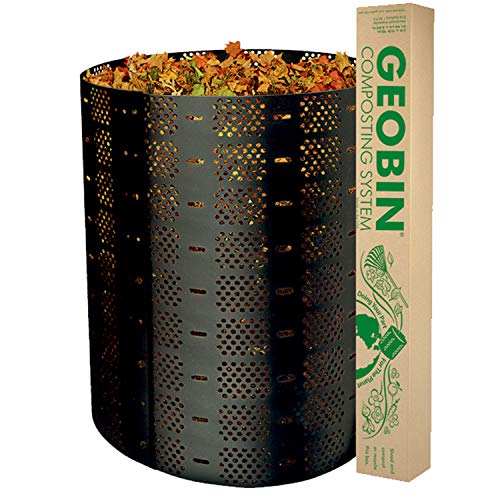
Our pick for fall leaves
2. Geobin Compost Bin
Best for: A yard with a big fall leaf drop

Our pick for a small yard
3. FCMP Outdoor Half Size Rolling Composter
Best for: A patio or small yard that makes little plant waste
Our pick for batch composting is the Lifetime 60072 Dual Compost Tumbler: one 50-gallon drum cures while you fill the other, the two-bin setup University of Missouri Extension calls always better where space permits. For fall leaves, the Geobin Compost Bin; for a small yard, the FCMP Outdoor Half Size Rolling Composter; for worms, the FCMP Outdoor Essential Living Composter; for the counter, the simplehuman Compost Caddy.
Below: the five picks, how to compost a fall leaf pile, a bin size table, and when a tumbler is the faster choice.
Start here: which compost bin for your yard
- You fill it in loads, from a mowing or a bed cleanup: Lifetime 60072 Dual Compost Tumbler (pick 1).
- Your trees drop a pile of leaves every fall: Geobin Compost Bin (pick 2).
- A patio or small yard that makes little plant waste: FCMP Outdoor Half Size Rolling Composter (pick 3).
- No yard, or you want to compost indoors: FCMP Outdoor Essential Living Composter (pick 4).
- Any kitchen that saves scraps for one of the above: simplehuman Compost Caddy (pick 5).
The main fork is turning or holding. Illinois Extension says turning units make compost faster because they get oxygen to the pile's bacteria, while holding units skip the turning and need 6 months to 2 years.
The picks, by job
One job per pick; the specs below are each maker's published figures.
1. Lifetime 60072 Dual Compost Tumbler: our pick for batch composting
Our pick for batch composting
Best for: Filling in loads, one batch curing while the next fills
Lifetime 60072 Dual Compost Tumbler
- Capacity: Two 50-gallon drums, 6.7 cubic feet each
- Drums: High-density polyethylene, dark double-wall panels
- Frame: Powder-coated steel, tool-free assembly
Two 50-gallon drums let one batch cure while you fill the other.
Two 50-gallon (6.7 cubic foot) drums on a powder-coated steel frame, 100 gallons in all. Lifetime makes the drums from high-density polyethylene with dark, double-wall panels meant to soak up and keep heat, and adds an aeration bar inside, extra-large removable lids, a spring-loaded pin that stops the drum spinning while you load it, and colored handle markers that show which batch is which. Lifetime calls the assembly tool-free and lists a 5-year limited warranty.
Why it is our pick: A tumbler works in batches. Illinois Extension says to save material until a turning unit can be filled to the right level, then add nothing new once the turning has begun. Two drums remove the wait: one side cures while scraps go into the other, which is the reason University of Missouri Extension prefers two bins wherever there is room.
Good to know: Each drum holds about a quarter of the 3-foot cube that Colorado State University Extension gives as the usual minimum for a pile that heats, though the same fact sheet says a well-insulated plastic bin can hold enough heat at a smaller size. Set it where the ground drains, with a hose in reach, as US EPA advises.
2. Geobin Compost Bin: our pick for fall leaves
Our pick for fall leaves
Best for: A yard with a big fall leaf drop
Geobin Compost Bin
- Capacity: 70 to 246 gallons
- Size: 36 inches tall, 24 to 44 inches across
- Weight: 7.8 pounds
An expandable ring that opens to 246 gallons, room for a season of leaves.
A single sheet of high-density polyethylene, full of air holes, that curls into a ring and locks with closure keys. Yardfully lists it at 36 inches tall and 24 to 44 inches across, or 70 to 246 gallons, says it holds 33 cubic feet, and gives its weight as 7.8 pounds. Its installation guide calls 3 to 3 1/2 feet across typical for an average urban yard and suggests keeping at least 7 inches of overlap.
Why it is our pick: Fall leaves land all at once, and they are the browns a pile runs on: US EPA lists dry leaves as a brown and suggests storing a supply to mix with food scraps. PlantTalk Colorado, from Colorado State University Extension, puts the minimum bin at 3 by 3 by 3 feet and says bins over 6 feet across may restrict oxygen; at 36 inches tall and up to 44 inches across, the Geobin sits inside that range. Reviewed's testers liked how easy it was to fill and that its size adjusts, and suggested it might suit garden scraps better than a lot of food waste, which is the leaf job.
Good to know: It has no lid and no floor. Reviewed's testers found that animals dug under its edge for food scraps, that it shifted on uneven ground until they ringed it with rocks, that rain and snow soaked the pile, and that the only way they saw to empty it was to lift the ring off the heap. Yardfully says to set it on level, well-drained ground, adds that stakes can steady it, and says to turn the pile every four to six weeks.
3. FCMP Outdoor Half Size Rolling Composter: our pick for a small yard
Our pick for a small yard
Best for: A patio or small yard that makes little plant waste
FCMP Outdoor Half Size Rolling Composter
- Capacity: 19 gallons, 2.5 cubic feet
- Size: 24 by 12 by 24 inches
- Assembly: None, ready to use
A 19-gallon drum that arrives ready to use and rolls to the garden to empty.
One 19-gallon (2.5 cubic foot) drum, 24 by 12 by 24 inches, in polyethylene that FCMP lists as recycled, UV-inhibited and BPA-free. FCMP says it arrives ready to use with no assembly, and its deep fins double as handholds and break up clumps inside.
Why it is our pick: Colorado State University Extension says compact plastic composters suit small yards with few plant wastes, and FCMP made this one half the size of its original Rolling Composter for smaller yards. FCMP says you can roll it to the garden to dump the finished compost. Bob Vila's testers called it a good size for a household of one or two that makes little compostable waste, and found it came nearly assembled.
Good to know: Small means frequent turning: FCMP says 5 to 6 turns every 2 to 3 days. Bob Vila's testers found it awkward to turn because the drum rests loose on its stand, found the door tight, and had to lift the drum to empty it, which can be a challenge once it is full and heavy. At 2.5 cubic feet it holds about a tenth of a 3-foot cube.
4. FCMP Outdoor Essential Living Composter: our pick for composting with worms

Our pick for composting with worms
Best for: No yard, or composting indoors
FCMP Outdoor Essential Living Composter
- Trays: Two, 4 gallons each
- Size: 15 by 15 by 21 1/4 inches
- Worms: Not included: order red wigglers
Two stacking trays the worms climb through, sized for a small space indoors or out.
Two stacking trays, each 4 gallons (0.53 cubic feet), over a base that collects liquid, 15 by 15 by 21 1/4 inches assembled, in BPA-free, UV-inhibited, recycled polypropylene. FCMP molds 52 angled tunnels into the bottom of each tray so worms can climb between trays, and runs a moisture channel around each tray so the bedding does not dry out at the edges.
Why it is our pick: US EPA says a worm bin takes up little space and can be kept indoors or outdoors. In a stacking tray system, Illinois Extension explains, the worms finish one tray, move up into a fresh one on top, and leave the bottom tray to harvest. Reviewed's tester kept one in an apartment for nearly two months and found that once the worms were settled, the bin asked for very little work.
Good to know: FCMP does not ship worms; US EPA suggests starting with one pound of red wigglers, about 1,000 worms. Illinois Extension says to keep the bin between 55 and 80 F, out of direct sun; US EPA gives 59 to 77 F. Reviewed's tester noticed a smell that grew each time the lid came off after adding scraps, though FCMP says the speed of worm composting keeps the typical odor to a minimum.
5. simplehuman Compost Caddy: our pick for kitchen scraps

Our pick for kitchen scraps
Best for: Collecting scraps on the counter
simplehuman Compost Caddy
- Capacity: 4 liters
- Finish: Brushed stainless steel
- Warranty: 5 years, per simplehuman
A 4 liter steel caddy that docks on a simplehuman can or sits on the counter.
A 4 liter caddy in brushed stainless steel with a soft-seal lid and a smooth inner bucket that lifts out for dumping and rinsing. A magnetic dock holds it on the side of a simplehuman trash can and props the lid open while you scrape a cutting board; the caddy lifts off the dock for the counter. simplehuman lists a 5-year warranty.
Why it is our pick: US EPA suggests a closed container for fruit and vegetable scraps, kept on the counter, under the sink, or in the fridge or freezer. Reviewed's testers found it handy next to a simplehuman can, where it doubled as a reminder to sort scraps, and usable on a counter without one.
Good to know: Reviewed's testers found the narrow bin filled after a meal or two. simplehuman says its Code Z liners are certified compostable and break down completely, but US EPA lists compostable bags among the things to keep out of a backyard pile, since home piles generally do not get hot enough to break them down. Tip the scraps into the bin and keep the liner out.
How we chose these
Fourteen compost bins, tumblers, worm bins and kitchen pails from the Amazon catalog went into our comparison, and we kept one per job. For every pick we read the maker's own page: Lifetime, Yardfully (with its Geobin installation guide), FCMP Outdoor and simplehuman. For how each kind of bin works we read US EPA, University of Missouri Extension, Illinois Extension, Colorado State University Extension (with its PlantTalk Colorado page on fall leaves) and Iowa State University Extension. For the products themselves we read independent testers who handled them: Bob Vila's compost tumbler roundup, for the FCMP Half Size Rolling Composter, and Reviewed's compost bin roundup and worm composter review, for the Geobin, the simplehuman caddy and the FCMP worm bin. When we read Amazon's catalog through the Creators API on October 29, 2026, every pick had a new offer in stock; the five picks span four brands. We do not run growing trials or show star ratings.
Also considered
Exaco Eco King Composter. A bin with a hinged lid over a wide top, two doors at the base and an open base, which Exaco makes at 105 or 160 gallons. On October 29, 2026 its new offer on Amazon came from a marketplace seller we could not tie to Exaco or to Amazon, so it is not linked here.
RSI Maze 65-Gallon Two-Stage Compost Tumbler. Bob Vila's testers found its geared crank turned the drum easily even when full, and found it hard to move once loaded. Bob Vila lists 65 gallons over two chambers, against the 100 gallons in pick 1.
FCMP Outdoor IM4000 Tumbling Composter. Bob Vila's testers found this two-chamber tumbler easy to turn even when filled. At 37 gallons in all, per Bob Vila, it holds a little over a third of pick 1, and it read out of stock on Amazon on October 29, 2026.
Redmon 65-Gallon Compost Bin. Reviewed's testers liked its sliding base doors for checking and emptying the pile. We found no Redmon product page to take its specs from.
How do you compost fall leaves?
Mix them with something green, keep them damp, and give them room. PlantTalk Colorado explains that leaves are high in carbon but comparatively low in the nitrogen that decomposing bacteria feed on. Its fix is one part dry leaves to two parts fresh grass clippings or other green garden debris, or a quarter to a half cup of lawn fertilizer per bushel, with no weed killer in it. Wet the leaves as they go in, to the feel of a wet sponge, and check them regularly, since a leaf pile soaks up water slowly, but never let them turn soggy. Kept that way, PlantTalk says, fall leaves can be compost by late spring, while leaves left alone may need two to three years.
Whole or shredded is where the sources part. PlantTalk prefers whole leaves, because finely chopped ones may pack down and shut out the air. Iowa State University Extension says shredding lets leaves break down faster, and Colorado State's Composting Yard Waste fact sheet puts the ideal piece size between 1/2 inch and 1 1/2 inches, with tough oak and cottonwood leaves usable in small amounts when well chopped and mixed in. In our reading, the shared point is air: break up big, tough leaves, but stop short of a powder that mats.
The ratios differ as well. US EPA's rule for a pile built around food scraps is at least two to three times as much brown as green by volume, and University of Missouri Extension aims for a carbon to nitrogen ratio of about 30 to 1, usually figured by dry weight. In our reading, PlantTalk's green-heavy mix is for a bin of nothing but leaves. No grass in November? Store the leaves. US EPA's rule is to keep food scraps under four to eight inches of browns such as dry leaves, so a full Geobin this fall is next summer's cover.
Short of a bin, Iowa State says a pile of leaves around 3 feet tall and wide turns into leaf mold, which you can use like mulch, over one to two years. Illinois Extension's sheet composting works raw leaves into the garden in fall; they break down by spring but tie up soil nitrogen, so do it only while the garden is fallow.
What size compost bin do you need?
Big enough to heat, or insulated well enough that a smaller bin can still hold the heat. Colorado State University Extension says a pile generally needs around 36 by 36 by 36 inches of material to build the heat for efficient composting, and that a well-insulated wood or plastic bin can hold enough heat at a smaller size. That cube is 27 cubic feet, about 202 gallons, and University of Missouri Extension counts a cubic yard of leaves, the same 3 by 3 by 3 feet, as about 23 bushels.
| Bin capacity | Cubic feet | Share of a 3-foot cube | Leaves it holds, about |
|---|---|---|---|
| 19 gallons | 2.5 | 9 percent | 2 bushels |
| 50 gallons | 6.7 | 25 percent | 6 bushels |
| 105 gallons | 14.0 | 52 percent | 12 bushels |
| 160 gallons | 21.4 | 79 percent | 18 bushels |
| 202 gallons | 27.0 | 100 percent | 23 bushels |
| 246 gallons | 32.9 | 122 percent | 28 bushels |
Our arithmetic: cubic feet are gallons divided by 7.48, and bushels follow Missouri's 23 per 27 cubic feet. A bin takes more than one filling over a season, because Colorado State says plants shrink by 50 to 75 percent in volume as they compost. Pick 3 is the first row, each drum of pick 1 the second, the Eco King 400 (Also considered) the third and the open Geobin the last.
Bigger is not always better: PlantTalk Colorado says bins over 6 feet across may restrict oxygen. Wherever the bin goes, US EPA asks for a spot you can reach all year, with good drainage, off a fence and near water.
Compost tumbler or compost bin: which works faster?
A tumbler, if you turn it; a bin holds more and asks less. Illinois Extension says turning units make compost faster by supplying oxygen but take no new material once turning starts, while holding units take scraps any time, need no turning, and take 6 months to 2 years. Bob Vila's testers add that spinning a tumbler takes a minute or two, against the half hour a pile takes with a fork, and that a tumbler can move into a shed or garage for winter while a stationary pile goes dormant in the cold.
What to look for in a compost bin
- Capacity: the 3-foot cube is the usual mark for a pile that heats on its own, per Colorado State University Extension; smaller bins lean on insulation or turning.
- Turning or holding: turning finishes faster, per Illinois Extension; holding takes scraps any time.
- Two chambers for batches: one matures while the other fills, the setup University of Missouri Extension prefers.
- Air: holes, vents, fins or an aeration bar. Colorado State says too much water displaces air and slows the breakdown.
- A lid, and a floor where rodents are a worry: US EPA says to add a lid to a bin, and potentially a floor, and to leave no gap wider than 1/4 inch.
Sources
- "US EPA: Composting At Home"
- "University of Missouri Extension: Making and Using Compost (G6956)"
- "Illinois Extension: Types of Compost Bins"
- "Illinois Extension: Vermicomposting"
- "Colorado State University Extension: Composting Yard Waste"
- "PlantTalk Colorado (Colorado State University Extension): Composting: Fall Leaves"
- "Iowa State University Extension and Outreach: How do I dispose of leaves that I collect?"
- "Lifetime: Double Bin Rotating Composter (100 gallon), model 60072"
- "Exaco: Eco King Composter"
- "Yardfully: GEOBIN Composter"
- "Yardfully: GEOBIN Composter installation guide (PDF)"
- "FCMP Outdoor: Half Size Rolling Composter"
- "FCMP Outdoor: The Essential Living Composter (2-Tray)"
- "simplehuman: Compost Caddy"
- "Bob Vila: compost tumbler roundup (updated September 18, 2025)"
- "Bob Vila: compost bin roundup (updated September 9, 2025)"
- "Reviewed: compost bin roundup (updated April 4, 2024)"
- "Reviewed: Essential Living Worm Composter review (April 15, 2022)"
Related guides
- Pruning shears buying guide
- Building a raised garden bed
- Growing tomatoes
- Growing squash and pumpkins
- Growing kale
Frequently asked questions
How long does compost take in a bin?
About three to five months in a well-kept pile, says US EPA, and a pile left untended may take a year. University of Missouri Extension says fast methods may make compost in three to eight weeks and traditional ones in three to nine months, with the materials, the temperature and how often you turn it setting the pace.
Is a compost tumbler better than a compost bin?
Not for every yard: a tumbler is faster, and a bin holds more and takes scraps any time. Illinois Extension says turning units make compost faster by supplying oxygen, but take no new material once turning starts, while holding units need no turning and take 6 months to 2 years.
What size compost bin do I need?
Around 36 by 36 by 36 inches of material, the volume Colorado State University Extension says a pile generally needs to build heat. That is 27 cubic feet, about 202 gallons. The same fact sheet says a well-insulated wood or plastic bin can hold enough heat at a smaller size, so small tumblers still work.
Can you put fall leaves in a compost bin?
Yes, dry leaves are browns, US EPA says, and it suggests storing a supply to mix with food scraps. PlantTalk Colorado says leaves are low in nitrogen, so mix one part leaves to two parts fresh grass clippings or green debris, keep them as wet as a sponge, and expect compost by late spring.
What should not go in a compost bin?
Meat, fish, bones, dairy, fats and oils, compostable bags, diseased or pest-infested plants, weeds with seeds, treated wood and pet waste. US EPA lists these for backyard piles, notes that several of the foods can attract animals, and says home piles generally do not get hot enough to break down compostable bags and tableware.
How wet should compost be?
About as damp as a wrung-out sponge, the test US EPA gives. University of Missouri Extension suggests squeezing a handful: a few drops of water means the moisture is about right, no drops means the pile is too dry, and a trickle of water means it is too wet.
What kind of worms go in a worm bin?
Red wigglers, Eisenia fetida, not worms from the yard or a bait shop. US EPA says only seven of the 9,000 earthworm species suit vermicomposting and suggests starting with one pound, about 1,000 worms. Illinois Extension says red wigglers will not survive its winters, so keep the bin between 55 and 80 F.
When should I add compost to a vegetable garden?
In fall or spring, when you work the beds. University of Missouri Extension names fall or spring tilling as the time to add compost and says to add it every year to build good soil. US EPA says to mix two to four inches into the upper six to nine inches of soil.
What you'll need for compost bins
Picks on Amazon
- Lifetime 60072 Dual Compost Tumbler Check price on Amazon
- Geobin Compost Bin Check price on Amazon
- FCMP Outdoor Half Size Rolling Composter Check price on Amazon
- FCMP Outdoor Essential Living Composter Check price on Amazon