
Best Garden Hoses (2026): 6 Picks
Our pick for a hose from the spigot to the beds is the Flexzilla Garden Hose, 5/8 inch: a 5/8 inch hose, the most popular diameter, sold in 25, 50, 75 and 100 foot lengths. For more water per minute, our pick is the Flexzilla Garden Hose, 3/4 inch. For a hose that shrinks to store, the Pocket Hose Copper Bullet; for a light hose sold as drinking water safe, the Water Right 400 Series; for patio pots, a Water Right coil; for a soaker hose, a 10-foot Flexzilla lead.
On this page
As an Amazon Associate we earn from qualifying purchases.
Our top picks
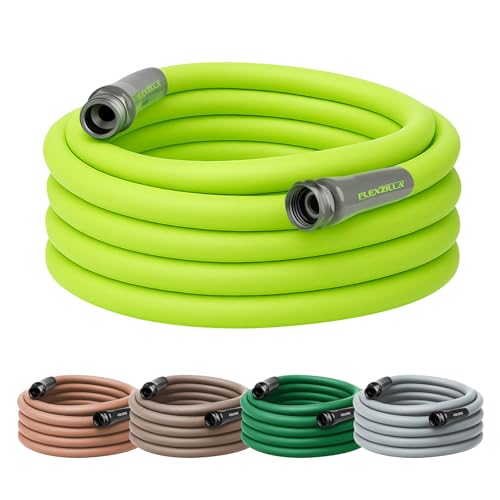
Our pick for a hose from the spigot to the beds
1. Flexzilla Garden Hose, 5/8 inch
Best for: Beds up to 100 feet from the spigot

Our pick for more water per minute
2. Flexzilla Garden Hose, 3/4 inch
Best for: A sprinkler, a big plot or a long fill

Our pick for an expandable hose
3. Pocket Hose Copper Bullet
Best for: Light weight and small storage
Our pick for a hose from the spigot to the beds is the Flexzilla Garden Hose, 5/8 inch: a 5/8 inch hose, the most popular diameter, sold in 25, 50, 75 and 100 foot lengths. For more water per minute, our pick is the Flexzilla Garden Hose, 3/4 inch. For a hose that shrinks to store, the Pocket Hose Copper Bullet; for a light hose sold as drinking water safe, the Water Right 400 Series; for patio pots, a Water Right coil; for a soaker hose, a 10-foot Flexzilla lead.
Below: each pick's job, a wand and a sprayer for the hose end, how much water each hose size moves, drinking water safety and watering a bed by hand, with seven extension services and a city water utility compared.
Start here: which garden hose for your garden
- The beds are up to 100 feet from the spigot: Flexzilla Garden Hose, 5/8 inch (pick 1), in the length that reaches your farthest bed.
- A sprinkler, a big plot or a long fill: Flexzilla Garden Hose, 3/4 inch (pick 2).
- A hose that weighs little and shrinks to store: Pocket Hose Copper Bullet (pick 3), if your water pressure can fill it.
- Filling pet bowls: Water Right 400 Series Garden Hose (pick 4), sold as drinking water safe; before anyone drinks from a hose, look for NSF/ANSI 61 or 372 on the package.
- Pots on a patio, porch or deck: Water Right 300 Series Coil Hose (pick 5).
- A soaker hose in a bed near the house: Flexzilla Garden Lead-in Hose, 10 feet (pick 6).
- Something on the end for watering plants: the Gardena Sommet Spray Wand or the Gardena Multi Sprayer (our shop).
Measure from the spigot to the farthest bed before anything else. Iowa State says a longer hose delivers less water each minute, so the fastest hose is one near the length you actually need, and Bob Vila's garden hose guide says many hoses run 25 to 75 feet, most commonly 50.
The picks, by job
Six hoses, one job apiece, with specs from the maker's own page.
1. Flexzilla Garden Hose, 5/8 inch: our pick for a hose from the spigot to the beds
Our pick for a hose from the spigot to the beds
Best for: Beds up to 100 feet from the spigot
Flexzilla Garden Hose, 5/8 inch
- Diameter: 5/8 inch
- Length: 50 feet (also 25, 75 and 100)
- Working pressure: 150 psi at 70 F
A 5/8 inch hybrid polymer hose, the most popular size, that came through being driven over by a car in testing.
A hybrid polymer garden hose in the 5/8 inch size, 50 feet long, also sold in 25, 75 and 100 feet and in short leads (pick 6). It is sold as a hose that won't kink under pressure and lies flat with zero memory. It keeps flexible in temperatures from -40 F up to 140 F, has a maximum working pressure of 150 psi at 70 F and a limited lifetime warranty, and its inner tube is sold as safe for drinking water.
Why it is our pick: Most vegetable beds need just this hose. 5/8 inch is the most popular hose diameter, and a 100-foot, 5/8 inch hose delivers 11 gallons a minute at 40 psi. In a tester's hands, this hose, 5/8 inch and 50 feet long, stayed flexible in the low 40s F, resisted kinking until it was knotted and pulled, and came through being driven over by a car.
Good to know: 80 psi or more of working pressure is recommended for a home hose; this one is rated 150, and its maker lists no burst pressure. Buy the length that reaches your farthest bed: a longer hose delivers less water each minute. To store the hose between waterings, see our hose reel buying guide.
2. Flexzilla Garden Hose, 3/4 inch: our pick for more water per minute
Our pick for more water per minute
Best for: A sprinkler, a big plot or a long fill
Flexzilla Garden Hose, 3/4 inch
- Diameter: 3/4 inch
- Length: 50 feet
- Working pressure: 150 psi at 70 F
A 3/4 inch hybrid polymer hose; Iowa State's table gives that size 18 gallons a minute at 40 psi, against 11 for 5/8 inch.
Flexzilla's hybrid polymer garden hose in its 3/4 inch size, 50 feet long; Flexzilla also lists the 3/4 inch in 75 and 100 feet. Flexzilla says the polymer "won't kink under pressure" and lies flat with zero memory. It lists a limited lifetime warranty, keeps the material flexible between -40 F and 140 F, gives a maximum working pressure of 150 psi at 70 F, and says the hose's inner tube is safe for drinking water.
Why it is our pick: A wider hose moves more water. Iowa State's table gives a 100-foot, 3/4 inch hose 18 gallons a minute at 40 psi, against 11 for 5/8 inch, and says that when you couple hoses of two sizes, the larger one goes nearest the faucet. Pick 1 is the same hose in 5/8 inch, with a tester's findings on it.
Good to know: Iowa State says larger hoses are heavier to handle. The expert Bob Vila quotes thinks a 1/2 inch hose is plenty for most homeowners and warns that a 3/4 inch mostly adds weight and could even leave too little pressure where a home's water pressure is weak. Flexzilla's 3/4 inch is the pick for a sprinkler or a long fill, not for every bed.
3. Pocket Hose Copper Bullet: our pick for an expandable hose
Our pick for an expandable hose
Best for: Light weight and small storage
Pocket Hose Copper Bullet
- Length: 50 feet; 16.7 feet contracted
- Weight: 2.31 pounds
- Full expansion: 58 psi
A latex expandable hose Pocket Hose lists at 2.31 pounds for 50 feet, if your water pressure reaches the 58 psi it needs to fully expand.
An expandable hose built from 3 layers of latex tubing inside an anti-burst outer sleeve, which stretches to its full length while water runs and shrinks back as it drains. Pocket Hose lists the 50-foot hose at 2.31 pounds and 16.7 feet long when contracted, with an operating range of 32 F to 140 F. Pocket Hose says the Copper Bullet is lead-free. The Amazon listing we link is the 50-foot hose with a 10-pattern nozzle.
Why it is our pick: Weight and storage. Bob Vila's expandable hose guide says these hoses typically come in at 1.5 to 3 pounds, about a fifth of a conventional hose's weight, and drain down to about a third of their full length. Bob Vila's tester used a sibling, the Pocket Hose model it calls the Copper Head, for 2 months and reports that the latex core, the jacket and the anti-burst layers all still looked good as new.
Good to know: Water pressure decides how far it stretches. Pocket Hose says the Copper Bullet needs 58 psi to fully expand, that 40 psi expands it to roughly less than three times its stored size, and that its working pressure is 80 psi at most. Iowa State gives about 40 psi as the pressure most households have. Pocket Hose says to store it drained, cool, dry and out of direct sun, and Bob Vila's tester advises keeping an expandable hose off rough surfaces and out of extreme conditions for long periods.
4. Water Right 400 Series Garden Hose: our pick for a light hose sold as drinking water safe

Our pick for a light hose sold as drinking water safe
Best for: Filling pet bowls
Water Right 400 Series Garden Hose
- Diameter: 7/16 inch
- Weight: 3 pounds per 50 feet
- Flow: 4 gallons a minute at 40 psi
A 7/16 inch polyurethane hose that Water Right sells as drinking water safe, at 3 pounds for every 50 feet.
A 7/16 inch polyurethane hose, 50 feet long, that Water Right says weighs 3 pounds for every 50 feet. Water Right says its polyurethane is free from lead, BPA and phthalates and sells the 400 Series as a drinking water safe garden hose. It lists lead-free brass fittings, strain reliefs at both ends against kinks at the faucet or the nozzle, flexibility in hot, cold and freezing weather, and manufacture in Oregon.
Why it is our pick: Among the light hoses here, its maker sells this one as drinking water safe, for the water a pet will drink. Cleveland Water says most garden hoses, especially those made before 2014, are not meant for drinking water, and the Home and Garden Information Center at the University of Maryland calls hoses made without lead the prudent choice for watering animals. Cleveland Water's mark of a hose made for drinking water is NSF/ANSI 61 or 372 on the product or package; Water Right's page names neither, so check the package. TechGearLab found the 400 Series among the lightest hoses its testers handled.
Good to know: The narrow bore gives less water. Water Right lists 4 gallons a minute at 40 psi and advises against pairing it with oscillating sprinklers, or with spray wands made for 5/8 inch hose. TechGearLab's testers also found it tended to twist during use.
5. Water Right 300 Series Coil Hose: our pick for pots on a patio

Our pick for pots on a patio
Best for: Pots on a porch, patio or deck
Water Right 300 Series Coil Hose
- Diameter: 3/8 inch
- Length: 25 feet
- Comfortable stretch: About 80% of its length
A 25-foot polyurethane coil that stores itself and stretches comfortably to about 80% of its length.
A 3/8 inch polyurethane coil hose, 25 feet long, that Water Right pitches as a self-storing hose for a porch, patio or deck. Water Right makes it in the United States from lead-free, UV stabilized, FDA grade polyurethane that it calls drinking water safe, with lead free brass fittings and 6 and 12 inch tails on the coil ends.
Why it is our pick: A coil puts itself away. Bob Vila's lightweight hose reviewers used a Water Right 300 Series coil on their deck, found it easy to handle and store in tight spaces, and say the coiled shape keeps kinks and tangles away; it tucked into a large planter between uses.
Good to know: Water Right names some limits: less water flow than a traditional garden hose, and a habit of catching on shrubs and patio furniture. It says a coil stretches comfortably to about 80% of its length, so in our arithmetic the 25-foot coil reaches about 20 feet.
6. Flexzilla Garden Lead-in Hose, 10 feet: our pick for a short lead to a soaker hose

Our pick for a short lead to a soaker hose
Best for: A soaker line beside the spigot
Flexzilla Garden Lead-in Hose, 10 feet
- Diameter: 5/8 inch
- Length: 10 feet
- Working pressure: 150 psi at 70 F
A 10-foot, 5/8 inch Flexzilla that links the spigot to a soaker line in a nearby bed.
The same Flexzilla hybrid polymer hose as pick 1, in a 10-foot length. Flexzilla gives it the same 150 psi maximum working pressure at 70 F and says it won't kink under pressure.
Why it is our pick: It feeds a short soaker run. For even watering, Colorado State Extension keeps each soaker run to generally 25 feet or shorter and feeds every run from a garden hose. A 10-foot lead links the spigot to a soaker in a nearby bed, and Bob Vila's guide puts short connecting hoses at around 6 to 10 feet. Our soaker hose buying guide covers the soaker end.
Good to know: Ten feet reaches only a bed beside the spigot. For a farther bed, run pick 1, in the length that reaches it, to the soaker instead.
From our shop: what goes on the end of the hose
A hose needs something on the end. Our shop sells these two Gardena watering tools; specs below are Gardena's own.
Our Amazon pick for this job
Orbit Front Trigger 10-Pattern Watering Wand, 30 in
For now, this slot links to our Amazon pick for the same job.
Our Amazon pick for this job
Orbit Ultralight 10-Pattern Turret Pistol Hose Nozzle
For now, this slot links to our Amazon pick for the same job.
Gardena Sommet Spray Wand: a soft spray at the base of plants
A 30 inch metal watering wand with a front trigger, sold with a US water stop. Gardena says the wand's soft stream treats plants gently and lets you reach shrubs and flower boxes without contorting yourself. It credits the metal build with frost protection, says the wand can come through the coldest winters undamaged, and gives it a hanging function for storage.
Why it fits the hose: University of Minnesota Extension waters vegetables with the flow turned down and the hose set low at the plants' base, so the stream stays too gentle to wash soil away from the roots. A 30 inch wand puts that soft spray down at the soil while you stand.
Gardena Multi Sprayer: one nozzle for several watering jobs
A hose nozzle with a lockable front trigger and five spray patterns, on a metal base that comes with a water stop. Gardena pitches the five patterns at versatile watering, and its own photos show a shower falling over plants and a jet aimed into a clay pot.
Why it fits the hose: Different jobs want different sprays. Bob Vila's expandable hose guide matches a shower pattern to the garden and single planters, a flat pattern to fragile plants and young seedlings, and a soak pattern to big trees and shrubs.
More in our shop: watering tools.
How we chose these
We looked at 48 hose listings from five Amazon catalog searches and the models four independent roundups wrote about, then kept one pick for each hose job, and added the two Gardena hose-end tools our shop sells. Specs are each maker's own, from Flexzilla, Pocket Hose, Water Right and Gardena. Watering and hose facts are from Iowa State, Minnesota, NC State, Colorado State, Oregon State, Nebraska and Maryland extension pages, plus Cleveland's water division. Tester findings are drawn from Bob Vila's garden hose roundup, its lightweight hose roundup, its expandable hose roundup and TechGearLab's garden hose roundup; none handled all six picks. Our Creators API read, dated October 30, 2026, returned a new, in-stock offer for all six picks; they span three brands. We do not run growing trials or show star ratings.
Also considered
Gardena X-Flow Garden Hose (our shop). A 5/8 inch hose, three layers of PVC around a fabric, sold in 50, 75 and 100 feet, with a 500 psi burst pressure and a 20-year warranty once registered. No tester we read handled it, and it is not sold as safe for drinking water; pick 1 has both a tester's findings and a drinking water statement.
Dramm ColorStorm Premium Rubber Hose. A 5/8 inch EPDM rubber hose that Dramm rates for hot water up to 160 F; the same job as pick 1.
Teknor Apex Zero-G. Bob Vila's tester backed a car over this 5/8 inch hose with no damage; again the job of pick 1.
Camco Outdoors Drinking Water Hose. Bob Vila's lightweight roundup names it for drinking water and says it carries National Sanitation Foundation certification; we found no Camco product page to check that or its specs.
How much water does a garden hose deliver?
It depends on the hose's diameter, its length and your water pressure. Iowa State's table lists the gallons a 100-foot hose delivers each minute at five pressures, and Minnesota Extension says a vegetable garden needs an inch of water a week, 62 gallons for every 100 square feet. Put together:
| Hose diameter | Gallons a minute at 40 psi | Gallons a minute at 60 psi | Minutes for one inch on 100 square feet at 40 psi (computed) |
|---|---|---|---|
| 1/2 inch | 6 | 8 | About 10.3 |
| 5/8 inch (picks 1 and 6) | 11 | 14 | About 5.6 |
| 3/4 inch (pick 2) | 18 | 22 | About 3.4 |
| 1 inch | 38 | 47 | About 1.6 |
Two readings, both our arithmetic on Iowa State's table. At 40 psi a 3/4 inch hose moves about 64 percent more water a minute than a 5/8 inch, and a 1/2 inch about 55 percent as much. Water Right's 7/16 inch hose, at its maker's figure of 4 gallons a minute at 40 psi, would take about 15.5 minutes for the same inch. Bob Vila's expandable hose guide gives higher figures with no hose length named: 17 gallons a minute for 5/8 inch at 40 psi in ideal conditions, and up to 23 for 3/4 inch.
Your own hose is the real test. Minnesota Extension says hand watering may lead you to underestimate the water applied, and suggests a clock and a bucket: time how long a marked 5-gallon pail takes to fill at your usual setting, and 12 times that applies 62 gallons.
Is it safe to drink from a garden hose?
Only from a hose made for it. Cleveland Water says most garden hoses and outdoor faucets, especially those made before 2014, are not meant for drinking water, because they can contain lead or leach chemicals, more so once the sun heats them. It points to hoses certified to NSF/ANSI 61 or 372; the 372 standard caps lead at 0.25% on any part touching the water, and a certified hose shows the NSF logo with those standard numbers on both the item and its package. None of the maker pages we read for this guide names an NSF/ANSI certification, so check the package.
What the makers do say: Water Right calls both its 400 Series and its 300 Series coil drinking water safe, Flexzilla says the hose's inner tube is safe for drinking water, and Pocket Hose calls the Copper Bullet lead-free. Bob Vila's tester adds that a drinking water hose is only as safe as the water it carries, and that a hose left outdoors can pick up bacteria over time.
For the soil, the risk is small: see the lead question in the FAQ below.
What goes on the end of the hose for watering vegetables?
A low, gentle flow aimed at the soil. Minnesota Extension says roots need the water and the leaves do not, and that leaves left wet, above all in the evening, can bring on leaf diseases; it turns the flow down and sets the hose low at the plants so the water soaks in without puddling or running off. NC State Extension waters in the morning, which lets moisture soak in and dries the foliage before nightfall. Colorado State discourages sprinkler watering for tomatoes, peppers and potatoes, crops prone to leaf diseases like early blight.
That points to a wand or a nozzle on a soft setting: a wand like the Gardena Sommet, or a nozzle with a shower pattern, one of the patterns the Gardena Multi Sprayer's photos show. Some crops ask for a lighter touch: for carrots, Minnesota Extension says a light spray on the soil surface may help the seedlings come up, and for pumpkins and winter squash it suggests a drip or soaker hose, or careful watering aimed at the soil, to keep the leaves dry. Our guides to tomatoes, peppers, carrots and squash and pumpkins give each crop's watering notes by source.
What to look for in a garden hose
- Diameter: 5/8 inch is the most popular, Iowa State says; a 3/4 inch hose delivers more water and weighs more, and a smaller hose delivers less in a given time.
- Length: measure to your farthest bed. Iowa State says hoses are normally sold in 25, 50, 75 and 100 feet, and that shorter hoses are easier to drain and coil.
- Pressure ratings: Bob Vila's guide says most home hoses in frequent use should carry a burst pressure of at least 350 psi, and recommends 80 psi or more of working pressure. Flexzilla lists a 150 psi working pressure and Pocket Hose an 80 psi working maximum; Gardena lists a 500 psi burst pressure for its X-Flow (Also considered).
- Couplings: Iowa State prefers heavy brass, with flattened hexagonal or octagonal edges resisting crushing best; plastic comes last.
- Material: Iowa State calls rubber the most flexible in the cold and the most expensive, and says ultraviolet light harms nylon and vinyl more, so put the hose away after use.
- Drinking water: the NSF logo with NSF/ANSI 61 or 372 on the product or package, per Cleveland Water, or at least the maker's own drinking water statement.
Sources
- "GARDENA: Garden Hose 15m 50ft. 5/8 X-Flow (article 20530-80)" and "GARDENA US: X-Flow 5/8 hose"
- "GARDENA US: Front Trigger Spray Wand Sommet"
- "GARDENA US: Premium Multi Sprayer (Five Spray Patterns)"
- "Flexzilla: Garden Hose"
- "Pocket Hose: Copper Bullet"
- "Water Right: The Everyday Garden Hose (400 Series)"
- "Water Right: The Small Space Coil Hose (300 Series)"
- "Dramm: ColorStorm Garden Hose, 50 feet"
- "Iowa State University Extension and Outreach: Hose Care"
- "University of Minnesota Extension: Watering the vegetable garden"
- "University of Minnesota Extension: Growing carrots and parsnips in home gardens"
- "University of Minnesota Extension: Pumpkins and winter squash"
- "NC State Extension: Watering Wisely"
- "Colorado State University Extension: Irrigating the Vegetable Garden"
- "Oregon State University Extension: Can I leave my garden hoses outside this winter?"
- "Nebraska Extension in Lancaster County: Nine Tips to Protect Your Yard from Fall's First Frost"
- "Ask Extension, answered by the University of Maryland Extension Home and Garden Information Center: Lead in garden"
- "Cleveland Water: Why You Shouldn't Drink Water from a Garden Hose"
- "Bob Vila: garden hose roundup (Glenda Taylor)"
- "Bob Vila: lightweight garden hose roundup"
- "Bob Vila: expandable hose roundup"
- "TechGearLab: garden hose roundup"
Related guides
- Soaker hoses buying guide, our pick for each slow-watering job at the soil.
- Hose reels buying guide, for keeping the hose off the ground between waterings.
- Raised bed how-to, with siting a new bed within reach of water.
- Tomato growing guide, with its notes on steady watering at the soil.
- Squash and pumpkin growing guide, for vines whose leaves should stay dry.
Frequently asked questions
What size garden hose do I need for a vegetable garden?
For most beds, a 5/8 inch hose long enough to reach the farthest one. Iowa State University Extension calls 5/8 inch the most popular diameter and says water runs fastest through a hose that is about as long as the job, not longer. A 3/4 inch hose moves more water, Iowa State says, but is heavier to handle.
Is it safe to drink water from a garden hose?
Usually not, unless the hose is made for it. Cleveland Water says most garden hoses, especially those made before 2014, are not made for drinking, since they can contain lead or leach chemicals, more so when the sun heats them. It points to hoses certified to NSF/ANSI 61 or 372, and says to run water through the hose before you drink.
Does a garden hose put lead in vegetable garden soil?
Very little, if any. The Home and Garden Information Center at the University of Maryland Extension, answering on Ask Extension, says watering from a hose that contains lead is very unlikely to raise soil lead appreciably. It still says not to drink from such hoses, and calls lead-free hoses the prudent choice for watering animals.
How much should I water a vegetable garden each week?
About an inch a week, rain included. University of Minnesota Extension says that inch comes to 62 gallons for every 100 square feet. NC State Extension checks it with a straight-sided container such as an empty tuna can: run the hose or sprinkler and time how long the container takes to hold an inch.
Do expandable garden hoses work on low water pressure?
Not fully. Pocket Hose says its Copper Bullet needs 58 psi to fully expand and that 40 psi stretches it to roughly less than three times its stored size, while Iowa State University Extension puts most household pressure at about 40 psi. On low pressure, look at a standard hose such as the Flexzilla 5/8 inch instead.
Can you leave a garden hose outside in winter?
Yes, once it is fully drained, but it wears out sooner. Oregon State University Extension says gravity can empty a hose laid over a high spot, so leftover water will not freeze and split it, while swings in temperature still age the material. Nebraska Extension says to unhook hoses from the spigot before a freeze.
What you'll need for garden hoses
Picks on Amazon
- Flexzilla Garden Hose, 5/8 inch Check price on Amazon
- Flexzilla Garden Hose, 3/4 inch Check price on Amazon
- Pocket Hose Copper Bullet Check price on Amazon
- Water Right 400 Series Garden Hose Check price on Amazon
From our shop

