
Pea Plant Guide: How to Grow Sugar Snap, Snow and Shelling Peas
Sow peas in early spring once the soil is at least 40 F (45 to 50 F in some guides), 1/2 to 2 inches deep and 1 to 4 inches apart, with a trellis for tall vines. Pick sugar snap peas as the pods fatten, snow peas while flat, and shelling peas when the pods turn round and full.
Sources: University of Minnesota Extension, Clemson Cooperative Extension, Utah State University Extension, Illinois Extension and 8 more. See the sources we used. How we source our guides
On this page
Sow peas outdoors in early spring, once the soil is workable and at least 40 F (45 to 50 F in some guides). Sow them 1/2 to 2 inches deep and 1 to 4 inches apart, and set up a trellis for tall vines at sowing. Pick sugar snap peas when the pods fatten, before the peas grow large.
Below: soil temperatures and frost rules, pea dates for zones 5 to 9, supports, inoculant, harvest signs for sugar snap, snow and shelling peas, and a fall crop.
| When to sow | Early spring, once the soil is workable |
|---|---|
| Soil temperature | At least 40 F in most guides; 45 to 50 F in others |
| Weeks from frost | Start 2 to 6 weeks before the average last spring frost; our zone schedules run from 4 to 6 weeks before until 2 to 3 weeks after |
| Depth and spacing | 1/2 to 2 inches deep; 1 to 4 inches apart; rows 12 to 36 inches apart |
| Sun | Full sun: at least 6 hours, 8 to 10 preferred |
| Soil pH | The ranges given run from 5.8 to 8, and every one includes 6.5 |
| Support | A trellis for tall vines, set at sowing; bush types can lean on each other |
| Days to harvest | 50 to 70 for most peas; the longest spans given run to 80 and 90 |
| Frost and heat | Plants can withstand frost, blossoms cannot; growth stops above 85 F |
When to plant peas: soil temperature, then the calendar
Plant peas as early in spring as your soil allows: once the ground has thawed and can be worked, because peas get only a short run where a cool spring warms up fast. Test it first: the soil should be dry enough to work without clinging to your tools.
| Soil temperature | What it means for peas |
|---|---|
| Below 40 F | Germination is delayed |
| 40 F | The minimum most guides give for sowing; seed generally germinates and emerges better above it |
| 45 to 50 F | The minimum in the guides that set the bar higher |
| 55 to 65 F | Seedlings come up in 7 to 10 days |
| Up to 75 F | Warmer soil speeds germination and emergence |
| 40 to 85 F | The span germination may cover |
Read the soil at 8 a.m., 4 inches deep.
Counting from your frost date
Our zone schedules use one rule: the pea window opens 4 to 6 weeks before the average last spring frost and closes 2 to 3 weeks after it. Another guide also sows 4 to 6 weeks before; a third starts its hardy crops, peas among them, as early as 2 to 4 weeks before. Our frost dates page gives your median dates; use them to know when to start checking the soil, since a median frost date is not a planting day.
Frost and blossoms. Young plants can survive a light frost and keep growing at temperatures above 40 F, but frost can be damaging once they flower, so when a late frost is forecast, cover them, if necessary, with sheets or row covers. The plants can withstand frosts and light freezes; the blossoms cannot.
Pea sowing dates on our zone schedules
Our zone schedules count that rule from each zone's median frost dates (1991-2020 climate normals). A median is a middle value, so roughly every other year the last spring frost falls after it. Zone 9 follows three extension calendars instead, because summer heat sets the season there.
| Zone | Spring sowing | Fall sowing |
|---|---|---|
| Zone 5 | Mar 18 to May 20 | Jul 23 |
| Zone 6 | Mar 7 to May 9 | Jul 31 |
| Zone 7 | Feb 20 to Apr 24 | Aug 11 |
| Zone 8 | Feb 7 to Apr 11 | Aug 19 |
| Zone 9 | Jan 1 to Mar 31 (the calendars differ) | Sep 1 to Jan 31 |
Zone 9: the range across the three state calendars on that page. Your own frost dates and soil temperature come first.
Why state calendars differ. In South Carolina, peas go in from Mar 1 to Apr 5 in the Piedmont and Feb 1 to Mar 15 on the coast. In Utah, the cutoff is April 1 where it is warm and May 1 in cooler areas, and in Pennsylvania the spring crop is sown in April. A state calendar fits one state's weather; a zone schedule counts one rule from one median.
How to plant peas: depth, spacing and rows
Sow peas where they will grow; starting transplants is a second way. Depth and spacing vary a little:
| What | How much |
|---|---|
| Depth | 1/2 to 2 inches; every range given includes 1 inch |
| Seed spacing in the row | 1 to 4 inches in most guides |
| Single rows | 12 to 36 inches apart |
| Double rows | Two rows 2 to 10 inches apart, each pair 18 to 24 inches from the next |
| Wide rows | 6 to 18 inches across, with the seed scattered |
| Along a trellis | A single row at its foot; rows of trellised peas 3 to 6 feet apart |
Wide rows. Scattering the seed across a wide row lets the plants hold each other up and helps shade their roots.
Handle the seed gently. Cracked seed is unlikely to come up, above all in cool, wet spring soil.
Soak or pre-sprout? Unsoaked seed germinates in 6 to 17 days, and an overnight soak, never longer than 24 hours, shortens that. You can also pre-sprout seed in damp paper towel inside a perforated plastic bag and plant it once roots show. Home gardeners may also start transplants 10 days to 2 weeks before setting them out.
Sow again for a longer harvest. You may sow again every 1 to 4 weeks, by guide. Snap peas generally bear over a longer stretch, so one planting of them is enough.
Sugar snap vs snow peas vs shelling peas: which should you grow?
All three are one species, Pisum sativum; they differ in the pod. Shelling peas, also called English or garden peas, are grown for the peas alone. Snow peas are flat pods eaten while the peas inside are tiny. Sugar snap peas are plump, juicy pods eaten whole once the peas are nearly mature; they come from crossing shelling and snow peas.
| Type | The pod | Varieties named |
|---|---|---|
| Shelling (English, garden) | Round and firm, 3 to 4 inches long; shelled | Green Arrow; Wando and Lincoln, both heat tolerant; Little Marvel |
| Snow | Flat and tender, about 2 to 3 inches when picked; eaten whole | Oregon Sugar Pod II; Dwarf Grey Sugar; Snowbird |
| Sugar snap | Plump and crisp, eaten whole with the peas nearly mature | Super Sugar Snap; Sugar Sprint; Sugar Heart, heat tolerant |
Wrinkled or smooth seed. Wrinkled-seeded garden peas are generally sweeter than smooth-seeded ones, which tend to hold more starch and are used more often for dry peas and split-pea soup.
Tall or bush. Tall vining varieties can climb 3 to 6 feet or more, bearing over a longer season; bush types stay three feet tall or less and set their crop all at once.
Not every pea is a pea
Sweet peas are a flower, Lathyrus odoratus, listed as poisonous. Black-eyed peas are a cowpea, genus Vigna, and the Southern pea is a different, warm-season vegetable grown the way beans are.
Do peas need a trellis?
Tall vining peas do. Most dwarf and bush varieties are self-supporting, and one guide sows varieties under 3 feet tall without support, though another finds even dwarf varieties benefit from some.
- When: at sowing. Put the support up before or right after planting, since one added once plants are growing may disturb or damage the roots, and set stakes about 3 inches from where the seed goes.
- What: netting, wires or pea brush, which is branched shrub prunings pushed into the row; wooden poles, wire cages or fencing; or trellis netting or chicken wire hung with its bottom edge just above the young plants.
- How: sow tall varieties in a single row at the foot of the trellis. For a teepee, ring its base with 6 to 8 seeds; along a straight trellis, sow 1 inch apart.
- Why: growing up helps air move around the vines, which may help cut disease and insect damage, and keeps vines off the ground, where they rot more easily if rain comes at harvest.
Do peas need inoculant or fertilizer?
Peas are legumes: Rhizobium bacteria in nodules on the roots fix nitrogen from the air into a form the plant can use. To raise their numbers, especially in ground new to peas, the seed can be inoculated with Rhizobium leguminosarum biovar viceae, sold as a wettable powder for moistened seed or as granules spread over the seed in the row. Inoculant is less needed in an established garden, and if you have never grown peas, you may want to use it.
Where the guides disagree: nitrogen.
- Little or none: one guide puts the fertilizer needs of peas below those of other crops; another adds none if compost or fertilizer went in at planting, because added nitrogen drives leafy growth, holds back flowering and reduces pod set.
- A measured dose: a third follows a soil test; without one, it applies 3 pounds of 5-10-10 per 100 square feet before planting, and never too much nitrogen.
- A heavy feeder: a fourth calls peas heavy users of nitrogen that fix little of it, and works fertilizer in before seeding.
In our reading, the common ground is a soil test, which three of the guides ask for first.
Soil and pH. Many soils, from sand to heavy clay, suit peas as long as they drain well. The pH targets run from 5.8 to 8, and every one includes 6.5; one guide finds acid soil, pH 6.0 and lower, holds back growth.
How often should you water peas?
Water peas when spring rain falls short, and most of all once they flower and set pods. In a wet spring you may not need to water at all; in a dry one you may need to. When you do, soak the soil: at least an inch deep each week by one guide, and to a depth of 6 inches at each watering by another, since light sprinklings encourage shallow roots. Water in the early morning, so the foliage is dry by nightfall.
- Too little: drought stress means dropped pods, smaller peas and stringier pods.
- Too much: wet soil promotes root rot and slows growth.
- Where: water at the soil line rather than over the vines, to hold down disease.
- Mulch: 2 to 4 inches of shredded leaves, pine straw, grass clippings or weed-free straw helps keep roots cool, hold moisture and suppress weeds.
- Weeds: hoe shallowly, because pea roots can be close to the surface.
Why do pea plants stop producing?
Peas stop growing and stop making flowers or pods once temperatures pass 85 F, so the season runs short anywhere a cool spring gives way fast to summer heat. One guide sets the line lower: peas do poorly above 80 F, the flowers are very sensitive above 80 F, and if conditions turn dry, plants shed their flowers. Hot days and nights can also cause flowers to abort, and hot weather can lead to poor pollination.
What helps: sow early, keep the soil moist, and mulch the later sowings. Wando and Lincoln are heat tolerant.
When to pick sugar snap peas, snow peas and shelling peas
Each type has its moment, and each passes it fast: ripe peas are past eating fresh within one to three days, so pick every 1 to 3 days while they are at their peak. Most peas are ready 50 to 70 days from sowing, and the longest spans given run to 80 and 90 days. Early varieties are ready in 55 to 64 days and mid-season ones in 65 to 70.
| Type | Pick when | Days after flowering |
|---|---|---|
| Sugar snap | The pods start to fatten and snap like green beans, before the peas get large | About 5 to 8 |
| Snow | The pods reach full length, around 3 inches, while still flat. One guide picks when the peas reach BB size; another, generally before they grow that big | Usually 5 to 7 |
| Shelling | The pods are swollen and round, the peas full size but not yet hard or starchy | About 18 to 21 |
Taste as you go. The low pods ripen first. Pick snow peas at least every other day and pull overgrown pods so the vines keep blooming; those overgrown pods can still be shelled like garden peas.
How to pick. Use two hands, one steadying the vine: yanking pods can stop a plant producing or pull it out of the ground. Pick when plants are dry, to help limit disease spread. Some snap and snow varieties have a string along the seam; pull it off before cooking.
Cool them fast. The sugar in peas turns to starch soon after picking, and as much as 40 percent of it can convert in a few hours. Storage advice differs: by two guides, fresh peas can keep in the fridge for 2 to 3 days, while another finds shelled peas chilled in very cold water stay good for more than a week. Edible pods can keep for two weeks in a plastic bag.
Pea shoots and dry peas
Pea vines are edible too: cut 6-inch lengths of tender vine for stir-fries or steaming, or grow pea shoots indoors as microgreens, ready in an estimated 8 to 10 days. For dry peas, leave the pods on the vine until they are dry and the seeds rattle, which may take as long as a month past the fresh harvest.
Can you grow peas in the fall?
Yes, with the right timing and variety. Count back 12 weeks from the first fall frost to sow a fall crop, or about 2 months by another schedule, and pick early, powdery mildew-resistant varieties that still flower as days shorten. Heat-tolerant varieties can be planted in mid to late summer, with extra days allowed beyond the listed maturity: short, cool fall days do not push the crop along the way long spring days do.
Where fall peas struggle. In some regions fall peas often do poorly: seed is slow to sprout in warm soil, plants grow poorly in heat, and the first killing frost usually comes before pods mature. One Southeastern guide does not recommend fall plantings, though its own table still lists fall dates.
Can you grow peas in containers?
Yes. Peas can grow in containers of at least two gallons and 12 inches deep. Space-saving choices, Little Marvel, Laxton's Progress, Sugar Rae Dwarf, SugarBon and SugarMel, still want a low trellis so air moves through the vines.
Pea problems: root rot, powdery mildew and pests
- Seed rot and damping off. Seed can rot and seedlings may damp off in cold, wet soil. Plant in well-drained soil, avoid overwatering, and sow spring peas while the soil is below 65 F.
- Root rot. Foliage yellows and dies back from the ground up. Well-drained soil helps control it, and so does rotation: one guide keeps the ground free of legumes for three years or more, another plants peas in one spot no more often than every third year.
- Fusarium wilt. Leaves curl downward and stems turn brittle. It is a problem once soil passes 70 F, so plant resistant varieties and sow early.
- Powdery mildew. White, powdery growth on leaves, stems and pods, which can appear in hot weather. Spring crops get less of it than fall ones.
- Aphids. Green to pinkish colonies under leaves near the tips, which spread pea enation virus. Knock them off with a stream of water; you may see natural enemies feeding on them.
- Weevils. Pea weevil larvae bore into young pods to eat the seed; early planting and harvest limit exposure. Keep peas away from clover, vetch and alfalfa to avoid the pea leaf weevil.
Pea seeds and supplies
Peas need seed of the type you want, a support for tall varieties and, especially in ground new to peas, perhaps an inoculant. The varieties above come from extension lists: Super Sugar Snap for snap peas, Oregon Sugar Pod II for snow peas and Green Arrow for shelling. Nearly all pea varieties are open-pollinated, so seed can be saved.
What you'll need for peas
As an Amazon Associate we earn from qualifying purchases.

Park Seed Super Sugar Snap Pea Seeds
Super Sugar Snap for snap peas comes from extension lists.
Check price on Amazon
Survival Garden Seeds Oregon Sugar Pod II Snow Pea Seeds
Oregon Sugar Pod II for snow peas comes from extension lists.
Check price on Amazon
TomorrowSeeds Green Arrow Shelling Pea Seeds
Green Arrow for shelling peas comes from extension lists.
Check price on Amazon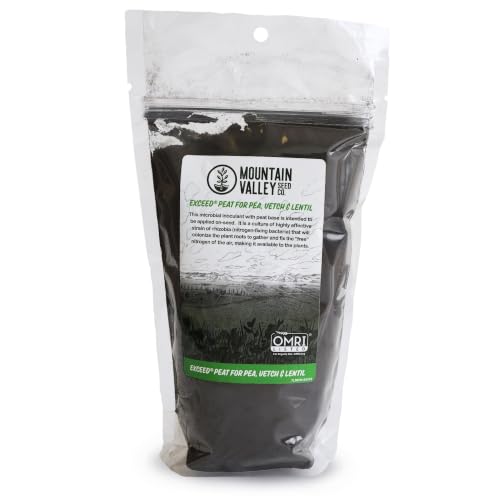
Mountain Valley Seed Co. Exceed Pea, Vetch, Bean and Lentil Inoculant
Especially in ground new to peas, perhaps an inoculant; it is less needed in an established garden.
Check price on Amazon
VIVOSUN Trellis Netting, 5 x 15 ft
A support for tall varieties, which can climb 3 to 6 feet or more; trellis netting can hang with its bottom edge just above the young plants.
Check price on Amazon
Sources we used
We read and kept a copy of every page listed here on October 29, 2026. Every figure above traces to these pages; when they disagree, you get the range or how they split.
- "University of Minnesota Extension: Growing peas in home gardens"
- "Clemson Cooperative Extension HGIC 1328: Garden Peas"
- "Utah State University Extension: How to Grow Peas in Your Garden" and "Grow Your Own Microgreens"
- "Illinois Extension: Peas" and "Harvesting Vegetables"
- "Penn State Extension: A Gardener's Guide to Peas"
- "University of Maryland Extension: Growing Green Peas in a Home Garden"
- "Washington State University Extension FS116E: Growing Green Peas in Home Gardens"
- "NC State Extension Plant Toolbox: Lathyrus oleraceus (pea)" and "Lathyrus odoratus (sweet pea)"
- "Montana State University Extension MontGuide: Can I Grow That Here?"
- "Colorado State University Extension, GardenNotes 720: Vegetable Planting Guide"
- "Johnny's Selected Seeds: Peas, Key Growing Information"
- Our own zone 5 to 9 planting schedules, linked in the table above, for the zone sowing dates.
Related guides
- How to grow beans, the warm-season legumes: bush, pole, shelling and dry.
- How to grow edamame, the soybean picked green.
- Sprouting seeds, the jar-grown crop eaten seed and all.
- Companion planting chart, for planning what grows near what.
- Frost dates by ZIP code: your median last and first frost, from the weather station nearest you.
Frequently asked questions
When should you plant peas?
Plant peas in early spring, once the soil is workable and at least 40 F (45 to 50 F in some guides). On our zone schedules, the window opens 4 to 6 weeks before the average last frost; it shuts 2 to 3 weeks after that frost. Young plants can survive a light frost, but the blossoms cannot withstand frost.
How do you grow sugar snap peas?
Grow sugar snap peas like other peas: sow them 1/2 to 2 inches deep in early spring, beside a trellis, since some snap varieties climb 6 feet or more. Keep the soil moist once they flower. Pick when the pods fatten but before the peas inside get large.
What is the difference between snap peas and snow peas?
Snow peas are flat pods eaten while the peas inside are tiny, and sugar snap peas are plump, juicy pods eaten whole once the peas are nearly mature. Snap peas are ready about 5 to 8 days after flowering, and snow peas usually reach picking stage 5 to 7 days after.
Do peas need a trellis?
Tall vining peas need a trellis. Most dwarf and bush varieties are self-supporting, though one guide finds even dwarf varieties benefit from some support. Bush types two to three feet tall can lean on each other in a wide row. Put netting or pea brush in place at sowing, because stakes added later may damage roots.
How long do peas take to grow?
Most peas are ready to harvest 50 to 70 days from sowing, though the longest spans given run to 80 and 90 days. Early varieties take 55 to 64 days and mid-season ones 65 to 70. Seedlings come up in 7 to 10 days in 55 to 65 F soil.
Should you soak pea seeds before planting?
You can: an overnight soak, never longer than 24 hours, shortens germination from the 6 to 17 days unsoaked seed takes. You can also sprout seed in a damp paper towel and plant it once roots show. Either way, handle the seed with care, because cracked seed is unlikely to come up.
Can you plant peas in the fall?
Yes, with the right timing and variety: sow a fall crop 12 weeks before the fall's first frost, or about 2 months before by another schedule, with early, mildew-resistant varieties. Results vary by region. In some, fall peas often do poorly, and one Southeastern guide does not recommend fall plantings.
Are sweet peas edible?
No. Sweet peas are a flowering plant, Lathyrus odoratus, listed as poisonous: the fruits are not edible and are poisonous to people, and the seeds are the poisonous part. Garden, snow and sugar snap peas are a different species, Lathyrus oleraceus, previously known as Pisum sativum.