
Cauliflower Plant Guide: How to Grow Cauliflower From Seed to Harvest
Start cauliflower indoors 7 to 9 weeks before the last spring frost and set it out 1 to 2 weeks before that frost, or sow in July for what is generally an easier fall crop. Keep it growing without stress, blanch white heads and cut them while the curd is tight.
Sources: University of Maryland Extension, University of Illinois Extension, Clemson Cooperative Extension, University of Minnesota Extension and 5 more. See the sources we used. How we source our guides

On this page (12)
To grow cauliflower, plan around your last spring frost: raise the seedlings indoors for about 4 to 8 weeks and set the young plants out 1 to 2 weeks before that frost, or grow a fall crop timed back from your first fall frost. Keep the plants growing without a pause, and cut each head while it is compact and firm, 50 to 80 days after transplanting.
Seedlings raised indoors want bright grow lights over them as soon as they come up; see the best seedling grow lights.
Spring set-out dates run from 1 to 4 weeks before the frost, and this guide counts from the latest of them. Every source read for this guide agrees on the hard part: cauliflower punishes stress. Cold snaps, heat, drought or a transplant that sat too long in its cell can all leave you with a big leafy plant and a head the size of a coin. Mid-Atlantic gardeners generally do better with a fall crop sown in July.
| Sun | Full sun, at least 6 hours a day, 8 to 10 preferred |
|---|---|
| Sowing depth | 1/4 to 1/2 inch |
| Spacing | 12 to 24 inches in the row, most often 18; rows 2 to 3 feet apart |
| Soil temperature | 70 F or warmer until the seed comes up, if possible, then 60 F; no bottom heat for a summer sowing |
| Growing temperature | An average of 60 to 65 F preferred; curds form at 50 to 70 F |
| Water | About 1 to 2 inches a week |
| Days to maturity | 50 to 80 days from transplanting |
| Frost tolerance | Semi-hardy: light frosts, not heavy frosts or freezing |
When to plant cauliflower
Two dates run the cauliflower calendar: your average last spring frost and your average first fall frost. The table below uses four airport weather stations and their 1991 to 2020 freeze normals (the date with a 50 percent chance of a 32 F night, in spring and in fall) and counts from the latest spring rule: set plants out 1 to 2 weeks ahead of the last frost after 6 to 7 weeks of growth indoors, within the 4 to 8 weeks the guides give for spring transplants. Added together, that puts indoor sowing 7 to 9 weeks before the last frost.
| Station | Last spring frost (50%) | Sow indoors | Set out transplants | First fall frost (50%) |
|---|---|---|---|---|
| Minneapolis-St. Paul, MN | Apr 23 | Feb 19 to Mar 5 | Apr 9 to Apr 16 | Oct 18 |
| Baltimore (BWI), MD | Apr 10 | Feb 6 to Feb 20 | Mar 27 to Apr 3 | Oct 31 |
| Raleigh-Durham, NC | Mar 31 | Jan 27 to Feb 10 | Mar 17 to Mar 24 | Nov 4 |
| Dallas-Fort Worth, TX | Mar 8 | Jan 4 to Jan 18 | Feb 22 to Mar 1 | Nov 24 |
Frost dates: 1991 to 2020 station normals, the date with a 50 percent chance of 32 F. Sow indoors = 7 to 9 weeks before the last frost; set out = 1 to 2 weeks before it, the latest of the guides' three frost-based rules.
Find your dates by ZIP, or see the planting schedule for zone 6, zone 7 or zone 8. For an indoor start: seed starting trays and grow lights for seedlings.
Find your nearest station, or look up the normals for your own town, and count back the same way. A zone number is not a frost date: two towns in the same zone can be weeks apart. How early the plants can go out varies: from 3 to 4 weeks ahead of the frost-free date, to no sooner than 2 to 3 weeks ahead, to 1 to 2 weeks ahead. The table uses the latest of the three, which is the gentler choice for a crop that can button after a cold shock.
What you'll need for cauliflower
As an Amazon Associate we earn from qualifying purchases. Some links are paid.

Sow Right Seeds Di Sicilia Violetto Cauliflower Seed
A purple head that needs no blanching.
Check price on Amazon
Mountain Valley Seed Co Self Blanche Cauliflower Seeds
A short-season white for the spring window.
Check price on Amazon
Bootstrap Farmer 32 Cell Tray
Cells for a late-winter indoor start.
Check price on Amazon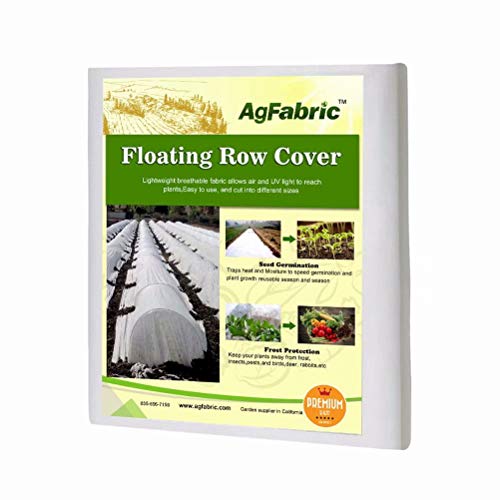
Agfabric 0.9 oz Row Cover
Row cover from planting day keeps flea beetles and root maggots off young plants.
Check price on Amazon
Corona AG 4930 Long Straight Snips
A clean cut through the main stem.
Check price on Amazon
Spring vs fall cauliflower: heat, cold and buttoning
Cauliflower forms its curd in a narrow band of weather. Dense, flavorful curds grow between 50 F and 70 F, the plant prefers an average of 60 to 65 F, and growth suffers when it stays above 75 F. Hot weather sets a hard ceiling: days at 86 F with nights over 77 F can stop a crown from forming at all.
Spring is the tricky season. A plant set out early enough to finish before summer heat also risks a cold spell. Ten or more days in a row between 35 and 50 F, after a stretch of good growth, can push cole crops to bolt, and the bigger the plant, the more likely it is. In some years the compromise between too cold and too hot may be almost impossible.
That is why gardeners in the Mid-Atlantic generally do better with fall production. Fall cauliflower grows its leaves in summer warmth and makes its head as the weather cools, and colder fall weather helps the crop hold its quality in the garden longer.
Buttoning is the classic failure: a head that stops growing at about an inch across. It is usually due to stress, such as transplants that grew too big in their cells, and hot or cold spells while the head is forming. Buttoning often follows dry soil, low temperatures, low nitrogen or transplant shock, and larger, older transplants are more prone to it. The fix is in the timing and in never letting the plant stall.
Fall timing by region. In the Mid-Atlantic, fall seed is sown in early July and plants are set out from late July to early August. In Minnesota, fall seed starts in early to late July, indoors or straight in the garden. In the South Carolina Piedmont, fall transplanting runs from July 15 to August 31, and from August 15 to 30 on the coast. Elsewhere, start at your first fall frost and count back: set the last fall transplants out no later than 14 weeks before it. Where your state's calendar and the count-back differ, the regional calendar comes from growers in your climate, so lean on it.
Winter crops. Where winters are mild and temperatures rarely fall below 32 F, transplants can go out any time from September through February.
Starting cauliflower seeds indoors
Fill cells with a sterile, soilless mix and push each seed down one-fourth to one-half inch. Expect sprouts in about two weeks, and put bright grow lights over the seedlings as soon as they come up.
Heat depends on the season. For a late-winter sowing in a cool room, hold the soil at 70 F or warmer until the seed germinates, if possible, and at 60 F after that, which a heat mat can do; once the seedlings are up, cooler is better. For a July sowing of the fall crop, skip the bottom heat: the seed sprouts readily in summer temperatures.
Feed lightly: a starter solution at half strength weekly from the first true leaf, and twice a week once two true leaves are showing. Hardening off can begin once the seedlings show four or five true leaves, roughly four weeks after sowing.
How long to keep them indoors varies by guide: about 4 to 8 weeks for a spring crop, and about 4 to 6 weeks for fall. What they all stress is that the plant must still be growing actively on the day it goes out.
Transplanting cauliflower without a check
Growers call a pause in growth a check, and cauliflower does not recover from one well. Use young, active transplants, and never buy stunted plants that were held too long in flats. The age limit varies, from no older than 4 to 5 weeks up to 5 to 7 weeks; or judge by the plant, ready once its roots are well developed and it carries 4 to 6 mature leaves.
- Harden off over a week. Cut back water and put the plants outside in a sheltered spot with a couple of hours of sun, then give them more sun and wind day by day.
- Space them. Set plants 18 inches apart for most beds; see the table below for the full range.
- Plant at the same depth they sat in their cells, and water them in with a starter solution.
- Cover the row. A row cover in the first weeks shelters the plants from wind and insects: a heavier cloth in spring for cold and a light one in summer so the plants do not overheat. Anchor the edges well: a loose cover flapping in the wind can do more harm than none. A floating row cover from planting day also keeps flea beetles and root maggots off young plants.
- Feed and water steadily. Side-dress about 3 to 4 weeks after setting plants out, or go by size: from about four inches tall up to half grown. If a week passes with under an inch of rain, give the bed a thorough soaking.
Direct sowing works too, mostly for fall. Drop three or four seeds per spot, 12 to 18 inches apart and one-fourth to one-half inch down, then thin to one seedling per spot.
What to plant with cauliflower
It is well documented that arugula, mustard and some other spicier brassicas can work as flea beetle trap crops, and mixing 3 or more trap species works better than one. Nasturtium also acts as a trap crop for cauliflower and kale. The claim that broccoli interferes with cauliflower comes with no study cited. More: what to plant with cauliflower.
Soil, spacing and water for cauliflower
Every source wants fertile, well-drained soil that still holds moisture. Soil pH targets run from 5.8 to 7.5 across the guides, and every range given includes 6.0 to 6.5, so a soil test before planting is worth the trouble. Cauliflower is a heavy feeder, and no cole crop reacts worse to poor conditions.
| What | Range in the guides | Detail |
|---|---|---|
| Seed depth | 1/4 to 1/2 in | 1/2 in when sown in place |
| Spacing in the row | 12 to 24 in | 18 in most often; the wider end for fall plantings |
| Between rows | 2 to 3 ft | 24 to 36 in |
| Indoor growing time | About 4 to 8 weeks for spring | About 4 to 6 weeks for fall; age limits from no older than 4 to 5 weeks to 5 to 7 weeks |
| Set out in spring | 1 to 4 weeks before the last frost | Guides give 3 to 4 weeks, no sooner than 2 to 3, or 1 to 2; MN early to mid-April; SC Piedmont Mar 20 to Apr 30 |
| Days to harvest | 50 to 80 from transplanting | 50 to 60 for spring varieties; tied heads 4 to 12 days after blanching starts |
Each row spans every figure the guides give for it; see Sources we used.
What you'll need is this guide's shopping list.
Water deeply: about 1 to 2 inches of water a week, enough to reach at least 6 inches deep, early in the day so the foliage dries before dark. A three to four inch mulch of weed-free straw, or grass clippings free of herbicide, can help hold weeds back.
Blanching cauliflower: self-blanching vs tying leaves
Sun on a white head turns it yellow and can change the flavor. Blanching shades it. The method is the same everywhere; the guides differ a little on the moment to start:
- When: once the head is about silver-dollar size, about 2 inches across, or when the white curd is 2 to 3 inches across.
- How: draw three or four big outer leaves up over it and hold them with a rubber band, or snap them over the top and tuck them in on the far side. In warm weather, tie loosely so air can move.
- How long: usually 4 to 12 days from the start of blanching to the cut, and it may take longer in fall.
Self-blanching varieties grow inner leaves that curl over the head on their own. Under cool conditions they blanch well and need no tying, and many newer varieties work this way. One caution: a tied head may stay humid, which favors the leaf spot disease Alternaria, so blanch only when you need to. Advice on fall heads varies: skip blanching in the cool, short days of fall, or blanch them and allow longer.
Purple, orange, green and Romanesco cauliflower
Do not tie leaves over colored heads: orange, green, purple and Romanesco types need sun on the curd to develop their full color. Varieties come in white, orange, purple and green, plus Romanesco with its pointed spiral head. The pointed green Romanesco is a fall crop.
Purple heads are classed two ways: as one of the cauliflower colors, or as a type of broccoli that looks like cauliflower and turns green when cooked. For the gardener, the care is the same either way: grow it like cauliflower, skip the blanching and leave the head in the sun.
Harvesting and storing cauliflower
Cut the head while it is compact and firm, before the curds start to separate. A well-grown head reaches 6 to 12 inches across. Wait too long and the head turns coarse and grainy; once you can see individual florets, quality falls off fast. Harvest comes 50 to 80 days after transplanting, depending on the variety.
Cut the main stem and leave a ruff of green leaves around the head to keep it longer. A head keeps about one week in the refrigerator. In cold (32 F), moist storage it keeps 2 to 3 weeks, and 3 to 4 at most. Cauliflower rarely sends up side shoots, so the plant can go on the compost pile once the head is cut. For a place to make that compost, see the best compost bins.
When heads go wrong: leaves growing through the head can come from heat or water stress; a loose, open head usually matured in hot weather; brown curds can come from downy mildew in wet weather or from a lack of boron; and a hollow stem, the most common cauliflower problem, ties to low soil pH among other factors.
Cauliflower seeds and supplies
Choose seed by season. For spring, look for a fast, heat-tolerant white with a short 50 to 60 day cycle, such as Snow Crown at 50 days. For fall, choices run from early-maturing varieties to midseason and storage types. For color, a purple type such as Sicilian Violet and a green Romanesco both skip the blanching step.
The gear is short: a cell tray with a clear dome and a seedling heat mat for a late-winter start, a floating row cover or insect netting for the first weeks outdoors, and a sharp knife or snips for the harvest cut. Shopping for a vegetable gardener? See the best gifts for gardeners who grow vegetables.
Sources we used
Six land-grant university extension services and one seed company supplied the growing advice here, read in October 2026. When their figures differ, each section gives the full spread or describes the split.
- "University of Maryland Extension: Growing Cauliflower in a Home Garden"
- "University of Illinois Extension: Cauliflower"
- "Clemson Cooperative Extension, HGIC 1326: Cauliflower"
- "University of Minnesota Extension: Growing cauliflower in home gardens"
- "Utah State University Extension: How to Grow Cauliflower in Your Garden"
- "Johnny's Selected Seeds: Cauliflower Key Growing Information"
- "Montana State University Extension: Can I Grow That Here? (MontGuide MT199308AG)"
- "University of Minnesota Extension: Companion planting in home gardens"
- "Utah State University Extension: Creating Sustainable School and Home Gardens, Companion Planting"
- "Illinois Extension: Plants that inhibit other plants"
- "NOAA NCEI: U.S. Climate Normals, 1991-2020": frost dates at the four cauliflower stations
Related guides
- Growing rosemary, one of the herbs that can draw parasitic wasps onto diamondback moth caterpillars, which feed on cauliflower leaves
- Getting rid of fungus gnats, the flies a damp tray of indoor starts can draw
- How to grow kale, the hardier cousin for the same fall beds
- How to grow turnips and rutabagas, timed by the same fall count-back
- How to grow radishes, quick to fill the rows between slow cauliflower
- How to grow asparagus, also sown indoors while it is still winter
- How to grow brassicas, for rotation years and clubroot
- How to grow arugula, a fast green that can double as a flea beetle trap crop
- How to grow carrots, a cool-season root crop for spring and fall beds
Frequently asked questions
When should I plant cauliflower?
Plant cauliflower in spring or in July for fall. For spring, set transplants out 1 to 2 weeks before the last frost, which means sowing indoors 7 to 9 weeks before it; some guides allow 2 to 4 weeks ahead. In the Mid-Atlantic, fall seed is sown in early July and plants are set out from late July to early August, and gardeners there generally do better in fall.
How do you care for cauliflower plants?
Keep cauliflower growing without a pause, with steady water and fertile soil. It needs about 1 to 2 inches of water every week, and a mulch helps hold soil moisture. Side-dress about 3 to 4 weeks after transplanting. Cauliflower is a heavy feeder, and soil pH targets run from 5.8 to 7.5, with every range including 6.0 to 6.5.
How far apart should cauliflower plants be?
In the row, space cauliflower 12 to 24 inches apart, most often 18 inches, with 2 to 3 feet between rows. Fall plantings take the wider spacing.
How long does cauliflower take to grow?
Cauliflower takes about 50 to 80 days from transplanting, after about 4 to 8 weeks of indoor growth. For spring planting, pick a variety with a short 50 to 60 day cycle.
When do you harvest cauliflower?
Harvest cauliflower while the head is compact and firm, before the curds begin to separate. A well-grown head reaches 6 to 12 inches across. Leave a ruff of leaves around the head. The plant does not ordinarily make side shoots.
Why is my cauliflower not forming a head?
Stress is the usual cause. Buttoning, a head that stalls at about an inch across, often follows dry soil, low temperatures, low nitrogen and shock at planting, and larger, older transplants button more often. Heat counts too: days at 86 F with nights over 77 F can stop a crown forming.
Do I have to tie cauliflower leaves?
Only on white varieties that do not blanch themselves. Draw three or four outer leaves over the head when it is the size of a silver dollar to about 2 or 3 inches across; blanching usually takes 4 to 12 days and may take longer in fall. Leave purple, orange, green and Romanesco heads uncovered, because their full color needs sun.
Can you plant broccoli and cauliflower together?
There is a claim that "broccoli interferes with related crops such as cabbage or cauliflower," but it comes with no spacing or planting advice and, in our reading, no study. Some spicier brassicas, arugula and mustard among them, can act as flea beetle trap crops for the cabbage family; that much is well documented.